Plan to strike out blowflies

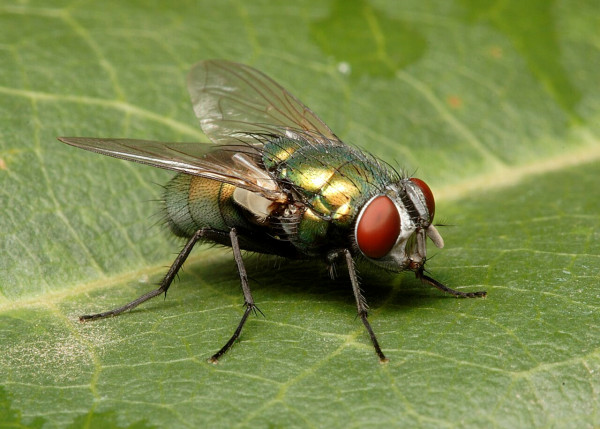
EVERY sheep producer in north-west Victoria will have their eyes on a project releasing millions of sterile male blowflies on Kangaroo Island to see whether it will suppress the blowfly reproduction rate and population – and by default the incidence of flystrike.

The release of masses of sterile male insects into the wild to mate with the females and thus reduce the next generation’s population is a method of biological insect control which has been successfully used worldwide for decades for numerous pest insects.

The Australian sheep blowfly lucilia cuprina is thought to be a good target for this sterile insect technique.

Sterilisation is induced through irradiation on the reproductive cells of the insects and not through genetic modification.

The release of sterile male blowflies on Kangaroo Island (4500km2 area, 600,000 sheep) in South Australia is under way and if blowfly suppression there is successful, it could indicate that suppression on the mainland might also be possible.

AWI program manager, animal wellbeing and industry resilience, Carolina Diaz, said that while there was no guarantee the project would be successful, the rewards could be significant of it was.

“It is hypothesised if producers could work together to strategically release sterile male blowflies within defined regions at targeted times, it might reduce fly pressure and thus reduce woolgrowers’ need for other fly management tools such as mulesing or chemicals,” Ms Diaz said.

“However, it is important the sterile male blowfly density is sufficient to dominate the already present wild, non-sterile male population, so there is less competition for the sterile blowflies to mate.

“Even if initially successful, there is always the risk that wild populations could be reintroduced through uncontrollable biosecurity gaps.

“The relative isolation of Kangaroo Island means it is a good testing ground for the technology, but it must remain biosecure from the mainland’s wild blowfly population, otherwise it will be at risk of reintroductions.”

In the current (second) phase, sterile blowflies are being released on the Dudley Peninsula (650km2) on the eastern end of Kangaroo Island which will be followed, if successful, by three years of large-scale releases across the rest of the island.

This will require the rearing of a massive 40 to 50 million blowflies per week.

Rearing and harvesting equipment, diet composition and climate control will need to be developed and optimised for production at this industrial scale.
Digital Editions


  • Collection under the hammer

    Collection under the hammer

    AN eclectic curation of vintage and antique Australian pastoral machinery and memorabilia will go to auction on 1 February. Yvon Smythe and her late partner,…

More News

  • Calls flow for royal commission

    Calls flow for royal commission

    Purchase this photo from Pic Store: 524159 AUSTRALIA needs a royal commission into water management in 2026, according to Murray MP Helen Dalton, who says politicians are “destroying” the nation’s…

  • Big skies and farmscapes

    Big skies and farmscapes

    Purchase this photo from Pic Store: 524028 THE Gallery Balranald is currently showcasing the work of professional artist Graham Hearn. His latest exhibition, Big Skies and Farmscapes, reflects the vast scale and…

  • Difficult outlook for grape growers

    Difficult outlook for grape growers

    Murray Valley Winegrowers has acknowledged the findings of Wine Australia’s Australian Wine Production, Sales and Inventory Report 2025, which confirms the challenging market conditions facing growers. The newly released report…

  • Benham appointed to new ag role

    Benham appointed to new ag role

    The Nationals member for Mildura, Jade Benham, has been appointed Shadow Assistant Minister for Agriculture and Regional Development, as part of Jess Wilson’s new Shadow Cabinet announcement. Ms Benham said…

  • Connecting urban and rural Australia

    Connecting urban and rural Australia

    HAMISH McIntyre grew up on the land in Queensland, learning the rhythms of farming from his family. Today, he runs a sprawling family business across the St George, Dirranbandi, Quilpie,…

  • Farmers warned to stay alert

    Farmers warned to stay alert

    A RUN of booming haystack and shed fires across regional Victoria has sparked fresh warnings for farmers as hay season rolls into full swing. Fire crews in the west and…

  • Bumper harvest fuels Cobram Estate’s growth

    Bumper harvest fuels Cobram Estate’s growth

    COBRAM Estate Olives has reported one of its strongest years on record, with an exceptional “on-year’’ harvest in Australia driving improved earnings, higher production volumes and a confident outlook from…

  • Select Harvests’ cracking pace

    Select Harvests’ cracking pace

    SELECT Harvests Limited has released its 2025 business update, reporting a final almond crop estimate of 24,700 tonnes, slightly below the midpoint of its earlier forecast. The company says the…

  • Further water buybacks anger farming industry

    Further water buybacks anger farming industry

    FARMERS, politicians and advocacy bodies are warning further water buybacks announced last week will gut regional towns, drive up food prices and cripple Australia’s dairy heartland. Federal Water Minister Murray…

  • Farmer takes action in feral pig fight

    Farmer takes action in feral pig fight

    IN THE heart of south-western New South Wales, sheep and cattle farmer Colin McCrabb is waging a quiet war against a destructive and elusive enemy -feral pigs. Operating a 6800-hectare…