Farmers warned on feed biosecurity rules

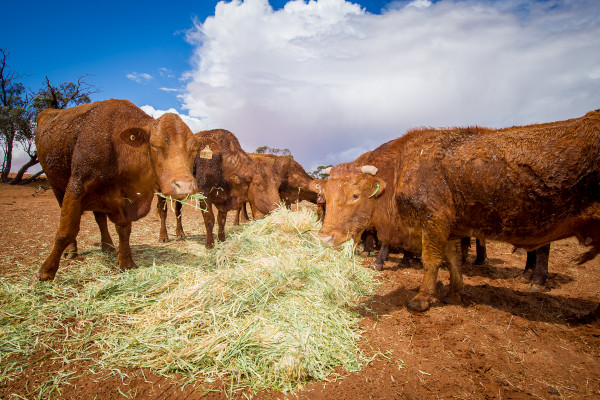
NORTH west Victorian livestock producers have been warned they must follow biosecurity laws when importing grain and fodder from interstate.

Agriculture Victoria grains industry biosecurity officer Jim Moran said varying weather conditions since late 2023 are likely to have impacted the quality and quantity of available local fodder across much of eastern Australia, pushing livestock producers interstate to meet ongoing feed demand.

Mr Moran says fodder movement laws are there for a good reason – to prevent the spread of weeds, pests, and diseases beyond known infestations and onto paddocks.

He said Victoria’s Plant Biosecurity Act 2010 describes restrictions on the entry into Victoria of material which is a host of a specified pest or disease.

And there are serious penalties for non-compliance.

“In some cases, the consignment will need to travel with a plant health certificate (PHC) issued by biosecurity officers in the source state,” he said.

“This certificate assures Victoria the prescribed conditions for entry, including sampling, testing, inspection, and other analyses, have been conducted and the consignment is free from risky pests and diseases.

“For example, the entry or importation of cereal grain (wheat, barley, oats) and lucerne, pasture, and cereal hay into Victoria for livestock feed is prohibited unless it meets Condition 20A of the Victorian PQM.”

This condition states:

“It must originate from a state or territory free from annual ryegrass toxicity (ARGT), including Queensland, Northern Territory, and Tasmania, where the respective state government has issued an area freedom certificate for ARGT.

“If it comes from NSW, Western Australia, and South Australia, it will need to travel with a plant health certificate (PHC) issued by biosecurity officers in that state. This assures Victoria the consignment is free from ryegrass containing the bacterium that causes ARGT.

“If grown or packed on a property within 25km of a green snail infestation, it is prohibited under Condition 23D in the Victorian PQM.

“A plant health certificate (PHC) or plant health assurance certificate (PHAC) must accompany the consignment to certify compliance with this entry condition.”

The entry or importation of grain legumes (chickpeas, faba beans, field peas, lentils and lupins), from any state, into Victoria for stock feed only, is allowed without restrictions.

Mr Moran said that if possible, feed livestock only in designated quarantine paddocks, where any potential issues can be contained and are easier to look for.

Thereafter, he said landowners should be on the lookout for anything new or suspicious that germinates in your paddock and have it identified and eradicated quickly.

For more information on the biosecurity entry conditions, when importing feed for your livestock from interstate, and for any other biosecurity query, contact Agriculture Victoria to speak to a biosecurity officer on 136 186.

Digital Editions


  • Almond boss resigns

    Almond boss resigns

    ALMOND giant Select Harvests is on the hunt for a new boss after shock news its chief executive is stepping down. Chief executive and managing…

More News

  • Dog’s Day Out arrives in the Mallee

    Dog’s Day Out arrives in the Mallee

    THE iconic spluttering rumble of Lanz Bulldog Tractors is set to roar across Swan Hill and Woorinen next month, when the Mallee Steam, Oil and Machinery Club hosts Dog’s Day…

  • Perfect storm for grape industry

    Perfect storm for grape industry

    This year is certainly testing ones resolve, excessive heat, high water costs, record low grape prices, 170mm of rain at the wrong time and now the fuel issue. After eventually…

  • Holding on to their heritage

    Holding on to their heritage

    Purchase this photo from Pic Store: 531373 TRADITIONAL family farms, passed down from generation to generation, are becoming rarer and rarer these days. With the growth in corporate farming, greater…

  • Wet weather halts harvest

    Wet weather halts harvest

    It’s been an eventful start to harvest for the almond industry. Like all of agriculture in the region, Mother Nature and geo-political tensions have played a hand in providing extra…

  • Royal Commission push back

    Royal Commission push back

    A FIERY clash in Federal Parliament has reignited the bitter fight over the future of the Murray-Darling Basin, with the federal environment minister rejecting claims the government is “destroying family…

  • Call for royal commission into water welcomed by irrigators

    Call for royal commission into water welcomed by irrigators

    FARMING communities have backed a call for a federal Royal Commission into water, saying it is time to expose the “treachery, lies and shonky deals” behind the Murray-Darling Basin Plan.…

  • Nationals push to protect prime farmland with new federal Bill

    Nationals push to protect prime farmland with new federal Bill

    THE Nationals have moved to block taxpayer funding for energy and mining projects on Australia’s best farming land, unveiling a new Bill they say is vital to protect the nation’s…

  • Sally returns from Japanese adventure

    Sally returns from Japanese adventure

    I am pretty excited for this week , actually just tomorrow evening specifically when Sally returns from her first globe trotting adventure. Flying in from Osaka Japan, she’s been on…

  • CWA brings life skills program to the Mallee

    CWA brings life skills program to the Mallee

    Purchase this photo from Pic Store: 539453 A SURGE of community spirit swept through the Mallee when Country Women’s Association of Victoria president Jenny Nola attended the Murray Valley Conference…

  • Basin leaders meet as water plan review looms

    Basin leaders meet as water plan review looms

    NEARLY 200 leaders from across the Murray-Darling Basin gathered in Brisbane last week to debate the future of water management, with northern Victorian councils warning food production and regional communities…