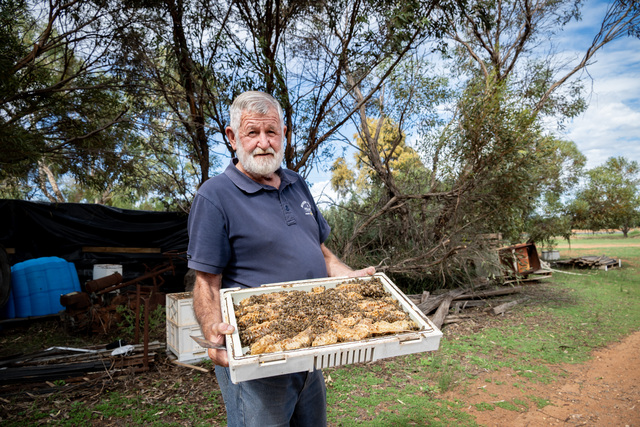
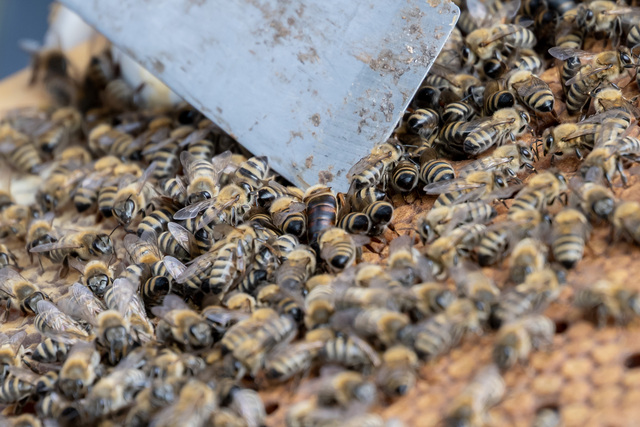
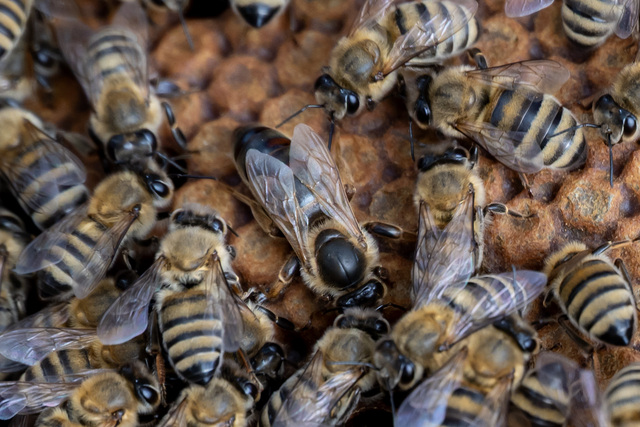
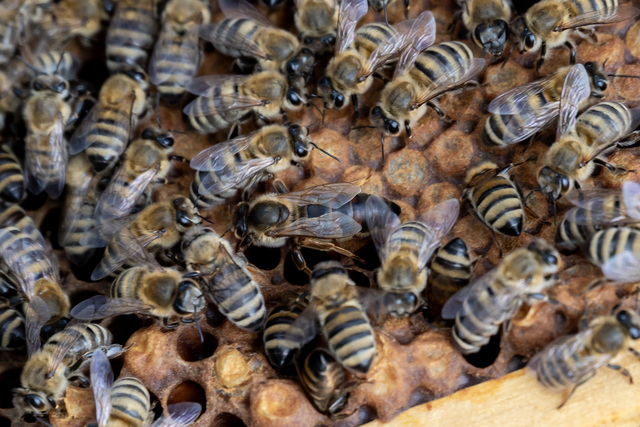
AT its peak Monson’s Honey and Pollination coordinated up to 140,000 hives, sourced from around 120 beekeepers across eastern Australia.
So it is no surprise that Mr Monson’s idea of retirement doesn’t involve putting his feet up and having a cup of tea.
Although, if he does find some time to take a sip, he is sure to add a spoonful of honey.
Born in Smithton, Tasmania, his grandfather John was chairman of the award-winning Duck River Butter Company, developing an abattoir that exported pork and lamb.
Mr Monson said John and his father Maurice also kept “up to 30 beehives.”
In 1949 Maurice sold his share at Duck River and moved his family to Mildura in Victoria’s northwest, initially to support his mother’s family with their pest control business across Victoria, New South Wales and South Australia.
However, Maurice’s love of bees led to a problem.
“When it came to getting rid of bees for clients that he found in houses and dried fruit boxes, he refused to destroy them,” Mr Monson said.
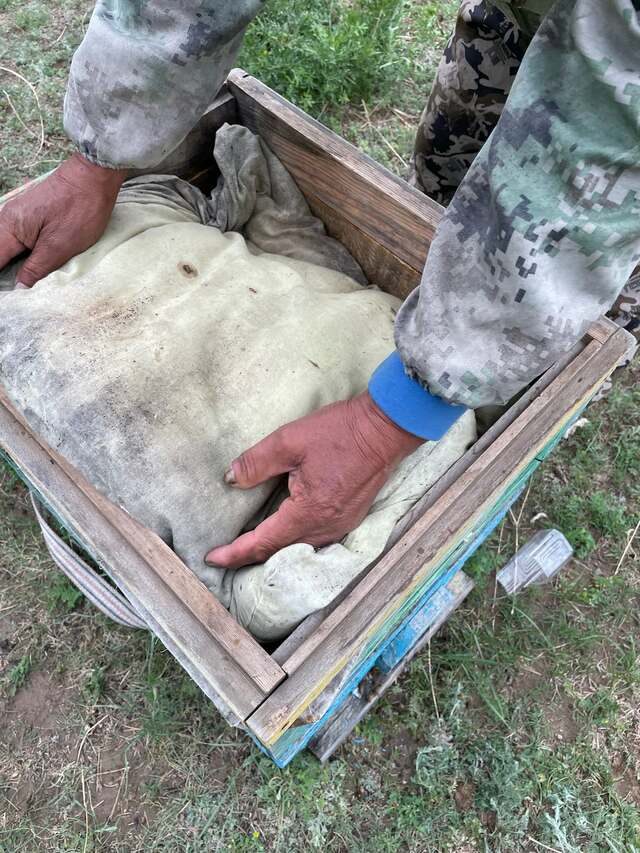
“Instead, he would rehouse them in bee boxes and add them to his new apiary.”
Eventually Maurice would purchase a fruit block at Mildura South.
Mr Monson said his first encounter with bees was memorable but unpleasant.
“I was riding on the fruit cart, being pulled by a big white horse, while my father loaded buckets of currants on the trailer behind.”
“This aggravated a swarm of bees hanging in the vines, who then attacked the horse, causing him to bolt off with the trailer still attached.”
“My father told me to run so I didn’t get stung. Later, I watched from a distance as he put the bees in a box.”
Despite this scary scenario, Mr Monson said he was immediately “fascinated by these bees, especially the different coloured pollens they were carrying on their bodies.”
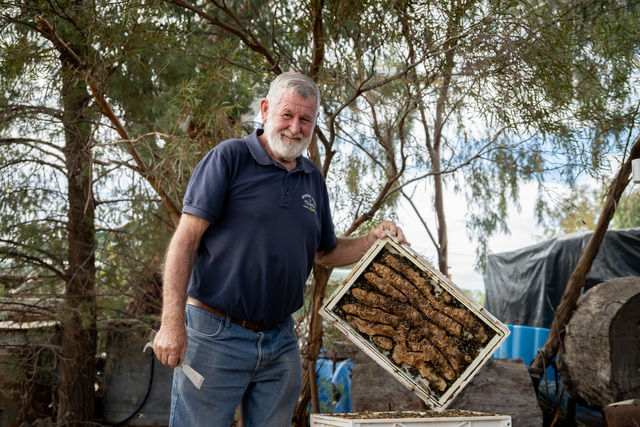
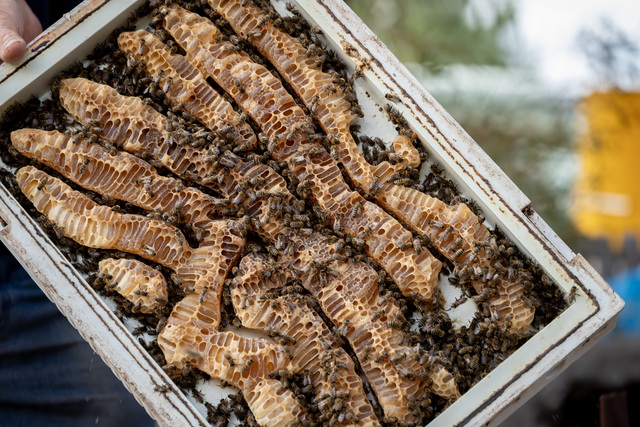
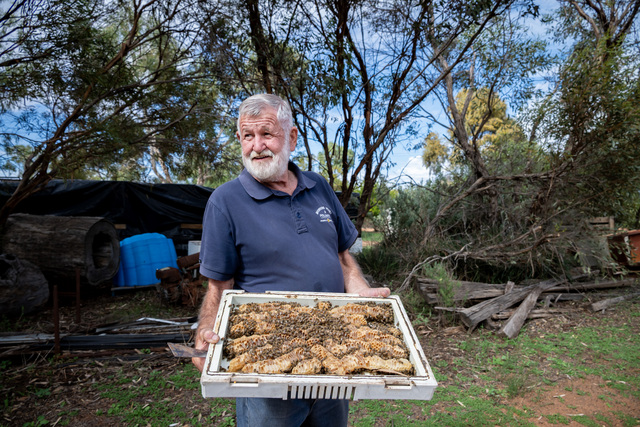
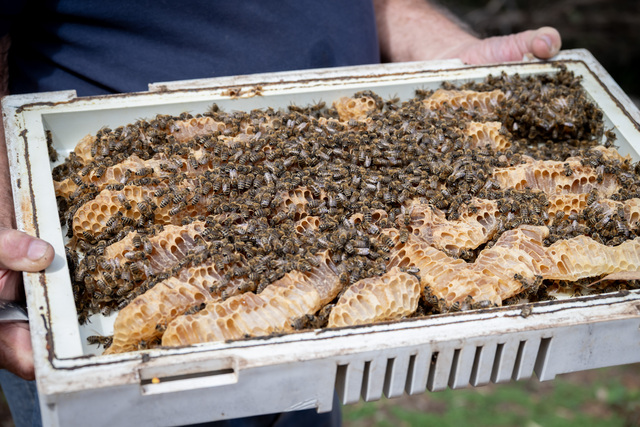
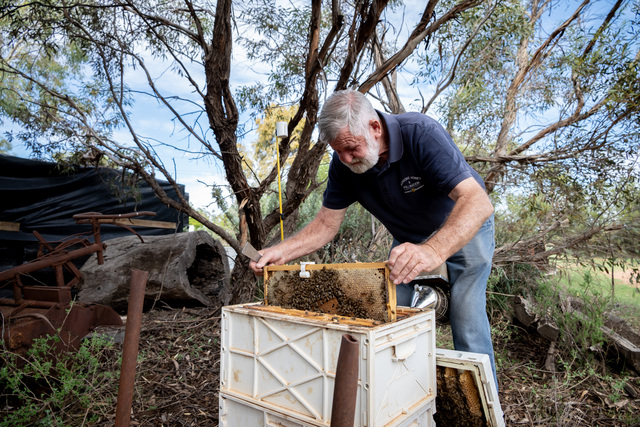
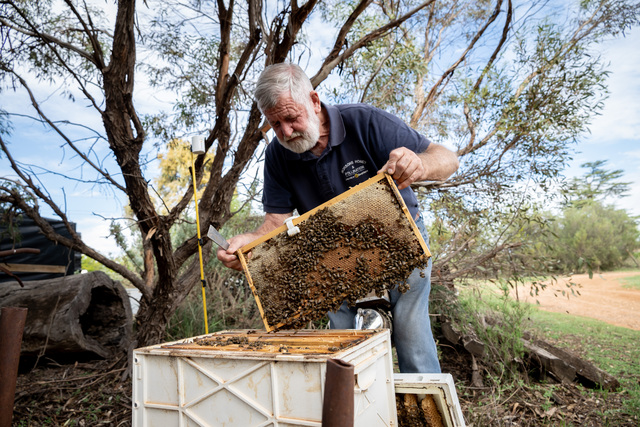
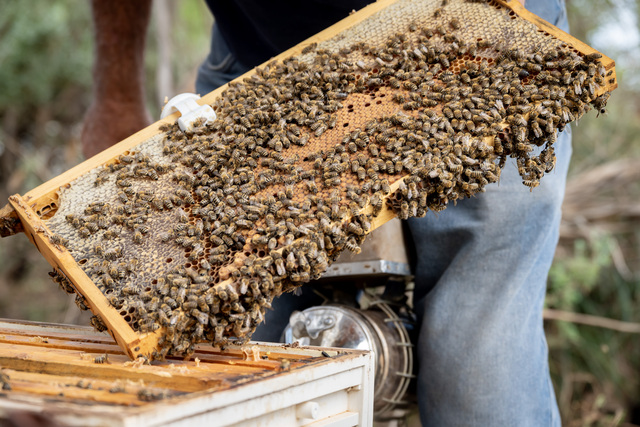
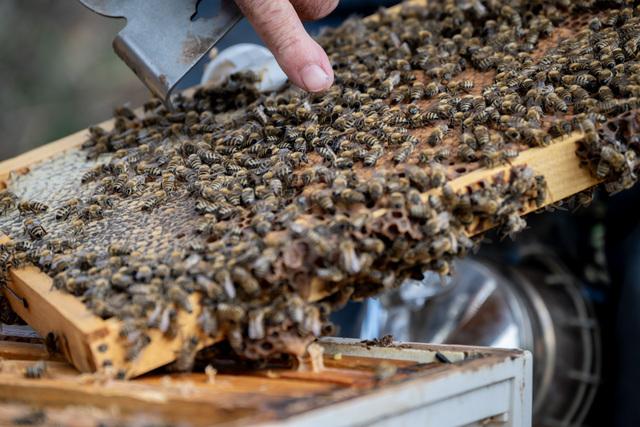
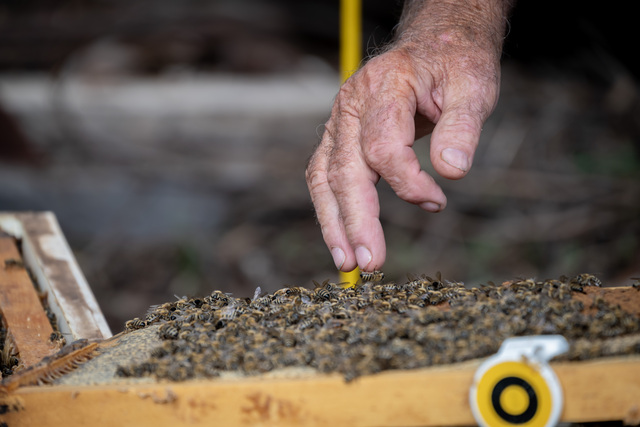
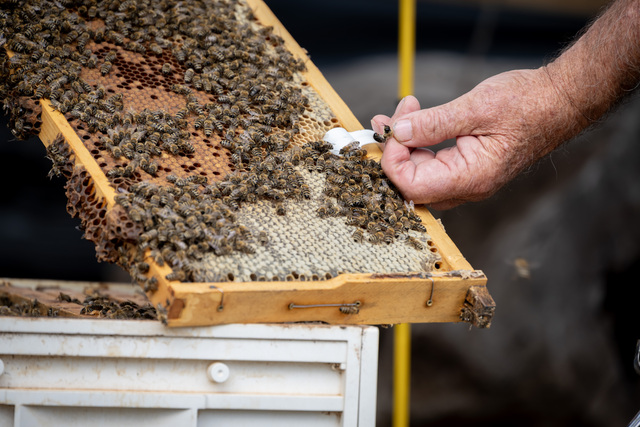
This lifelong devotion to bees was evident when Mr Monson, without veil or gloves, gently slid a frame from one of his hives and delicately pinched a single drone between his fingertips.
“They’re pretty calm,” he said.
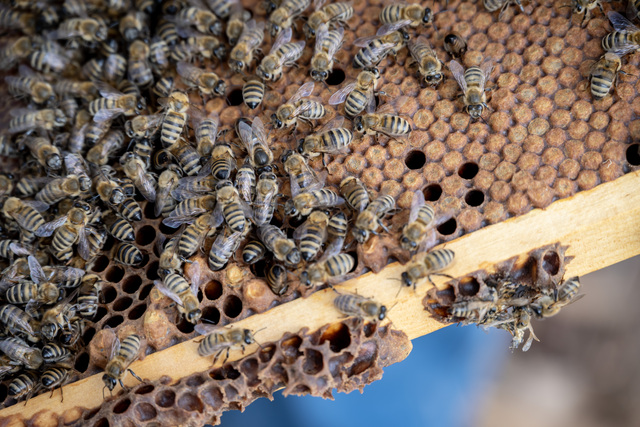
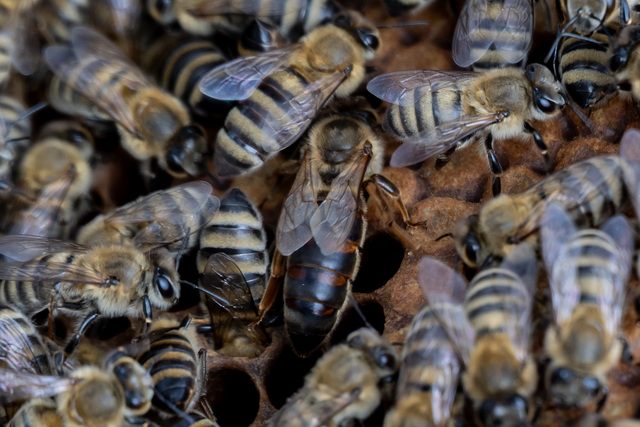
At ease among his bees, the amiable apiarist pointed out the workers and the queen, describing their behaviour with an air of gentle curiosity.
By 1954 Maurice had sold the fruit block and his pest extermination business and moved the family across the river to Gol Gol, where he became a full-time beekeeper.
While he dabbled with the idea of becoming an accountant, it didn’t take long for Mr Monson to realise he was also destined to be a beekeeper for life.
Mr Monson said the early years were tough for the family farm.
“We were doing well until the 1967 drought hit us hard.”
As a result, he spent the next few years managing a packaging shed at a citrus property at Monak.
After marrying his wife Carolyn, a school teacher from Hobart, at the end of 1971, he returned to Gol Gol, hoping to return to beekeeping in 1972.
However, as they often do, circumstances changed.
“It wasn’t long before a neighbour from Monak asked me to manage a second farm he owned with his brother at Nangiloc,” Mr Monson said.
“The farm was rundown and badly needed some TLC. By then my brother Lyle was helping my father with the bees. So I was given the okay to accept the offer for at least the next five years. I ended up staying for seven,” he said.
Eventually, in 1979, and now with a young family of three children, Mr Monson returned to his family’s honey and pollination business.
He hasn’t looked back since.
“It wasn’t long before we were supplying so many growing industries with bees for pollination, to the almond growers, to market gardeners, to watermelon and pumpkin growers, and any other crop that improved yields with bees and their pollination skills,” he said.
The expansion of Mr Monson’s beekeeping business to larger managed properties, such as those owned by Timbercorp, required him to sub-contract other beekeepers.
“This meant a lot of trust on behalf of those beekeepers, that we would care for their bees and give them a reasonable return, plus provide the crop and returns expected by the farms,” he said.
Over time Mr Monson’s son Jonathon, who is now the director of Monson’s Honey and Pollination, his son-in-law Daniel, and his nephew Reece, would take on more responsibility, allowing him to step back and smell the sunflowers.
“My role nowadays is mainly using my knowledge of beehive placement,” he said.
That expertise is critical in modern agriculture, where pollination underpins crops ranging from almonds and blueberries to canola and sunflowers.
With orchards expanding in scale and complexity, particularly in the almond sector, the logistics of pollination have become a major operation in their own right.
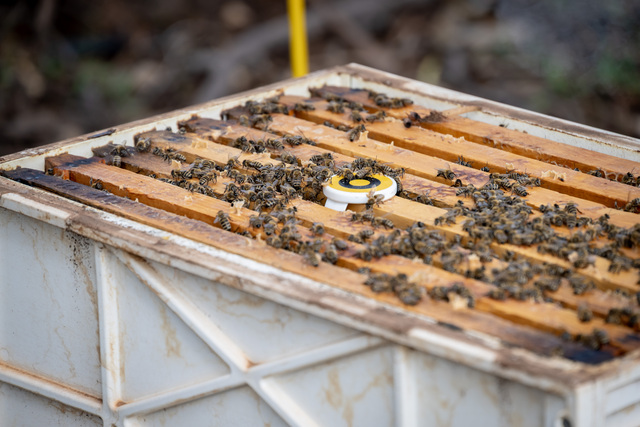
In recent years Mr Monson’s business has been working with international ag-tech company BeeHero, trialling in-hive sensors designed to monitor bee health and activity in real time.
These small devices measure temperature, humidity, sound and vibration within the hive, offering insights into hive strength, before and during pollination.
“The strength of a hive has become a real problem,” he said.
“With thousands of hives being provided, many are not strong enough to do their job in the cold spring conditions.”
Thankfully the BeeHero transponder can perform a pre-audit to ensure a hive has enough food and insulation prior to wrapping.
Mr Monson said the technology was already proving its value, significantly reducing the time required to assess hive performance across large orchards.
Beyond saving time, the sensors help to create a more level playing field across the industry, with consistent data replacing subjective assessments of hive strength.
There is also growing potential to use the technology in new ways, from tracking bee activity in specific crops to analysing how weather impacts pollination.
“It is exciting to have the ability to place sensors in an orchard or on a canola crop to record bee activity,” Mr Monson said.
With his younger family members assuming control, Mr Monson decided to take his experience beyond Australia’s borders and into developing agricultural communities, where his practical knowledge could have immediate impact.
“I had travelled on government-sponsored trips to the US and China over the years, but when I turned 70 I decided that I needed to share the knowledge that I had.”
What began as a guest speaking engagement at Mildura Deakin Rotary Club led to a deeper involvement in international development work and a growing appreciation of how the organisation connects local communities with global projects.
Mr Monson has since taken his expertise from his eclectic farm in Gol Gol to Laos, Cambodia, Thailand, Myanmar and Mongolia.
In Laos, Mr Monson engaged in spirited negotiations with locals about the merits of leaving drone broods in their hives.
“Swarms of bees would fly into the hives and the keepers would rush to get the drones out,” he said.
Drones are male bees that are necessary to fertilise the queen but do not produce honey.
Historically, they have been removed from hives because they sap resources and are susceptible to Varroa mites, which can evolve to parasitise Apis cerana, the honey bee species native to Asia.
However, researchers have discovered that drone blood left in the hive can be used as a pollen supplement that keeps hives thriving during winter, through droughts, or at times when nectar and pollen are scarce.
Drone blood can also be used to produce a flour, providing a rich source of protein and essential nutrients for the hive.
In recent years, Mr Monson has worked alongside Brendan Irvine, who serves as an agricultural advisor with non-government organisation Adventist Development and Relief Agency (ADRA).
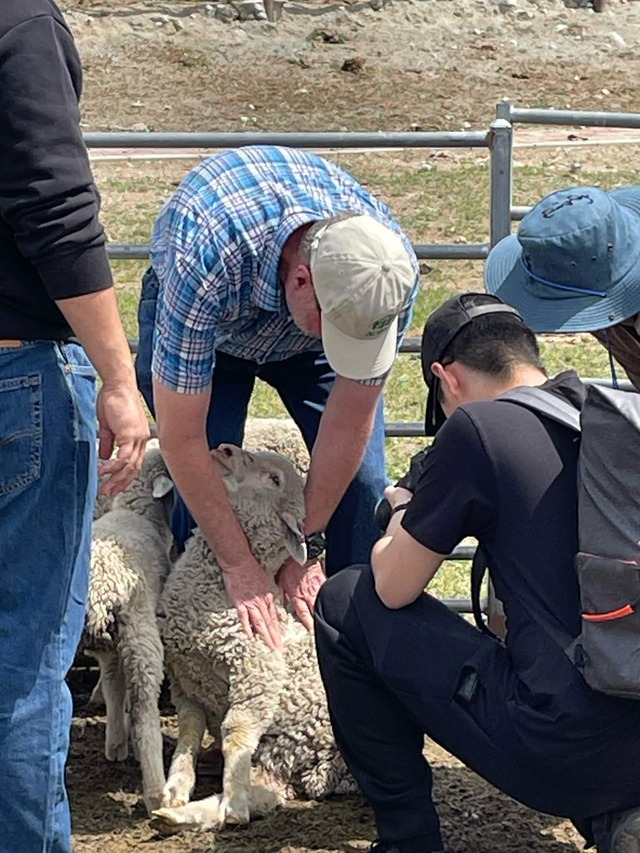
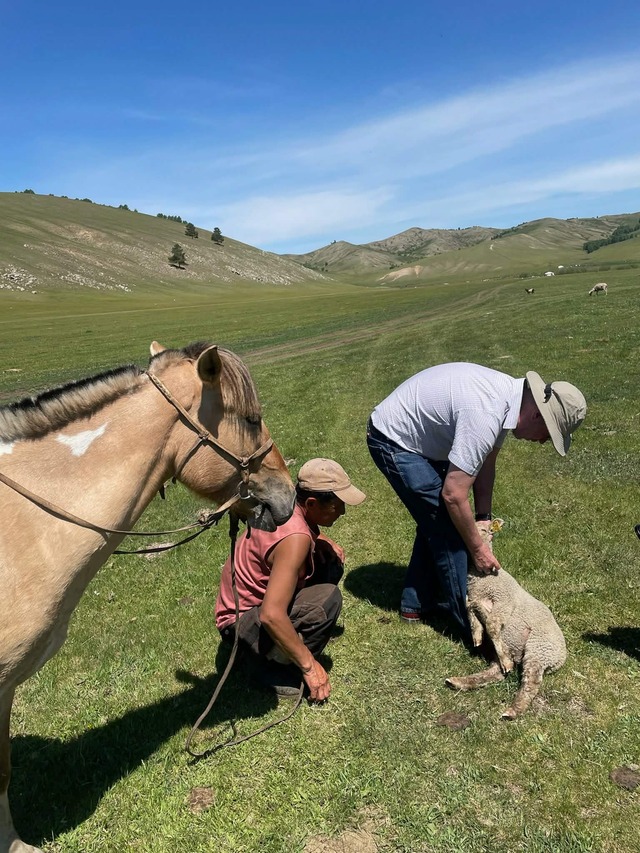
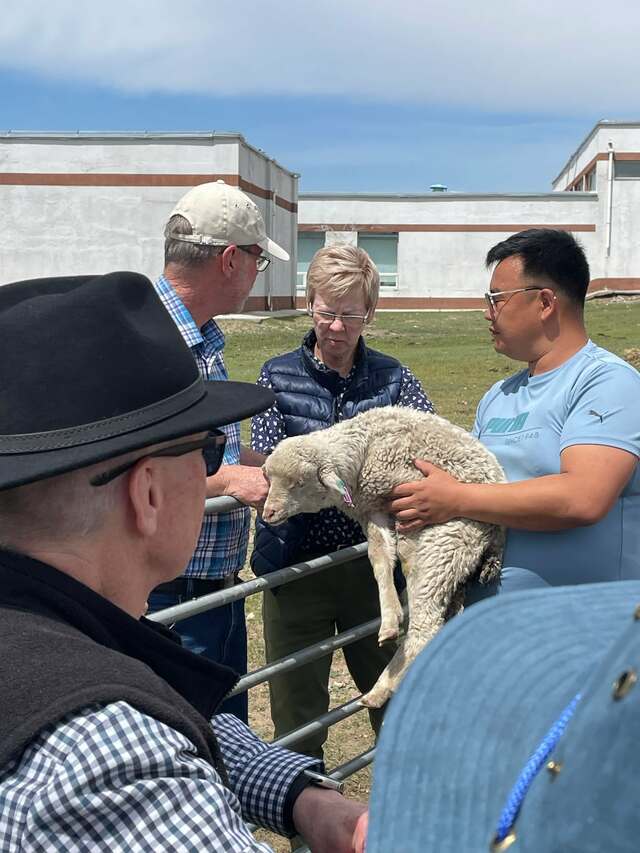
One of their most significant undertakings has been a sheep‑breeding project in Mongolia.
Established by the Australian Embassy in Ulaanbaatar, the project involves implanting the embryos of super fine merino sheep into Mongolian ewes, with the aim of lifting wool quality and improving long-term productivity in the local sheep industry.
Mr Monson said the process reduced the amount of livestock required for cashmere production, helping to protect native grasses and improve both economic outcomes for herders and environmental sustainability.
“We set up a request for the Fine Wool Program to be funded through the International Rotary body of RAWCS (Rotary Australia World Community Service).”
Always looking to the future, Mr Monson said the project gave him the opportunity to pass on his expertise while supporting work that delivered real benefits.
“There are many international projects listed on their website that are worthy of attention and can genuinely make a difference,” he said.
Even in retirement, Mr Monson is finding new ways to put a lifetime spent with bees to work.