Pullout quote: “This reform is not just an industry issue, it’s a food security issue, a regional development issue and a national economic issue,” – Australian Consolidated Milk chief executive Jason Limbrick
HUNDREDS have rallied in Barham, demanding an immediate halt to Murray-Darling Basin Plan reforms they say are crippling rural Australia.
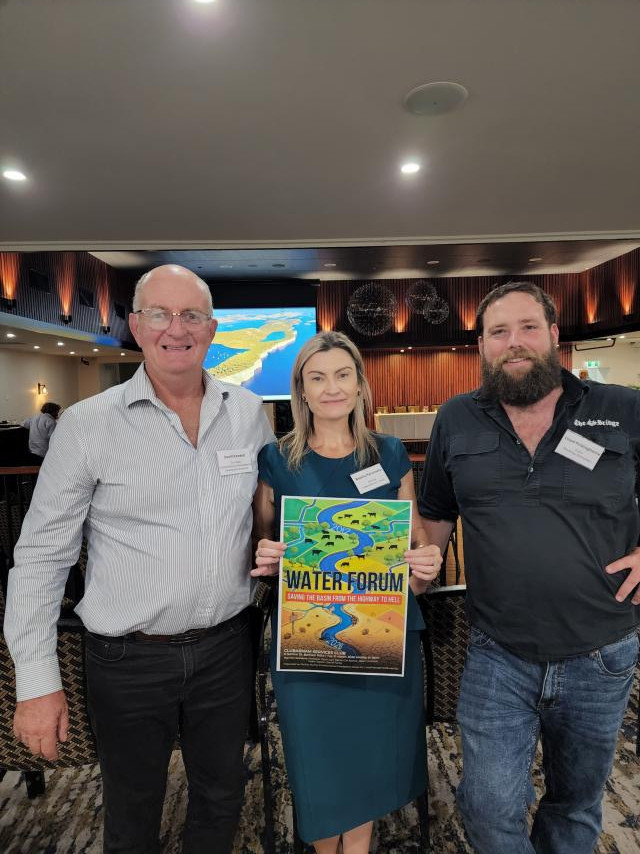
The heated forum, held on 31 March under the banner Saving the Murray Darling Basin from the Highway to Hell, brought together irrigators, farmers, scientists, legal experts and industry leaders from Victoria, New South Wales and South Australia, with many more watching online.
The event will form part of a submission to the Murray-Darling Basin Authority’s ongoing review.
Southern Riverina Irrigators chief executive Sophie Baldwin said the message was unanimous.
“Everyone in attendance called for an end to all basin plan reform which is destroying our rural communities and crippling productivity,” she said.
“Ultimately the basin plan is based on flawed modelling and some unachievable environmental outcomes, something the MDBA has finally acknowledged in the review they released in February.”
Ms Baldwin said her organisation was calling for an end to all water recovery measures.
“No more buybacks, no Sustainable Diversion Limit Adjustment Mechanism shortfall and no relaxing of constraints because these are all mechanisms used to deliver water downstream for unachievable environmental outcomes,” she said.
She warned communities were at breaking point, with more cuts looming.
“Basin plan reform is killing productivity and we are at a critical point,” she said.
“There is still 221GL of water to strip from communities under the 450GL restoring our rivers legislation and if they come for the 305 to 350GL SDLAM shortfall, they are basically wiping out the entire annual productive pool of Murray irrigation.
“Who will grow our staple foods and feed our nation if we no longer have our farmers growing rice, cereal, dairy, fodder, livestock and fruit and vegetables?
“It is an absolute disaster.”
An industry panel featuring Ricegrowers Australia, Kagome and Australian Consolidated Milk painted a grim future of consolidation, job losses and shrinking regional economies.
Australian Consolidated Milk chief executive Jason Limbrick said modelling showed water recovery of 302GL would cut the consumptive pool by eight per cent and push temporary water prices up 20 per cent.
He said dairy farmers could face losses of up to 40 per cent, forcing some of the region’s 40 processing facilities, employing about 2000 people across eight local government areas, to shut.
“This reform is not just an industry issue, it’s a food security issue, a regional development issue and a national economic issue,” he said.
Speakers from agriculture, science and law echoed the concerns, including De Bortoli Wines managing director Darren De Bertoli, Ricegrowers Association’s Justin Sutherland, Kagome’s Darcy Kirchofer, horticulturist Nathan Free, Federation University wetland scientist Emeritus Professor Peter Gell, Citrus South Australia chair Mark Doecke, agribusiness leader David Farley and water law specialists Tim Horne and Bobbie Pannowitz.
They warned industries were already struggling after 4687GL had been removed from agricultural production, with a further 450GL planned plus an SDLAM shortfall of up to 355GL.
Despite more than $11.5 billion spent over 14 years, critics say the basin plan has failed to balance environmental, social and economic outcomes or provide water security.
There are now more than 4622GL in government water accounts, yet speakers said critical infrastructure remained underfunded and future planning for farmers was becoming impossible.
“With the purchase of every extra megalitre of water from the consumptive pool, it becomes increasingly difficult to forward plan and budget,” the forum heard.
“Buybacks escalate the price of water and when combined with drought, global conflict, fuel and energy shortages, we see businesses collapse.”
Ms Baldwin said rising costs were compounding the crisis.
“IPART has just released another round of potential fee increases of 10 per cent over the next three years plus CPI and there is just no end in sight,” she said.
“We need drastic action now to change this trajectory and there needs to be immediate flexibility with environmental water so it can be returned for use in the productive pool and keep our farmers farming.”
She delivered a stark warning.
“Our farmers will soon need to be recognised as critically endangered just like the lower Murray River,” Ms Baldwin said.
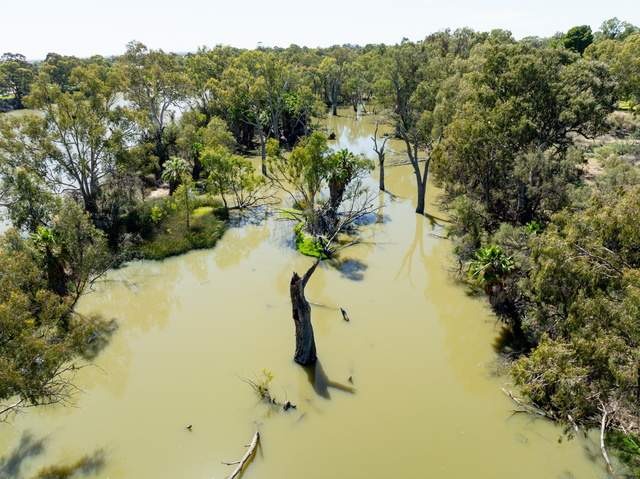
Critics also pointed to environmental outcomes, claiming fish and bird numbers were declining despite water recovery efforts, while the lower Murray River has been declared a critically endangered ecological region.
After 14 years, they say the policy has failed both the environment and the people who depend on the land, contributing to the collapse of generational farms, closure of milk processing plants and rising mental health issues in rural communities.
The forum called for a shift away from buybacks toward measures such as carp eradication, cold water pollution control, fish passages, improved water quality, sediment management, riverbank revegetation and on-farm refuges.
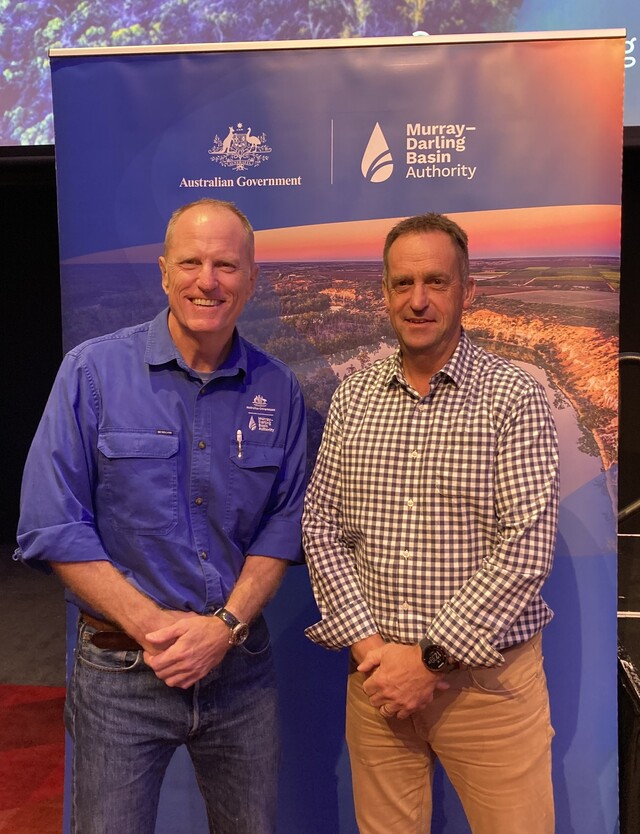
MDBA chief executive Andrew McConville said the review was an important opportunity to assess the plan’s future.
“The basin plan review is an important opportunity to consider how the basin plan is working and what needs to change for the next decade,” he said.
“Representatives of the MDBA are out and about in the Basin throughout the consultation period, with meetings scheduled across the catchment areas.
“Existing commitments mean it is not possible for us to attend the forum, but I have spoken directly with the organisers to arrange an alternative time to meet.
“This is a really important group for us to meet with, and I am keen to hear from them in person.
“The MDBA is committed to engaging with all basin stakeholders and to listening and learning as we shape how the basin’s water is managed for future generations.”