A natural fungal agent specific to flaxleaf fleabane weeds is entering the final phase of development for eventual field deployment.
Flaxleaf fleabane (Conyza bonariensis), which is now widespread across northwest Victoria, is one of the grain sector’s highest-impact weeds, costing more than $43 million annually in lost grain crop revenue.
It affects nearly three million hectares and, worse, it is increasingly acquiring resistance to herbicides.
In response, GRDC has invested in the search for biocontrol agents that can reduce both the weed’s growth – and, therefore, its ability to compete for soil moisture – and its ability to set seed.
The first phase is complete and the second started in the summer of 2024 and will run for two years.
Phase one, led by Dr Ben Gooden of CSIRO’s weed management systems, involved testing which identified several fungal and insect candidates with potential to control flaxleaf fleabane. This work resulted in regulatory approvals for a pilot release program of a rust fungus called Puccinia cnici-oleracei.
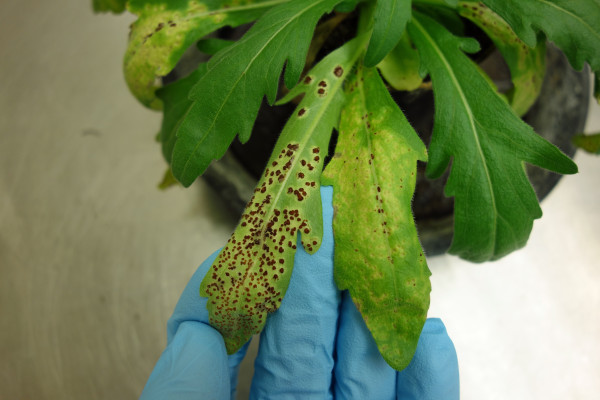
Testing found the rust pathogen is highly specific for flaxleaf fleabane, and infection can potentially reduce seed production by 50 to 60 per cent compared with non-infected plants.
Dr Gooden said testing on the insects is looking promising.
“Progress will ultimately depend on rigorous risk assessment before approvals are given for further testing,” he said.
In the meantime, the fungal work has now entered the next development phase under the leadership of CSIRO’s Dr Gavin Hunter.
This will involve optimising the release protocol and resolving challenges identified in the pilot study.
A journey of discovery
The organisms used in the study were sourced from South America (predominantly Colombia), which is the native range of flaxleaf fleabane.
“There is an enormous amount of work that goes into this phase of development that often goes unnoticed,” Dr Gooden said.
“But it is a prime reason why producing a biocontrol agent has such long lead times.”
A total of 136 diseased Conyza samples were collected, and several fungi were recovered from the plant symptoms. An export permit was obtained from Colombian authorities following cross-inoculation experiments which demonstrated a high specificity for the target weed species.
In Australia, comprehensive host-specificity testing was undertaken in quarantine on a total of 50 closely related, non-target plant species in the Asteraceae family present here (ornamental, weed and native).
“Our research found the fungus only infects flaxleaf fleabane, while all non-target plant species tested were resistant,” Dr Gooden said.
“Based on this research, the fungus was deemed safe and was approved by the Department of Agriculture, Fisheries and Forestry (DAFF) for introduction to Australia in June 2021.”
Pilot study
The pilot release study (from September 2022 to February 2023) was undertaken in partnership with community participants in a variety of landscape and climate contexts. The 55 participants comprised grain growers, agronomists, research institutes, local councils and Landcare networks.
Altogether, 366 biocontrol release kits were distributed nationwide, focusing on the south-eastern parts of Australia where the greatest flaxleaf fleabane impacts occur.
However, the trial found that participants struggled with the procedure.
Of participants who monitored fungus release sites, only about 10 per cent were able to observe successful infection.
However, some participants were found to have released the fungus on a different plant species, most often tall fleabane (Conyza sumatrensis). In other cases, the host flaxleaf fleabane plants had died by the time the participants returned to inspect the plants for signs of infection.
“During the CSIRO-run experiments, we observed that pustules can appear on the leaf surface within about two to four weeks, after which time the host leaves die off very quickly (within a couple of days) after the fungus has formed spores,” Dr Gooden said.
“As such, the incidence of infection was likely much higher at the community release sites, but the low frequency of return visits meant that many visible symptoms were likely missed by the participants.”
Dr Gooden noted even where the rust fungus can establish successfully in the field, infection is unlikely to result in significant reductions in the population size of flaxleaf fleabane in the short term.
“Patience is required with biocontrol agents as it amounts to a longer-term strategy, but one which can eventually become self-sustaining and reduce weed impact at a landscape scale,” Dr Gooden said.
“Furthermore, the combination of several biocontrol agents may enable more robust control of weeds. In this way, further research into the biocontrol of flaxleaf fleabane with insects may provide enhanced biocontrol outcomes.”
Phase Two: Optimising release methods and impacts
At the CSIRO Black Mountain site in Canberra, a culture of rust fungus is being maintained for further research and eventual field release trials led by Dr Hunter, leader of CSIRO’s plant health diagnostics team.
Dr Hunter said the pilot program highlighted some practical issues that need to be resolved to ensure the rust fungus can establish in the field across different environmental conditions.
“The current investment will seek to further optimise release methods for the fungus and ascertain its impacts on flaxleaf fleabane in the cropping landscape,” he said.
“We’ll be designing and running experiments at different temperatures, humidity levels and light levels to see their effects on fungal spore production, release and germination.”
These experiments will start in the laboratory and then scale out to field trials.
The team will also be studying the variation in infection between plants of different size, age and genotype. Importantly, it will also examine impacts on glyphosate-resistant versus non-glyphosate-resistant flaxleaf fleabane populations.
Besides infection dynamics, the project will also assess the impact the fungal agent has on the growth and reproductive output of flaxleaf fleabane plants. This will help understand impacts with regards to a major issue for growers – seed-set.
A new advisory group has been set up by GRDC and CSIRO to provide independent advice on the prospects of the biological control of flaxleaf fleabane in the Australian environment.
It will bring together diverse views of stakeholders working in the Australian grains industry with expertise in weeds of grain cropping, weed–pathogen interactions and community engagement in weed management programs.
Future field trials on the horizon
Field trials for this new phase started in the summer of 2024 and will run for about two years.
“We’ll use the insights from our laboratory and field trials to develop new guidelines for optimal release and establishment of the flaxleaf fleabane rust fungus in the cropping landscape,” Dr Hunter added.
This will include investigating the impact of herbicide application on the fleabane rust fungus.
“We’ll be doing experiments to see if the application of chemical herbicide to flaxleaf fleabane reduces infection rates, or, conversely, if fungus-infected flaxleaf fleabane plants have differential susceptibility to herbicides,” Dr Hunter said.
The first step, however, is research that can inform a successful mass-release program. By working with growers, advisers and government departments, it is hoped that this phase will culminate in the establishment of the fleabane rust fungus, and, in the process, add a more sustainable tool in the integrated weed management toolkit.