PUTTING water buybacks back on the table during the flood crisis is a “highly cynical move” by the Federal Government that will “break” the local horticulture industry, Member for Mallee Anne Webster claims.
Dr Webster said Environment and Water Minister Tanya Plibersek had pushed buybacks again to recover 450GL under the Murray-Darling Basin Plan but “hidden the detail behind a veil of commercial sensitivity”.
“Mallee growers deserve more transparency and respect from their Federal Government,” Dr Webster said.
“With so much water around, currently the average person isn’t necessarily worried about the potential lack of it, but that doesn’t mean we can allow Labor to quietly push through these measures that will break the local horticulture industry.”
In its first budget last week, the government allocated an unspecified amount for buybacks, which were strongly opposed by nearly every community and agricultural group in the NSW Murray region.
A water buyback is where the government ‘buys back’ water entitlements from growers, thereby reducing the amount of water taken from the river.
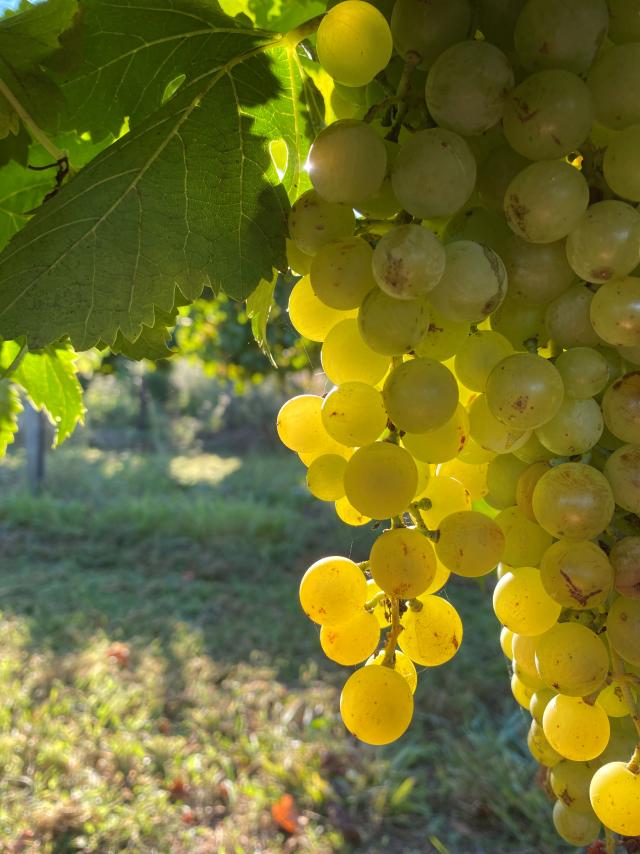
Dr Webster’s concerns were echoed by Australian Table Grape Association chief executive Jeff Scott, who feared the economic impact of buybacks returning to the water market.
“As soon as you take water off the market, it affects the market value,” Mr Scott said.
“With a reduction in supply, but the same or higher demand, the price goes up – which hurts our growers.”
Robinvale grower Tony Natale said buybacks would be devastating to the market, driving up prices.
“There is already insufficient water to supply all the licenses … it’s going to make it even more scarce,” he said.
Red Cliffs grower Domenic Sergi, also the secretary-treasurer of the Sunraysia Table Grape Growers Association, said the prospect of buybacks being introduced came at a difficult time for growers and did nothing but shift the problem.
“It’s kicking the can down the road, in any other industry if there’s a problem they’d manage the environmental issues and find an engineering solution for it,” he said.
“This is basically an easy way of saying, ‘I’m not going to take responsibility for it, I’m just going to reduce the size of the industry’.
“It’s like saying if we were running out of electricity, rather than finding solutions around that you just start telling businesses to shut down – it’s no different.”
Dr Webster said the government had been warned previously about the impacts of buybacks on regional communities.
“The Labor Government needs to learn from history, last time water buybacks were instituted it resulted in a Swiss cheese of horticultural properties when farmers sold off their water and left dry paddocks,” she said.
“The burden for water infrastructure for remaining properties to pass those dry paddocks fell to farmers – this is not something we want to revisit.”
The Murray Regional Strategy Group was concerned about the impact on its communities if the government proceeded with water buybacks.
Chair Geoff Moar said communities along the Murray River and its tributaries “had better get used to flooding events” if more water was recovered through buybacks and held in upper Murray storages.
He said there was a concerning failure of authorities to accept the consequences of buying water, storing it in dams, then sending massive quantities down the Murray River.
“One basin plan objective is flows of 80,000 megalitres a day over the South Australian border, and we need to put that into perspective in regards to flooding outcomes,” Mr Moar said.
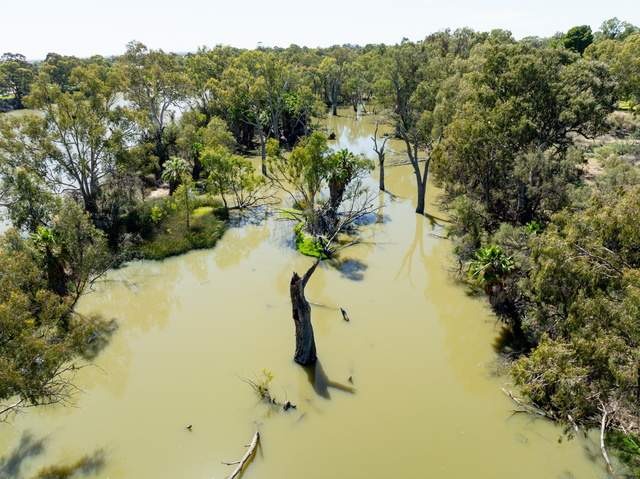
He explained that at present, the Murray River was in flood at Tocumwal, where flows are just under 70,000 ML/day. Many tributaries, including the Ovens and Kiewa Rivers, are making a significant contribution to the Murray, and downstream of the Barmah Choke there are also flows from the Goulburn (49,000 ML/day), Campaspe and Loddon Rivers.
“We have these devastating floods, yet flows over the border are only slightly higher than the basin plan objective. If we buy more water to achieve that poorly modelled objective, quite obviously we are going to have more frequent flooding,” Mr Moar said.
Mr Moar said he was also disappointed with the government’s position on water buybacks rather than solutions which protect rural communities, which were discussed at a meeting between MRSG and Ms Plibersek last month.
“We thought this was a good meeting with positive feedback to the roadmap we have developed that provides workable solutions to issues with basin plan implementation,” he said.
“We urge the minister to continue to work with us on solutions that can provide a balanced basin plan that is delivered in the best interests of our nation, its environment and rural communities.”