Not worth a bean without good storage

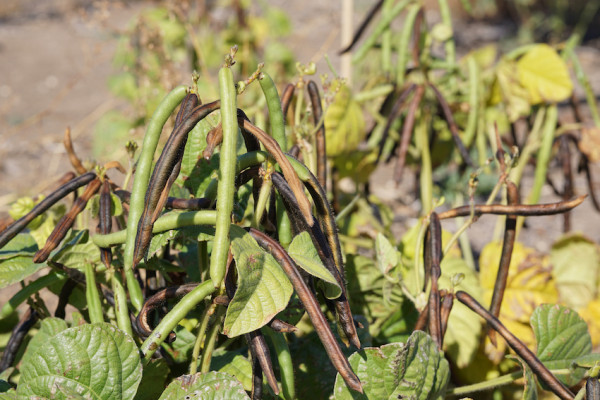
WITH legumes becoming big business across northwest Victoria, the latest research out of Monash University is ringing some alarm bells for local croppers.

The research reveals poor storage conditions are causing avoidable quality decline across the legume supply chain – costing growers and processors.

After harvesting, legumes are often stored in bulk silos or on-farm sheds where they can be exposed to hot Australian summers with little or no temperature or humidity control.

High temperatures and humidity during storage trigger internal damage in faba and adzuki beans, making them harder to cook, less nutritious, and less suitable for processing (e.g. canning or protein extraction), the research has found.

In a series of studies published in Carbohydrate Polymers, Food Hydrocolloids, and Food Bioscience, researchers found storing faba and adzuki beans at high temperatures (above 40 °C) and humidity levels (more than 80 per cent) triggers internal changes in the beans’ protein, starch, and lipid structures.

According to lead author Associate Professor Sushil Dhital, how beans are stored after harvest can make or break their final quality, even if they were grown and harvested perfectly.

“There’s a perception that once beans are harvested, the job is done,” Associate Professor Dhital said. “But we found poor storage conditions can quietly ruin bean quality and undo months of good work in the paddock.

“We saw even perfectly bred and harvested beans can develop serious quality issues if not stored correctly.

“Beans stored at high temperatures and humidity become structurally resistant to water absorption and much harder to cook. Their protein and starch are different to those of freshly harvested.”

Known as the HTC defect – hard to cook – it means beans take longer to soften, are harder to digest, and can develop off-flavours.

Associate Professor Dhital said this has real implications for food manufacturers, canning companies, and exporters who rely on consistent, high-quality product.

Australia is one of the world’s top producers and exporters of legumes, yet postharvest handling remains relatively overlooked.

The research team highlighted the need for investment in temperature and humidity-controlled storage systems, along with policy support to ensure the preservation of postharvest quality.

They’re calling for greater industry awareness – particularly from the Grains Research and Development Corporation, which funds research to improve Australia’s grain productivity and sustainability – regarding the impact of storage on bean quality.

“Millions are invested in breeding better beans and improving agronomy,” Associate Professor Dhital said.

“But without proper storage, much of that value is lost. We need a shift in focus from paddock to postharvest.”

Digital Editions


  • Almond boss resigns

    Almond boss resigns

    ALMOND giant Select Harvests is on the hunt for a new boss after shock news its chief executive is stepping down. Chief executive and managing…

More News

  • Dog’s Day Out arrives in the Mallee

    Dog’s Day Out arrives in the Mallee

    THE iconic spluttering rumble of Lanz Bulldog Tractors is set to roar across Swan Hill and Woorinen next month, when the Mallee Steam, Oil and Machinery Club hosts Dog’s Day…

  • Perfect storm for grape industry

    Perfect storm for grape industry

    This year is certainly testing ones resolve, excessive heat, high water costs, record low grape prices, 170mm of rain at the wrong time and now the fuel issue. After eventually…

  • Holding on to their heritage

    Holding on to their heritage

    Purchase this photo from Pic Store: 531373 TRADITIONAL family farms, passed down from generation to generation, are becoming rarer and rarer these days. With the growth in corporate farming, greater…

  • Wet weather halts harvest

    Wet weather halts harvest

    It’s been an eventful start to harvest for the almond industry. Like all of agriculture in the region, Mother Nature and geo-political tensions have played a hand in providing extra…

  • Royal Commission push back

    Royal Commission push back

    A FIERY clash in Federal Parliament has reignited the bitter fight over the future of the Murray-Darling Basin, with the federal environment minister rejecting claims the government is “destroying family…

  • Call for royal commission into water welcomed by irrigators

    Call for royal commission into water welcomed by irrigators

    FARMING communities have backed a call for a federal Royal Commission into water, saying it is time to expose the “treachery, lies and shonky deals” behind the Murray-Darling Basin Plan.…

  • Nationals push to protect prime farmland with new federal Bill

    Nationals push to protect prime farmland with new federal Bill

    THE Nationals have moved to block taxpayer funding for energy and mining projects on Australia’s best farming land, unveiling a new Bill they say is vital to protect the nation’s…

  • Sally returns from Japanese adventure

    Sally returns from Japanese adventure

    I am pretty excited for this week , actually just tomorrow evening specifically when Sally returns from her first globe trotting adventure. Flying in from Osaka Japan, she’s been on…

  • CWA brings life skills program to the Mallee

    CWA brings life skills program to the Mallee

    Purchase this photo from Pic Store: 539453 A SURGE of community spirit swept through the Mallee when Country Women’s Association of Victoria president Jenny Nola attended the Murray Valley Conference…

  • Basin leaders meet as water plan review looms

    Basin leaders meet as water plan review looms

    NEARLY 200 leaders from across the Murray-Darling Basin gathered in Brisbane last week to debate the future of water management, with northern Victorian councils warning food production and regional communities…