Seemingly never-ending farmer cost burdens must end

Brett Hosking

President, Victorian Farmers Federation

VICTORIA’S farmers are being squeezed from every direction.

Drought conditions, soaring input costs and volatile global markets have already placed unprecedented pressure on agricultural producers.

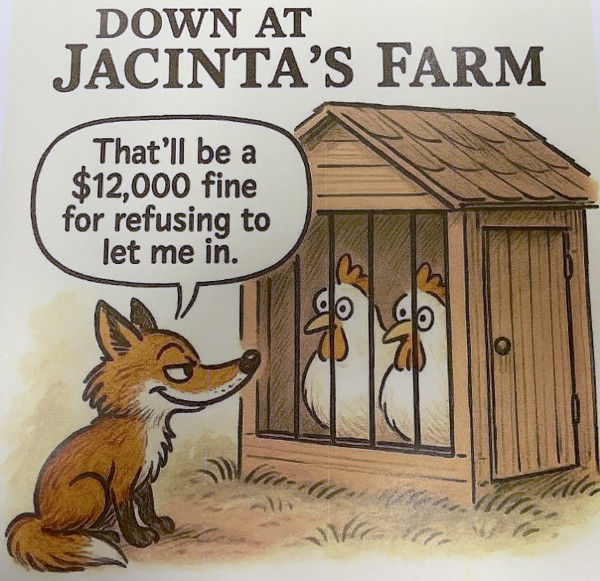
Now, many are being hit with steep council rate hikes and the looming threat of a new emergency services levy which risks compounding the burden on farming communities already at breaking point.

Recently the VFF team crunched the figures and revealed the five biggest council offenders when it comes to local rates, and the outcome was startling.

Many local councils are flaunting the Victorian Government’s local government rate capping policy and hanging farmers out to dry.

We won’t stand idle and watch the burden of funding key services rely more and more on the agricultural sector.

From rates to the fundamentally wrong Emergency Services and Volunteers Fund, farmers are wondering when the financial hits will stop.

Some farmers face increases in the tens of thousands of dollars with the ESVF and now have surging rates on top of it.

We’ve won a reprieve with the fire services levy increases paused, but it’s still looming large, and this rate rort is another kick in the guts.

To put it in context, farmers in the Surf Coast Shire are facing a huge 15.93 per cent rise to their rates.

When you consider the potential costs imposed by the looming ESVF, an extra $1 million would be extracted from local farmers just in that area.

Put simply, it’s not sustainable and we can’t sit back and watch it happen.

When you’ve got one group of taxpayers in some cases facing double-digit rate increases and little to no increase for others in the same area, there can be no doubt the system is flawed.

We’ve long argued for the Victorian Government to require councils to apply the rate cap to each class of land to stop this mess.

The fundamental principle should be that as the value of farmland increases; the differential rate is adjusted to reduce the rate in the dollar so that the rate burden paid by the farm sector remains stable.

This approach has been applied with great effect in the Ararat Rural City Council and every single council in the state must do the same.

When you look at the issues facing farmers from a wide angle, it’s no wonder why many regional Victorians are furious.

Farmers aren’t asking for special treatment, rather fairness.

The reality is farms use fewer council services than their urban counterparts yet are being charged many times more in rates.

This fundamental inequity in the local government funding system needs urgent reform.

Once again, the ball is in the court of the Victorian Government, and we will be making sure farmers voices continue to be heard.

The five worst performing councils are listed below:

Local Government          Change in average farm rates assessment (%)     Change in average residential rates assessment (%)

Surf Coast Shire     15.93 1.09

Macedon Ranges Shire 14.78 2.49

Melton City Council 13.94 -3.36

Mitchell Shire (40-100 ha farmland) 8.62 1.60

Mornington Peninsula Shire 6.14 3.66

Digital Editions


  • Almond boss resigns

    Almond boss resigns

    ALMOND giant Select Harvests is on the hunt for a new boss after shock news its chief executive is stepping down. Chief executive and managing…

More News

  • Dog’s Day Out arrives in the Mallee

    Dog’s Day Out arrives in the Mallee

    THE iconic spluttering rumble of Lanz Bulldog Tractors is set to roar across Swan Hill and Woorinen next month, when the Mallee Steam, Oil and Machinery Club hosts Dog’s Day…

  • Perfect storm for grape industry

    Perfect storm for grape industry

    This year is certainly testing ones resolve, excessive heat, high water costs, record low grape prices, 170mm of rain at the wrong time and now the fuel issue. After eventually…

  • Holding on to their heritage

    Holding on to their heritage

    Purchase this photo from Pic Store: 531373 TRADITIONAL family farms, passed down from generation to generation, are becoming rarer and rarer these days. With the growth in corporate farming, greater…

  • Wet weather halts harvest

    Wet weather halts harvest

    It’s been an eventful start to harvest for the almond industry. Like all of agriculture in the region, Mother Nature and geo-political tensions have played a hand in providing extra…

  • Royal Commission push back

    Royal Commission push back

    A FIERY clash in Federal Parliament has reignited the bitter fight over the future of the Murray-Darling Basin, with the federal environment minister rejecting claims the government is “destroying family…

  • Call for royal commission into water welcomed by irrigators

    Call for royal commission into water welcomed by irrigators

    FARMING communities have backed a call for a federal Royal Commission into water, saying it is time to expose the “treachery, lies and shonky deals” behind the Murray-Darling Basin Plan.…

  • Nationals push to protect prime farmland with new federal Bill

    Nationals push to protect prime farmland with new federal Bill

    THE Nationals have moved to block taxpayer funding for energy and mining projects on Australia’s best farming land, unveiling a new Bill they say is vital to protect the nation’s…

  • Sally returns from Japanese adventure

    Sally returns from Japanese adventure

    I am pretty excited for this week , actually just tomorrow evening specifically when Sally returns from her first globe trotting adventure. Flying in from Osaka Japan, she’s been on…

  • CWA brings life skills program to the Mallee

    CWA brings life skills program to the Mallee

    Purchase this photo from Pic Store: 539453 A SURGE of community spirit swept through the Mallee when Country Women’s Association of Victoria president Jenny Nola attended the Murray Valley Conference…

  • Basin leaders meet as water plan review looms

    Basin leaders meet as water plan review looms

    NEARLY 200 leaders from across the Murray-Darling Basin gathered in Brisbane last week to debate the future of water management, with northern Victorian councils warning food production and regional communities…