MALLEE Sustainable Farming has been funded for a project to promote action to optimise or increase soil carbon in southwest NSW.
Soil carbon is a hot topic in agriculture, but what does it really mean for farmers in low-rainfall areas such as these?
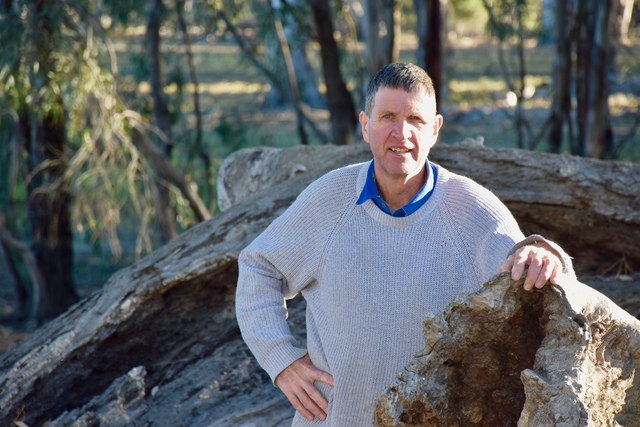
Well according to MSF’s ag researcher Nick Paltridge, who facilitated a recent webinar taking a close look at what soil carbon looks like in our Mallee region, and the goals producers should have in managing it, there are many challenges to achieving stable, long-term carbon sequestration in Mallee soils.
He was joined on the webinar panel by Dr Karl Anderson of NSW Department of Primary Industries and Dr Amanda Schapel from SA Department of Primary Industries and Regions and said the following were some key themes from the webinar:
Soil Organic Carbon (SOC) is naturally low in Mallee soils;
SOC is critical for soil health, contributing to nutrient cycling, water retention, and overall soil structure.
In the southwest of NSW, there are two main reasons why SOC levels are relatively low (<1 per cent):
Low rainfall conditions mean less plant growth, so there are less carbon inputs to the system;
Soils are generally sandy with minimal clay content, meaning less protection for soil carbon, and its more rapid breakdown.
MINIMISE CARBON LOSSES
The first and most realistic goal in carbon management in Mallee soils is actually to minimise carbon loss.
When paddocks suffer wind erosion, a lot of what blows away is organic matter.
Maintaining as much ground cover as possible within the farming system to reduce erosion losses is one of the most important things a land manager can do – so no-till seeding, and avoiding overgrazing, are two essentials for good carbon management.
MAXIMISE BIOMASS PRODUCTION
Maximising biomass production is not only profitable, but also improves carbon inputs to the soil – any agronomic strategies that boost crop and pasture production are good for soil carbon, too.
This can include optimised nutrition (conventional or organic amendments) but also actions like deep ripping to improve rooting depth and liming to manage acidity.
In sandy soils, most of the extra biomass is quickly broken down, supplying nutrients to the next crop.
Incorporation of clay into soils by delving, deep tillage or clay spreading can boost plant performance as well as the ability of soil to store organic matter.
REALISTIC GOALS FOR CARBON MANAGEMENT IN THE MALLEE
While methods have been developed to monitor soil carbon levels in agricultural soils, most registered projects are in higher rainfall zones, on soils with reasonable clay content, and involve perennial pastures and rotational grazing.
There is little evidence registering soil carbon projects in the Mallee makes economic sense, particularly once the costs of registration, baselining and reporting are taken into account – if anyone knows of a project successfully building soil carbon in the Mallee, MSF would love to hear about it.
On most Mallee farms, optimised soil carbon management is going to be less about soil carbon sequestration, and more about protecting the carbon you’ve got, and maximising biomass production, soil health and nutrient cycling.
Maximising yield per unit of input often reduces your emissions intensity (greenhouse gas emissions per kg of product), which is a win for the environment.
Additional methods may also be developed that make soil carbon sequestration more feasible in the Mallee in future.
Mr Paltridge said when people talked about carbon emissions in agriculture, it was important to consider not just carbon stocks, but also emissions intensity – the volume of emissions per unit of production.
“You can use freely available greenhouse accounting tools to work out what your emissions are from your inputs and farming activities, and you enter your production details, and the tools then calculate what total emissions are and your emissions per unit of product,” Mr Paltridge said.
“But with soil carbon, it’s a stock that is hard to measure, and it fluctuates depending on season.
“We did with soils ameliorated 10 or 12 years ago in the South Australian Mallee, which showed greatly improved productivity.
“In a couple of the sites we did see a likely increase in soil carbon, but in others it didn’t change, and at one site it went down, not up.
“However we do know that if you till the soil, have low ground cover and/or overgraze it can lead to a loss of carbon from the soil.
“I think one of the other key message participants took home with them was a deeper appreciation of the difficulties of increasing soil carbon.
“It may be that a more realistic goal at this stage is minimise carbon losses, maximise production per unit of inputs, and farm as efficiently as possible to reduce emissions intensity.”