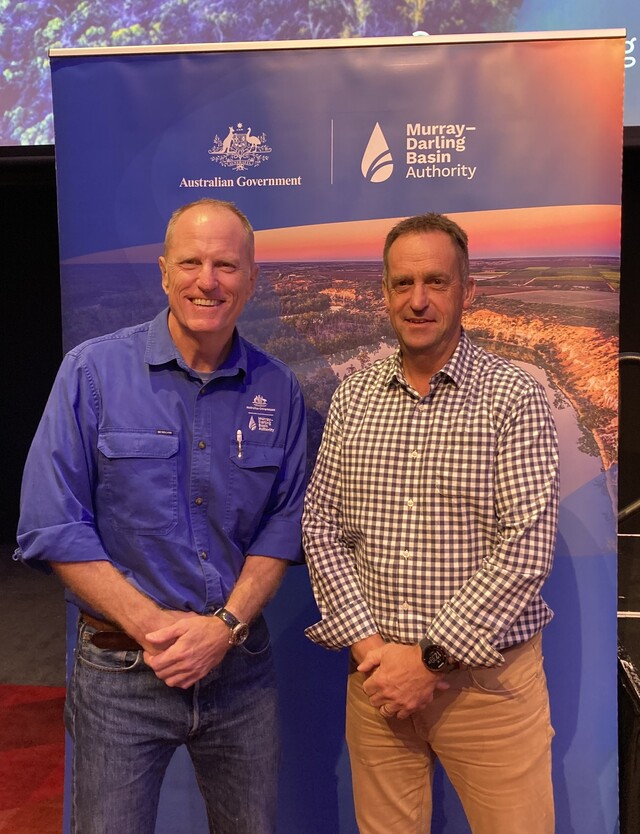
MILDURA-based Mallee Sustainable Farming has turned north of the Murray to help grain growers explore and better understand residual-based herbicides.
MSF managing director Jenny Garonne said the project Optimising Weed Management Efficiency: Exploring Residual-Based Herbicides for Summer Fallow, funded through Grains Research and Development Corporation, will be run across two sites at Wentworth.
“Innovative project will look at products such as the herbicide Overwatch, applied as a pre-emergent to aid with summer weed management,” Ms Garonne said.
She also said the end goal is to provide farmers with effective tools to control weeds during the challenging summer months.
“If we can achieve that, and give them a better entrée to the growing season, ultimately they will be improving both crop yields and sustainability,” Ms Garonne said.
“With very few exceptions, the SA/Victorian/NSW Mallee region has experienced an exceptionally dry summer and autumn, receiving very minimal rainfall since January’s storm activity.
“This prolonged dry spell has significantly impacted summer weed management plans, prompting farmers and agronomists to reassess their strategies.
“The spring of 2023 saw average to below-average rainfall in many areas.
“However, the brief rain in January, combined with generally mild to warm temperatures, created short-lived ideal conditions for weed germination, including new weeds and mature ones such as fleabane, which had germinated in late winter/early spring.”
Given these challenging conditions, Ms Garonne said effective weed management requires a strategic and adaptable approach.
She said it is crucial to balance the benefits and drawbacks of different weed control methods to optimise outcomes and ensure sustainability.
“In all projects you have to assess the pros and cons to make sure all your stakeholders are getting the biggest bang for their bucks,” Ms Garonne said.
“Understanding the behaviour and breakdown of herbicides during summer is crucial for effective weed management.
“In dry conditions, herbicides may persist longer on the soil surface, potentially affecting subsequent crops.”
Ms Garonne said effective weed management is a complex process, involving various strategies, to achieve the best possible outcome.
“The principles of integrated weed management (IWM) are increasingly being adopted, emphasising a holistic and sustainable approach to farming,” she said.
“IWM incorporates multiple tactics to manage weeds effectively while ensuring the long-term productivity and sustainability of agricultural systems.
“MSF plays a vital role in connecting research, extension, and farmers and promotes economically viable, socially responsible, and environmentally sustainable agriculture.
“By leveraging our expertise and support, farmers can work towards a more prosperous and resilient future in agriculture.”
Residual-based herbicides
Benefits:
· Soil moisture conservation: Effective weed control helps conserve soil moisture for the upcoming planting season.
· Weed seed control: Reducing the weed seed bank can minimise weed pressure in the future.
· Effective double knock strategy: Using a combination of herbicides to increase efficacy and manage resistance.
· Aiding seeding season: Minimises challenges with machinery by controlling large, cumbersome weeds like paddymelons.
Drawbacks:
· Soil erosion risk: Disturbed soil can lead to erosion, especially in low rainfall areas.
· Expense: Costs associated with chemicals, equipment, and labour can be significant.
· Herbicide resistance: Risk of spraying stressed or mature weeds ineffectively, contributing to resistance.
· Impact on subsequent crops: Potential residual effects of herbicides on future crops and non-target damage, especially if temperature inversions are present.
Factors to consider include:
· Degradation rates: Herbicides break down at different rates depending on temperature, moisture, and microbial activity. Dry conditions can slow down this process.
· Volatility: Some herbicides are prone to volatilisation, especially in hot and dry conditions, which can reduce their efficacy and increase the risk of non-target damage.
· Soil binding: In dry soils, certain herbicides may bind more tightly to soil particles, reducing their availability for weed control.
Spraying mature, stressed, and dust-covered weeds also presents growers with several challenges:
· Reduced efficacy: Stressed weeds may not absorb herbicides effectively, reducing the overall efficacy of the treatment.
· Dust interference: Dust on weed surfaces can act as a barrier, preventing herbicides from making proper contact with the plants.
· Herbicide resistance: Ineffective spraying can contribute to the development of herbicide-resistant weed populations, complicating future management efforts.