AFI releases carbon farming evaluation tool

ONE of the country’s foremost agricultural research organisations has developed an innovative online decision tool to help farmers make an informed choice about whether to take up carbon farming.

Australian Farm Institute executive director Richard Heath says as options to engage in new carbon markets have grown, a “confusopoly” has developed, as many primary producers are unsure if the perceived cost of participation is higher than the return.

Which is why AFI came up with the decision tool, he said.

“In speaking at a lot of events and to lots of farmers, the clear message that we get is confusion about the number of carbon opportunities being presented and farmers’ ability to weigh them up against each other,” Mr Heath said.

“That has been complicated by the speed of evolution of policy in this area that can very rapidly make an opportunity more or less attractive, which then affects investment, the requirements of the project and a range of other factors.

“It’s just such a fluid environment when they need clear and concise information about what the real opportunities are.”

In response, AFI interviewed stakeholders across the carbon landscape, from banks, academics and regulators to primary producers, farm advisors and peak bodies.

“The primary objective of this project was to create a decision tool to help producers decide what, if any, is the best opportunity for a particular farm business in relation to carbon,” Mr Heath said.

The result is the Carbon Opportunity Decision Support Tool, which guides users through a series of questions to identify a project best suited to their business, risk appetite and personality.

Along the way there are links to stories about farmers who’ve put the various methods into practice, contacts for advisors and experts, and helpful resources such as AgriFutures Australia’s A Farmer’s Handbook to On-Farm Carbon Management.

“There’s a lot of evidence that the success of a business model really depends on the alignment of skills and personality with the business model,” Mr Heath said.

“We wanted to make sure that the particular path you ended up going down was aligned to those characteristics.”

Mr Heath said one of the most important outcomes for primary producers in carbon farming was not the carbon credits they could create but the productivity gains that could be achieved.

“It’s actually the primary benefit, and that’s what we want to make clear,” he said.

“There’s quite a deal of research now that shows very clearly the economic benefit is far greater in terms of productivity improvement than you might make from the potential alternative revenue stream from sequestering carbon.

“It gives you a more resilient farming system, better yields, more water retention — all of those agronomic factors that lead to greater productivity and profitability.”

AFI plans to continually improve and refresh the CODST to ensure it keeps pace with new technology and the changing regulatory environment and is exploring its potential for use in other emerging opportunities, such as biodiversity credits.

Digital Editions


  • Almond boss resigns

    Almond boss resigns

    ALMOND giant Select Harvests is on the hunt for a new boss after shock news its chief executive is stepping down. Chief executive and managing…

More News

  • Dog’s Day Out arrives in the Mallee

    Dog’s Day Out arrives in the Mallee

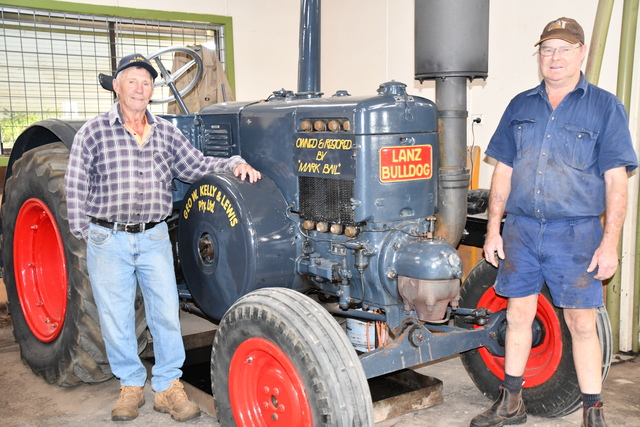
    THE iconic spluttering rumble of Lanz Bulldog Tractors is set to roar across Swan Hill and Woorinen next month, when the Mallee Steam, Oil and Machinery Club hosts Dog’s Day…

  • Perfect storm for grape industry

    Perfect storm for grape industry

    This year is certainly testing ones resolve, excessive heat, high water costs, record low grape prices, 170mm of rain at the wrong time and now the fuel issue. After eventually…

  • Holding on to their heritage

    Holding on to their heritage

    Purchase this photo from Pic Store: 531373 TRADITIONAL family farms, passed down from generation to generation, are becoming rarer and rarer these days. With the growth in corporate farming, greater…

  • Wet weather halts harvest

    Wet weather halts harvest

    It’s been an eventful start to harvest for the almond industry. Like all of agriculture in the region, Mother Nature and geo-political tensions have played a hand in providing extra…

  • Royal Commission push back

    Royal Commission push back

    A FIERY clash in Federal Parliament has reignited the bitter fight over the future of the Murray-Darling Basin, with the federal environment minister rejecting claims the government is “destroying family…

  • Call for royal commission into water welcomed by irrigators

    Call for royal commission into water welcomed by irrigators

    FARMING communities have backed a call for a federal Royal Commission into water, saying it is time to expose the “treachery, lies and shonky deals” behind the Murray-Darling Basin Plan.…

  • Nationals push to protect prime farmland with new federal Bill

    Nationals push to protect prime farmland with new federal Bill

    THE Nationals have moved to block taxpayer funding for energy and mining projects on Australia’s best farming land, unveiling a new Bill they say is vital to protect the nation’s…

  • Sally returns from Japanese adventure

    Sally returns from Japanese adventure

    I am pretty excited for this week , actually just tomorrow evening specifically when Sally returns from her first globe trotting adventure. Flying in from Osaka Japan, she’s been on…

  • CWA brings life skills program to the Mallee

    CWA brings life skills program to the Mallee

    Purchase this photo from Pic Store: 539453 A SURGE of community spirit swept through the Mallee when Country Women’s Association of Victoria president Jenny Nola attended the Murray Valley Conference…

  • Basin leaders meet as water plan review looms

    Basin leaders meet as water plan review looms

    NEARLY 200 leaders from across the Murray-Darling Basin gathered in Brisbane last week to debate the future of water management, with northern Victorian councils warning food production and regional communities…