The same team that first used indoor LED lights to reduce generation times within a number of crop breeding programs has now successfully achieved another important milestone, with important benefits to legume growers.
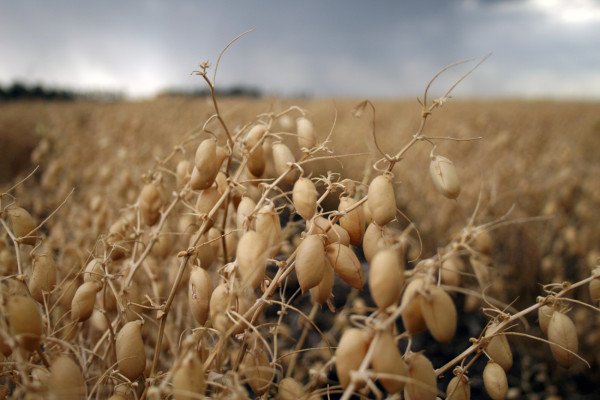
In a novel application of this pioneering accelerated-Single Seed Descent (aSSD) technology, the Grains Research and Development Corporation says the gene pool of domesticated chickpeas was successfully diversified using genetics sourced from the wild chickpea species, Cicer echinospermum.
A population of 800 inbred chickpea lines with enhanced genetic diversity are now publicly available at the Australian Grains Genebank (AGG) as a result of GRDC investment.
The project overcame the main obstacle holding back both chickpea breeding and the crop’s wider adoption across different growing zones: namely, chickpea’s overly narrow gene pool that has limited the crop’s environmental adaptiveness and its resilience.
Accelerated breeding
Researcher Dr Janine Croser explains that aSSD is a complete plant growth system developed by her team at the University of Western Australia (UWA) in which duration of exposure to light and the light’s wavelength is managed in ways that induces plants to flower and mature sooner than normal.
The system includes methods to germinate immature seed directly in soil, the ability to miniaturise plant size plus protocols to optimise growing conditions (including stringent hygiene standards) that result in low plant loss across generations. The platform can process large numbers of breeding lines in a small, controlled-environment space through the use of multi-shelf racks each with their own LED lights.
“At its most effective, the aSSD platform can be used to process up to seven generations in one year, with adaptions available for different cool season legume crops and pastures,” Dr Croser says.
Since its development, the platform was successfully incorporated into the chickpea, faba bean, lentil and field pea breeding programs.
“In all, about 50,000 legume genotypes have been processed through the aSSD facility on behalf of Plant Breeding Australia and Chickpea Breeding Australia (CBA) breeding programs,” Dr Croser says.
Advanced aSSD-derived lines are being assessed for a number of agronomically important traits with potentially high impacts on crop productivity.
One striking example was the use of the aSSD platform as a component in a multi-institutional accelerated breeding pipeline that incorporated mutation breeding, conventional crossing, marker assisted selection and advanced statistical modelling to achieve a three-year saving in the development of a novel imidazolinone-tolerant chickpea variety.
Other traits accelerated to farmgate using aSSD include early vigour, disease resistance, pod shatter and improved plant architecture. The aSSD platform has also been tapped to develop mapping populations across the cool season legumes for gene discovery work, including salinity tolerance, vigour and cyst nematode tolerance in chickpeas and Ascochyta lentis resistance in lentils.
Accessing wild genetics
A second round of GRDC investment has since opened up a new application for aSSD technology. Dr Croser’s team worked in partnership with UWA’s Dr Judith Lichtenzveig, Dr Maria Pazos-Navarro and Ms Simone Wells to successfully recruit novel genetics from wild relatives of chickpeas and diversify the gene pool available to breeders.
This breakthrough was achieved within a pre-breeding program that generated hybrids between elite cultivars and wild C. echinospermum material collected internationally through a GRDC investment led by the CSIRO. The aSSD platform was then used to process the hybrid material into genetically stable and fertile in-bred lines suitable for use in trait discovery work.
Given the chromosomal differences between domesticated and wild chickpeas, the first-generation hybrids produced fertility challenges.
Dr Lichtenzveig says that practical details of growing the wild material had to be resolved – issues relating to seed shattering, plants not growing upright and flowering time differences.
“Once we had those issues resolved, the whole pre-breeding process under the LED lights proved extremely routine and reliable,” Dr Lichtenzveig says. “We were able to bring the domesticated and wild plants together and make the crosses entirely within the aSSD platform.”
In the process, Dr Lichtenzveig got a close-up look at the fertility barriers that prevent a free-flowing exchange (or recombination) of chromosomal material between domesticated and wild genomes. She is now keen to apply the learnings by restarting crosses between the hybrid population to capture even more genetic diversity.
“The efficacy of the aSSD platform means we can look to better overcome hybrid infertility and capture up to 96 per cent of the genetic diversity of the wild species with a series of back crosses that will only take one year to complete,” Dr Lichtenzveig says. “Those timeframes mean that achieving meaningful breakthroughs is possible within the timeframe of one PhD project.”
Phenotyping the new population
The new chickpea population with its enhanced genetic diversity is also being typed at the level of crop performance traits, both by the UWA team and CBA breeding program.
Already the aSSD-derived domestic-wild hybrid populations contain numerous trait characteristic with likely important applications. Breeders are finding that these desirable traits are, indeed, mapping to the newly imported DNA from the wild parent.
Of special interest to Dr Croser and Dr Lichtenzveig is typing the population in order to match chickpea performance given early sowing practices within Western Australian soil types and to a depth of 25 centimetres (to survive dry growing conditions). There are also phenological traits, such as plant height and flowering time, that are being looked at in order to optimise the number of pods set by new germplasm.
The effect of temperature is also a key concern, with the wild genetics already delivering material with greater chilling tolerance compared to the parent lines in cold chamber studies. A proposal is now being floated to follow up testing in the field.
“What we want to deliver to breeders are plants that are crop-like in architecture and phenology but contain novel genetics that are demonstrably useful for improving crop performance,” Dr Lichtenzveig says.“However, because we are also facing a climate uncertain future, we also want to prepare a bank of genetically diverse material that can be used for unspecified needs in the future.”
More information: Janine Croser is now based at the South Australian Research and Development Institute, janine.croser@sa.gov.au; Judith Lichtenzveig, Judith.lichtenzveig@uwa.edu.au