Project compares trail feeding vs self-feeders for lambing ewes

Local sheep producers wanting to know more about the impact of supplementary feeding on ewe behaviour and lamb survival have the chance to join an AWI co-funded project comparing the effects of using trail feeding or self-feeders during lambing.

The project’s results will be used to create supplementary feeding guidelines for sheep producers to optimise lamb marking rates.

Supplementary feeding is often required to meet the nutritional demands of ewes lambing in autumn and when feed-on-offer (FOO) is limited during winter or early spring.

However, there is no industry consensus on optimal supplementary feeding strategies for lambing ewes, a fact highlighted during consultation with sheep producers who are actively seeking advice on the matter.

“A survey of producers in southern Australia showed that 92 per cent of them believe further research is warranted into the best supplementary feeding regimes to optimise lamb survival,” says the AWI reproduction and nutrition project manager Emmah Goldsmith.

“The overall project is evaluating strategies for supplementary feeding at lambing via trail feeding, and self-feeders, and aims to quantify the impacts on lamb survival to marking on commercial farms across southern Australia,” Emmah says.

“It will also assess changes in mob behaviour associated with the feeding method using sensor technology.

“The ultimate outcome from this project is to produce guidelines for sheep producers to increase lamb marking rates.”

A significant proportion of producers in southern Australia lamb ewes onto dry feed in autumn. Increasing climate variability also means a greater number of producers may have dry or limited green feed available when lambing in winter or even early spring.

Anecdotal evidence has suggested that supplementary feeding ewes at lambing may cause them to abandon their lambs which could reduce lamb survival. However, there is conflicting opinion as to whether trail feeding or the use of self-feeders is more favourable for lamb survival.

Dr Amy Lockwood of Murdoch University says the project’s research sites are being located in both the medium to high and the low rainfall zones to capture variation in environmental and management conditions, including the size of lambing paddocks in which ewes are being supplementary fed.

“At least 24 on-farm research sites will be established across Australia during the project,” she says.

“We have so far completed work for our first trial at 10 research sites and are currently seeking more sheep producers across southern Australia to host the trial on their farms. We’re keen to hear from anyone that’s interested in being involved.”

The research team is seeking Victorian sheep producers who pregnancy scan at least 300 single-bearing ewes and 160 twin-bearing ewes.

Interested producers can get in touch with Steve Cotton at s.cotton@dynamicag.com.au or phone 0447 352 321.

Digital Editions


  • Almond boss resigns

    Almond boss resigns

    ALMOND giant Select Harvests is on the hunt for a new boss after shock news its chief executive is stepping down. Chief executive and managing…

More News

  • Dog’s Day Out arrives in the Mallee

    Dog’s Day Out arrives in the Mallee

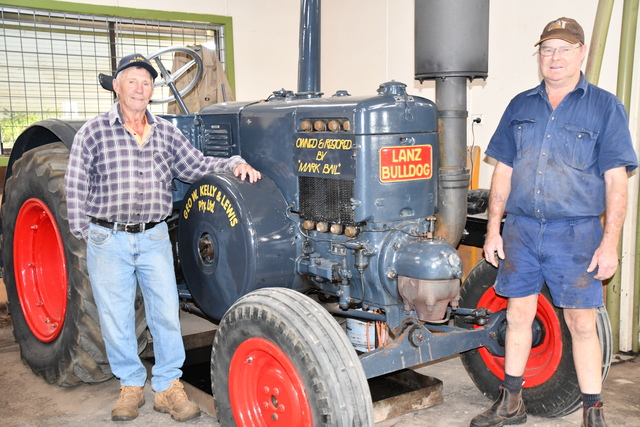
    THE iconic spluttering rumble of Lanz Bulldog Tractors is set to roar across Swan Hill and Woorinen next month, when the Mallee Steam, Oil and Machinery Club hosts Dog’s Day…

  • Perfect storm for grape industry

    Perfect storm for grape industry

    This year is certainly testing ones resolve, excessive heat, high water costs, record low grape prices, 170mm of rain at the wrong time and now the fuel issue. After eventually…

  • Holding on to their heritage

    Holding on to their heritage

    Purchase this photo from Pic Store: 531373 TRADITIONAL family farms, passed down from generation to generation, are becoming rarer and rarer these days. With the growth in corporate farming, greater…

  • Wet weather halts harvest

    Wet weather halts harvest

    It’s been an eventful start to harvest for the almond industry. Like all of agriculture in the region, Mother Nature and geo-political tensions have played a hand in providing extra…

  • Royal Commission push back

    Royal Commission push back

    A FIERY clash in Federal Parliament has reignited the bitter fight over the future of the Murray-Darling Basin, with the federal environment minister rejecting claims the government is “destroying family…

  • Call for royal commission into water welcomed by irrigators

    Call for royal commission into water welcomed by irrigators

    FARMING communities have backed a call for a federal Royal Commission into water, saying it is time to expose the “treachery, lies and shonky deals” behind the Murray-Darling Basin Plan.…

  • Nationals push to protect prime farmland with new federal Bill

    Nationals push to protect prime farmland with new federal Bill

    THE Nationals have moved to block taxpayer funding for energy and mining projects on Australia’s best farming land, unveiling a new Bill they say is vital to protect the nation’s…

  • Sally returns from Japanese adventure

    Sally returns from Japanese adventure

    I am pretty excited for this week , actually just tomorrow evening specifically when Sally returns from her first globe trotting adventure. Flying in from Osaka Japan, she’s been on…

  • CWA brings life skills program to the Mallee

    CWA brings life skills program to the Mallee

    Purchase this photo from Pic Store: 539453 A SURGE of community spirit swept through the Mallee when Country Women’s Association of Victoria president Jenny Nola attended the Murray Valley Conference…

  • Basin leaders meet as water plan review looms

    Basin leaders meet as water plan review looms

    NEARLY 200 leaders from across the Murray-Darling Basin gathered in Brisbane last week to debate the future of water management, with northern Victorian councils warning food production and regional communities…