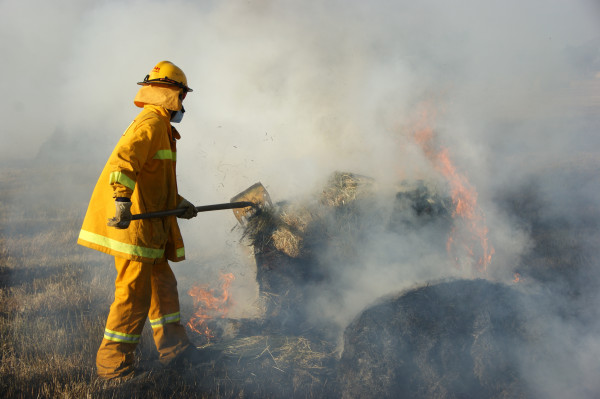
FIre risk alert over wet hay

FARMERS in the western and northern parts of the state are reminded of the dangers of high moisture content in hay as they begin cutting, baling and storing it to beat the persistent rain.

Large areas of Victoria have experienced heavy rainfall in recent weeks, and some communities have seen major flooding, which will have an impact on the moisture levels of crops and fodder.

These wet conditions present a risk for farmers trying to prepare their hay while the sun shines to beat the next bout of predicted rainfall.

If hay producers do not allow adequate time for grass and crops to dry out before baling, it can present a high risk for spontaneous combustion.

If hay has not properly dried out or has been exposed to rain or damp conditions, the moisture content in the bales may be higher than the recommended levels, leading to elevated risk of haystack fires.

It is also important to consider the storage of hay, as significant rain to exposed haystacks are at risk from spontaneous ignition.

This can be better managed by storing undercover or using hay caps or tarps to restrict rain getting into bales.

CFA chief officer Jason Heffernan said if hay is baled with high moisture content, it can heat up like compost, which can lead to spontaneous combustion weeks or months later.

“Farmers who have decided to carry on with hay production need to be extra vigilant this year to make sure condition are right for making hay and for the future storage and transport of the product as well,” he said.

“Hay fires are a real threat to properties and stock in farmland areas.

“Whether you’re a seasoned hay grower or switching to hay this year, it’s really important to take care of your hay and crops this fire season.”

CFA responded to almost 50 haystack related fires between July 1, 2021 and June 30, 2022.

Haystack fires can also start easily from lightning strikes or sparks from equipment.

“You should regularly monitor your haystacks by using a temperature probe or a crowbar to detect heating hay,” Mr Heffernan said.

Signs of heating hay can include steam rising from the stack or unusual odours like burning, must, pipe tobacco smell or a caramel smell.*breaout*

Haystack Tips

• Ensure hay is well cured before baling

Know the history of the hay you purchase

• Keep haystacks to a limited size and separate your haystacks

• Monitor moisture and temperature of your hay regularly

• Watch for unusual odours such as pipe tobacco, caramel, burning or musty smells.

• Store hay in separate stacks or sheds away from farm equipment and other buildings.

• Keep your hay dry. Protect it from rain, leaking rooves or spouts, and runoff. Cover stacks with tarps or hay caps.

• Don’t stack hay right to the top of a hay shed. Allow some air to circulate at the top – this helps to carry away moisture

Digital Editions


  • Dog’s Day Out arrives in the Mallee

    Dog’s Day Out arrives in the Mallee

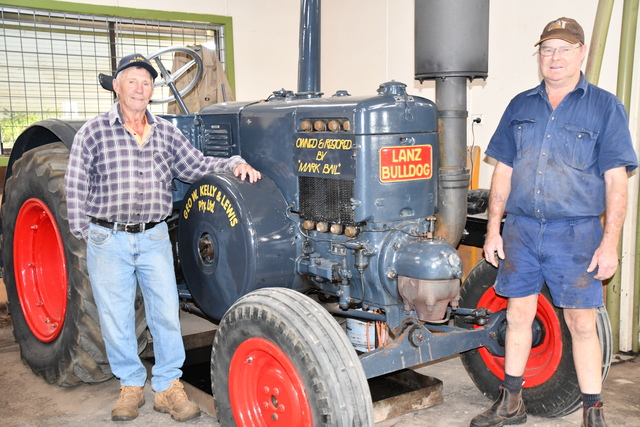
    THE iconic spluttering rumble of Lanz Bulldog Tractors is set to roar across Swan Hill and Woorinen next month, when the Mallee Steam, Oil and…

More News

  • Royal Commission push back

    Royal Commission push back

    A FIERY clash in Federal Parliament has reignited the bitter fight over the future of the Murray-Darling Basin, with the federal environment minister rejecting claims the government is “destroying family…

  • Call for royal commission into water welcomed by irrigators

    Call for royal commission into water welcomed by irrigators

    FARMING communities have backed a call for a federal Royal Commission into water, saying it is time to expose the “treachery, lies and shonky deals” behind the Murray-Darling Basin Plan.…

  • Nationals push to protect prime farmland with new federal Bill

    Nationals push to protect prime farmland with new federal Bill

    THE Nationals have moved to block taxpayer funding for energy and mining projects on Australia’s best farming land, unveiling a new Bill they say is vital to protect the nation’s…

  • Sally returns from Japanese adventure

    Sally returns from Japanese adventure

    I am pretty excited for this week , actually just tomorrow evening specifically when Sally returns from her first globe trotting adventure. Flying in from Osaka Japan, she’s been on…

  • CWA brings life skills program to the Mallee

    CWA brings life skills program to the Mallee

    Purchase this photo from Pic Store: 539453 A SURGE of community spirit swept through the Mallee when Country Women’s Association of Victoria president Jenny Nola attended the Murray Valley Conference…

  • Basin leaders meet as water plan review looms

    Basin leaders meet as water plan review looms

    NEARLY 200 leaders from across the Murray-Darling Basin gathered in Brisbane last week to debate the future of water management, with northern Victorian councils warning food production and regional communities…

  • Nationals push to protect prime farmland with new federal Bill

    Nationals push to protect prime farmland with new federal Bill

    THE Nationals have moved to block taxpayer funding for energy and mining projects on Australia’s best farming land, unveiling a new Bill they say is vital to protect the nation’s…

  • Fuel supply critical for farms

    Fuel supply critical for farms

    CITY dwellers are being urged to swap their cars for public transport and the government to make public transport free as the fuel crisis lingers. Victorian Farmers Federation president Brett…

  • Jujubes jewel

    Jujubes jewel

    Purchase this photo from Pic Store: 535568 THEY look like tiny apples, taste like a crisp pear and carry more vitamin C than an orange. And in the red dirt…

  • Independent actionable research

    Independent actionable research

    MAKING informed winter cropping decisions – based on detailed local research – is what is driving the 2026 Irrigation Farmers Network (IFN) Winter Variety Trials Research Results Discussion Day in…