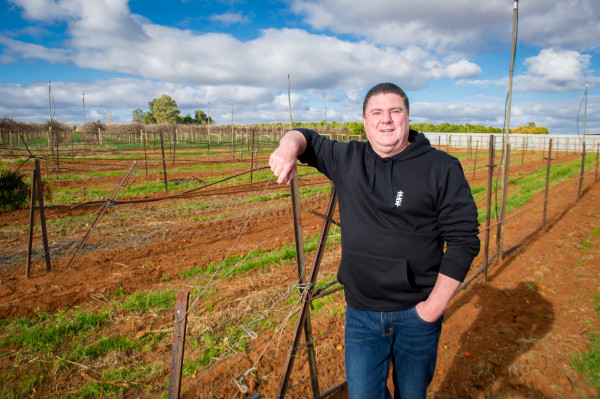
If Anthony Marciano has any say in it, the Mildura area could become the industrial hemp capital of Victoria, if not the country.
As far as he is concerned, opportunities are limitless for this truly remarkable plant, and he is going flat out to establish the Mallee Hemp Growers Co-operative to drive the fledgling industry.
Traditionally industrial hemp has been used in items such as textiles, paper, rope, fuel, oil and stockfeed, with more recent applications including composite building materials, oil and chemical absorption materials, animal bedding, kitty litter, and motor vehicle parts.
Hemp oil is also extracted from the seed, and has been used for cosmetics, paints, printing inks, solvents and animal feed.
But Anthony has come up with even more options, including insulation, hempcrete, weed suppression mats – and beer.
Plus he sees options for hemp seed as the latest superfood thanks to its outstanding properties. Each one contains about 30 per cent plant protein with the essential alphabet of amino acids, is high in polyunsaturated fats, including the plant omega-3 fatty acid alpha-linoleic acid and omega-6 fatty acid linoleic acid, are 5 per cent fibre and contain vitamin E, B-group vitamins such as folate and thiamine, along with minerals including phosphorus, potassium, magnesium, and iron.
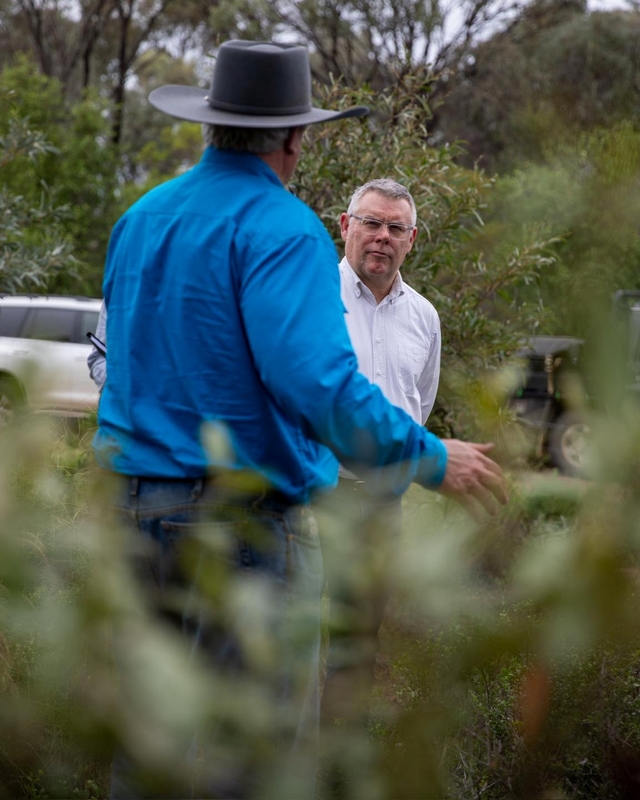
“I’ve set up a Facebook page and am also pushing the co-op concept,” Anthony said. “There has been a lot of genuine interest from a lot of growers – and we have six signed up for trial plantings in Mildura, Irymple and Red Cliffs plus another four which are stations outside Wentworth.
“They are sites from 1ha to 10ha which should give us a good idea of soils and climate and how well the hemp will perform there. We expect that to be pretty good as the plants have performed best on fertile, neutral to slightly alkaline, well drained, clay loam or silt loam soils.”
Anthony says some of the most important questions he is being asked by growers are how much hemp could be worth to them, and its cost of production.
He says some established growers have reached 15 tonnes per hectare, but with the right growing conditions believes that could soon top 20 tonnes.
“The real magic to hemp is the speed with which it grows – we will easily do two crops a year and at 20 tonnes per hectare I reckon you could net $5000 per hectare – twice a year – after covering costs,” Anthony said.
“At the same time, having a co-op would also mean significant savings on seed – as an individual grower you could be paying $15 a kilogram but in a group purchase we could get that down to around $8, so the more that get on board, the cheaper it will be.
“And there is demand for hemp – the building industry is crying out for it; they would take 5000ha right now. They have to import at the moment and they’d really prefer to use a product made in Australia.”
Anthony said Darren Christie at iHemp Victoria, has a mill in Gippsland, which he is prepared to move to Mildura if the acreage under crop justifies the decision.
Although not as tightly controlled as the poppy industry, there are still some pretty stringent rules for growing hemp, including licences, police checks and controls on the THC – tetrahydrocannabinol, the psychoactive component in cannabis sativa, which is the defining difference between hemp and marijuana. Hemp contains 0.3 per cent or less; anything higher is considered marijuana.
That in itself is a double-edged sword and will demand a tight production window in and around Mildura.
Anthony said they have already decided there will be no crop in the months of January and February.
“Because of the heat in January and February it’s not worth the hassle because the plants would get too stressed and that would cause the THC level to rise too high and the crop would be a write-off,” Anthony said.
He said the first trial will go into the ground in late August or the first few days of September and go through to harvest in December. If it all goes forward from there, the second growing season will start each March.
The three usable parts of the hemp plant are its inner fibres (called hurd), outer fibres (bast) and the seeds. Different varieties are grown for either the fibre or for seed, although there are now strong dual-purpose varieties.
The Mildura hemp industry would be organic, and you couldn’t pick a better crop when it comes to weed control and pest resistance, Anthony said.
Densely planted it is an incredibly efficient weed suppressor and won’t require any kind of herbicide, has very few pest issues and once it is about 30cm tall “it pretty well looks after itself”. It’s so good at it, there are still no registered chemicals for weed control in a growing hemp crop.
Even if there are pests present – such as heliothis or aphids – there is rarely any significant impact on productivity. Birds will try and strip the flowers of seed crops, and harvesting usually begins as soon as there are signs birds are targeting paddocks.
“We will need to keep an eye on fertigation, and probably use sea-based products to protect our organic program,” Anthony explained.
“There are so many upsides in this plant. It doesn’t require anywhere near the labour of traditional Sunraysia products and that’s really good, especially now, where there’s not too many workers around.
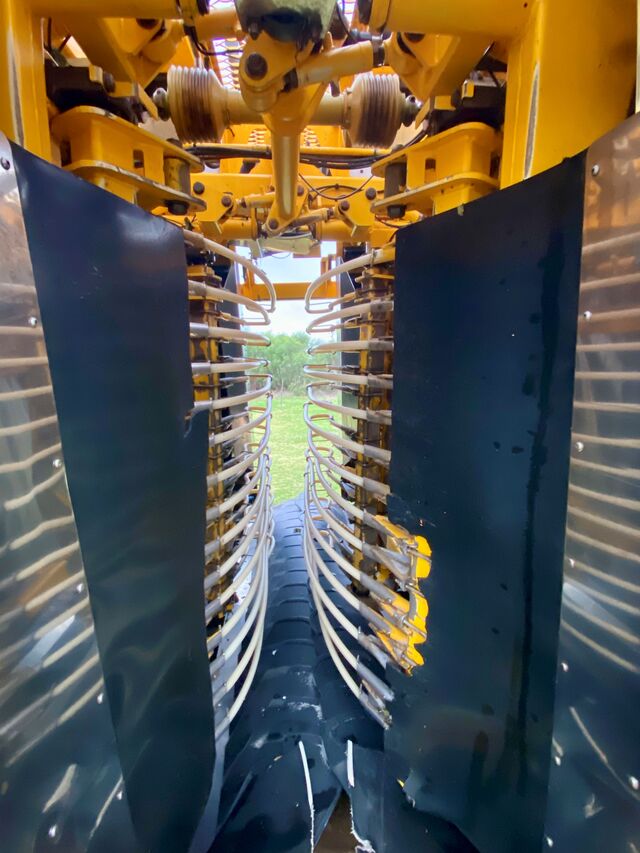
“We can also use conventional machinery, the only real change you need is stronger blades in the header because it is a pretty thick crop and grows very densely.”
And Anthony is still coming up with more uses for hemp. He has a local rockmelon grower who is prepared to trial some prototype hemp weed matting and he has even come up with a use for the roots of the hemp once it is harvested.
“It’s being used in brewing,” he said. “I’ve already had talks with some of the people who are doing it and it just contributes more to the value of the hemp industry – not only do you get to use the whole plant, basically it is also does a fantastic job as a break crop.
“Growing hemp gradually regenerates carbon-depleted soils by sequestering carbon and locking it into the soil for plants to use. After harvesting, any biomass left in the paddock is ploughed in, to further boost soil carbon and benefit future crops – show me a more complete plant to grow.”