Online tool to help prepare for climate risks

Farming communities have been dealing with drought, floods, fires and other changes in the climate for a long time.

But with extreme weather predicted to become more frequent across much of Australia, it is clear farmers need forward thinking to keep their farms, land and communities thriving.

There are lots of things farmers can do to ensure they are prepared for drought.

There are many examples of farmers who have been able to stay more productive, and recover faster, following drought because of the way they manage their land and natural resources.

On the environmental front, managing groundcover, water flow, soil carbon and moisture, and switching to alternative fodder and crops, as well as various grazing and cropping strategies are some of the options.

But the first step is making sure you’ve got the right information so you can make the right decisions. DR.SAT (which stands for Drought Resilience Self-Assessment Tool) is a free online tool now available to support farmers in better decision-making.

It’s the first of its kind, combining satellite data at a farm-level, with trustworthy farm-level climate projections, and the ability for farmers to ‘sense check’ their level of resilience and get tailored options that can help them better prepare for future drought and climate risks.

By logging on at www.drsat.com.au, you’ll be able to explore this free tool and have:

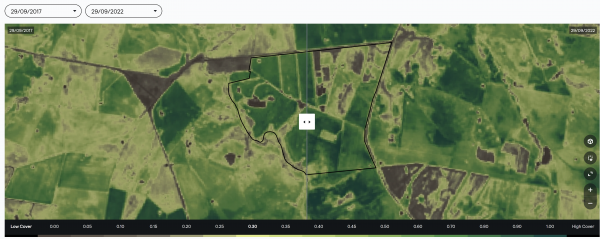
1. The ability to input details about your farm and see satellite images of historic and current condition, including ground vegetation, surface moisture and land surface temperature specific to your farm (updated roughly every six days).

2. Climate projections for your property and region for 2030 and 2050.

3. Simple questions about your land condition, financial, physical and mental wellbeing to assess your resilience, including options for the future with links to resources to support in building your resilience.

DR.SAT was developed with farmers, for farmers, and it taps into expert advice from industry bodies, farm business advisors and others.

It uses climate data from Climate Services for Agriculture (CSA) a joint initiative of the Bureau of Meteorology and the CSIRO.

Since the first release of DR.SAT in December 2021, the tool has evolved from a focus on cattle grazing and dry land cropping to now include commodities such as sheep, wool, dairy, citrus and temperate fruits.

DR.SAT can be used by all Australian farmers, but provides deeper insights in specific regions and commodities.

For sheep producers (both meat and wool) in Condamine and the Northern Tablelands of NSW, the Victorian Mallee and the WA Sheep Wheatbelt for sheep, you can get specific insights to build your environmental resilience.

This will expand to national coverage at the end of 2022.

To contribute ideas, feedback or if you have any questions about the tool, reach out to the DR.SAT Help Desk at help@drsat.com.au

More information www.drsat.com.au

Digital Editions


  • Almond boss resigns

    Almond boss resigns

    ALMOND giant Select Harvests is on the hunt for a new boss after shock news its chief executive is stepping down. Chief executive and managing…

More News

  • Dog’s Day Out arrives in the Mallee

    Dog’s Day Out arrives in the Mallee

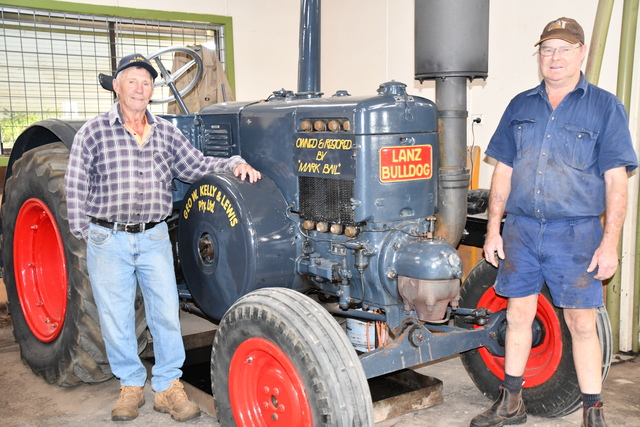
    THE iconic spluttering rumble of Lanz Bulldog Tractors is set to roar across Swan Hill and Woorinen next month, when the Mallee Steam, Oil and Machinery Club hosts Dog’s Day…

  • Perfect storm for grape industry

    Perfect storm for grape industry

    This year is certainly testing ones resolve, excessive heat, high water costs, record low grape prices, 170mm of rain at the wrong time and now the fuel issue. After eventually…

  • Holding on to their heritage

    Holding on to their heritage

    Purchase this photo from Pic Store: 531373 TRADITIONAL family farms, passed down from generation to generation, are becoming rarer and rarer these days. With the growth in corporate farming, greater…

  • Wet weather halts harvest

    Wet weather halts harvest

    It’s been an eventful start to harvest for the almond industry. Like all of agriculture in the region, Mother Nature and geo-political tensions have played a hand in providing extra…

  • Royal Commission push back

    Royal Commission push back

    A FIERY clash in Federal Parliament has reignited the bitter fight over the future of the Murray-Darling Basin, with the federal environment minister rejecting claims the government is “destroying family…

  • Call for royal commission into water welcomed by irrigators

    Call for royal commission into water welcomed by irrigators

    FARMING communities have backed a call for a federal Royal Commission into water, saying it is time to expose the “treachery, lies and shonky deals” behind the Murray-Darling Basin Plan.…

  • Nationals push to protect prime farmland with new federal Bill

    Nationals push to protect prime farmland with new federal Bill

    THE Nationals have moved to block taxpayer funding for energy and mining projects on Australia’s best farming land, unveiling a new Bill they say is vital to protect the nation’s…

  • Sally returns from Japanese adventure

    Sally returns from Japanese adventure

    I am pretty excited for this week , actually just tomorrow evening specifically when Sally returns from her first globe trotting adventure. Flying in from Osaka Japan, she’s been on…

  • CWA brings life skills program to the Mallee

    CWA brings life skills program to the Mallee

    Purchase this photo from Pic Store: 539453 A SURGE of community spirit swept through the Mallee when Country Women’s Association of Victoria president Jenny Nola attended the Murray Valley Conference…

  • Basin leaders meet as water plan review looms

    Basin leaders meet as water plan review looms

    NEARLY 200 leaders from across the Murray-Darling Basin gathered in Brisbane last week to debate the future of water management, with northern Victorian councils warning food production and regional communities…