Council needs to strategically review its whole future direction

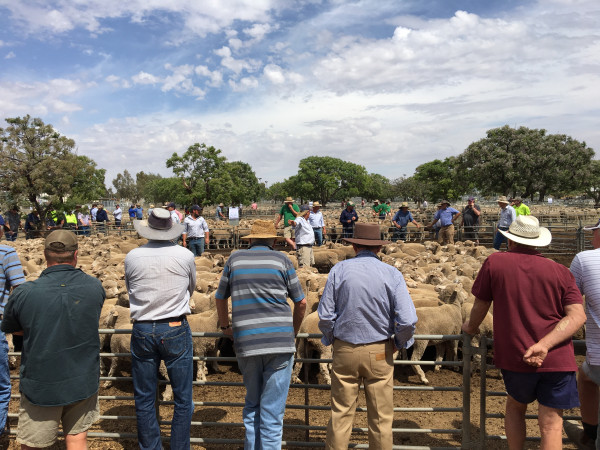
SWAN Hill Rural City Council’s proposal to ‘strategically review’ the future of what it describes as its financially underperforming saleyards has sparked deep concern across the region, and rightly so.

Because in these turbulent economic times, strategic review is the trendy terminology for things which are on the chopping block.

These yards are a vital part of our community, and they are a driving force for local business, especially on sale days when the town sees a significant boost in activity.

Their closure would not only deal a blow to businesses which rely on this influx, but also threaten local employment.

As Ouyen producer (and former chairman of PrimeSafe and Cattle Council of Australia executive member) Leonard Vallance correctly pointed out during a recent public meeting on the matter, the number of people coming through Swan Hill on sale days don’t just attend the sales; they also shop locally, fill up at local service stations, and make use of other town services.

If they are instead forced to travel to Mortlake or Benalla, they’re unlikely to make a second trip back to Swan Hill, so the town can kiss that cash injection goodbye.

Also pushing back against the closure is Woodward Foods, the largest private employer in Swan Hill, with 500 staff on its books.

The company has just announced plans to double its workforce thanks to new overseas export licences but has made it clear the long-term security of the saleyards is essential to this growth.

Removing them now could severely limit the region’s potential for development, growth in its employment and in the overall local economy.

Beyond business and employment, there are also serious concerns around biosecurity.

And if you think biosecurity is not a threat, just look at the recent disasters to hit the poultry industry. Biosecurity is not an issue until it is – and invariably then it is too late.

If the Swan Hill yards were to close, trucks would have to travel longer distances, increasing the risk of disease spread among livestock.

This also raises a critical question: what happens to the truck wash facility?

If the yards close, will the stock industry, and the wider trucking and business community, still retain access to this essential infrastructure?

Without it, we risk trucks moving between properties without proper sanitisation, further compromising animal health — and with trucks multitasking across other ag industries, that risk just multiplies.

The VFF’s biosecurity team, StockSense, has been actively promoting best practices and the importance of washing down trucks between loads and properties.

Removing the local facility would undermine this effort and introduce new risks for farmers and producers across the region.

For our state to truly prosper and grow we need governments, federal, state and local, to start considering how they can invest and grow agriculture in our regions for the benefit of entire communities.

This includes investing in critical infrastructure which supports growth such as our saleyards and supporting industries.

Digital Editions


  • Almond boss resigns

    Almond boss resigns

    ALMOND giant Select Harvests is on the hunt for a new boss after shock news its chief executive is stepping down. Chief executive and managing…

More News

  • Dog’s Day Out arrives in the Mallee

    Dog’s Day Out arrives in the Mallee

    THE iconic spluttering rumble of Lanz Bulldog Tractors is set to roar across Swan Hill and Woorinen next month, when the Mallee Steam, Oil and Machinery Club hosts Dog’s Day…

  • Perfect storm for grape industry

    Perfect storm for grape industry

    This year is certainly testing ones resolve, excessive heat, high water costs, record low grape prices, 170mm of rain at the wrong time and now the fuel issue. After eventually…

  • Holding on to their heritage

    Holding on to their heritage

    Purchase this photo from Pic Store: 531373 TRADITIONAL family farms, passed down from generation to generation, are becoming rarer and rarer these days. With the growth in corporate farming, greater…

  • Wet weather halts harvest

    Wet weather halts harvest

    It’s been an eventful start to harvest for the almond industry. Like all of agriculture in the region, Mother Nature and geo-political tensions have played a hand in providing extra…

  • Royal Commission push back

    Royal Commission push back

    A FIERY clash in Federal Parliament has reignited the bitter fight over the future of the Murray-Darling Basin, with the federal environment minister rejecting claims the government is “destroying family…

  • Call for royal commission into water welcomed by irrigators

    Call for royal commission into water welcomed by irrigators

    FARMING communities have backed a call for a federal Royal Commission into water, saying it is time to expose the “treachery, lies and shonky deals” behind the Murray-Darling Basin Plan.…

  • Nationals push to protect prime farmland with new federal Bill

    Nationals push to protect prime farmland with new federal Bill

    THE Nationals have moved to block taxpayer funding for energy and mining projects on Australia’s best farming land, unveiling a new Bill they say is vital to protect the nation’s…

  • Sally returns from Japanese adventure

    Sally returns from Japanese adventure

    I am pretty excited for this week , actually just tomorrow evening specifically when Sally returns from her first globe trotting adventure. Flying in from Osaka Japan, she’s been on…

  • CWA brings life skills program to the Mallee

    CWA brings life skills program to the Mallee

    Purchase this photo from Pic Store: 539453 A SURGE of community spirit swept through the Mallee when Country Women’s Association of Victoria president Jenny Nola attended the Murray Valley Conference…

  • Basin leaders meet as water plan review looms

    Basin leaders meet as water plan review looms

    NEARLY 200 leaders from across the Murray-Darling Basin gathered in Brisbane last week to debate the future of water management, with northern Victorian councils warning food production and regional communities…