Keep an eye in the sky on pasture management

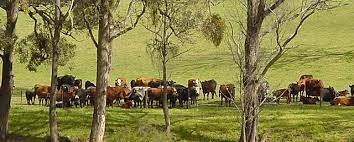
Seeing the complete picture of what’s happening across your property’s feed base to better plan for profitable pasture has become easier with the Australian Feedbase Monitor (AFM).

Since the AFM was launched last year by Meat & Livestock Australia (MLA) and Cibo Labs, more than 1900 accounts have been created by producers around Australia.

Based on satellite-fed data, the AFM objectively measures pasture growth, biomass and ground cover using a 30-day rolling average.

This enables producers to make informed decisions about the state of their pasture.

The tool is free for MLA members who have linked their Livestock Production Assurance (LPA) accounts to their myMLA dashboard, or can be accessed by non-members via Cibo Labs’ paid subscription service.

A tool for everyone

The AFM is designed to allow producers to become more objective in how they manage their feed base.

Cibo Labs’ national extension and adoption manager, Alastair Rayner, says producers can use it to assess long-term averages and inform pasture management strategies.

“This is a great tool for everyone,” Alastair says.

“The AFM will help you make decisions based on widespread data, as well as in-field assessments, to help when it comes to the actuals of your pasture quantity and quality.

“You don’t have to be a major landholder to use it – whether you run 100ha or one million hectares, you’ll be able to use it and get a view of what is happening across your country.

“This tool allows you to see where your pastures are responding well during different seasonal conditions, and where they are not, so you can make more informed decisions for the health of your stock and land.”

The AFM also provides comparative data, as far back as 2017, to help producers recognise trends and changes in the distribution of pasture.

On-farm planning

Grazing advisor for Range IQ, Dionne Walsh, says the main way her clients use the AFM on a day-to-day basis is to check if the feed supply is likely to support the herd size and production targets for the year ahead.

“Producers usually know from experience what numbers they will allocate to their different paddocks,” she says.

“The AFM data can provide reassurance for these plans or highlight where these plans might need to be tweaked.”

Dionne says the AFM is particularly powerful for producers who cannot get across all their land easily – such as extensive pastoral enterprises – as well as producers who are not familiar with the feed base history of recent property purchases.

“The AFM is also good for people who are just starting out in feed budgeting or fire management and want objective data for their planning,” Dionne says.

“The imagery in the AFM clarifies what’s happening on different parts of your property and can help you pinpoint areas where you should go and have a closer look so you can make more informed decisions for future planning.

“For example, there may be parts of your property that the imagery suggests are not responding well to rainfall and may need more time to recover so the AFM helps identify those areas and inform your management plans.”

Digital Editions


  • Almond boss resigns

    Almond boss resigns

    ALMOND giant Select Harvests is on the hunt for a new boss after shock news its chief executive is stepping down. Chief executive and managing…

More News

  • Dog’s Day Out arrives in the Mallee

    Dog’s Day Out arrives in the Mallee

    THE iconic spluttering rumble of Lanz Bulldog Tractors is set to roar across Swan Hill and Woorinen next month, when the Mallee Steam, Oil and Machinery Club hosts Dog’s Day…

  • Perfect storm for grape industry

    Perfect storm for grape industry

    This year is certainly testing ones resolve, excessive heat, high water costs, record low grape prices, 170mm of rain at the wrong time and now the fuel issue. After eventually…

  • Holding on to their heritage

    Holding on to their heritage

    Purchase this photo from Pic Store: 531373 TRADITIONAL family farms, passed down from generation to generation, are becoming rarer and rarer these days. With the growth in corporate farming, greater…

  • Wet weather halts harvest

    Wet weather halts harvest

    It’s been an eventful start to harvest for the almond industry. Like all of agriculture in the region, Mother Nature and geo-political tensions have played a hand in providing extra…

  • Royal Commission push back

    Royal Commission push back

    A FIERY clash in Federal Parliament has reignited the bitter fight over the future of the Murray-Darling Basin, with the federal environment minister rejecting claims the government is “destroying family…

  • Call for royal commission into water welcomed by irrigators

    Call for royal commission into water welcomed by irrigators

    FARMING communities have backed a call for a federal Royal Commission into water, saying it is time to expose the “treachery, lies and shonky deals” behind the Murray-Darling Basin Plan.…

  • Nationals push to protect prime farmland with new federal Bill

    Nationals push to protect prime farmland with new federal Bill

    THE Nationals have moved to block taxpayer funding for energy and mining projects on Australia’s best farming land, unveiling a new Bill they say is vital to protect the nation’s…

  • Sally returns from Japanese adventure

    Sally returns from Japanese adventure

    I am pretty excited for this week , actually just tomorrow evening specifically when Sally returns from her first globe trotting adventure. Flying in from Osaka Japan, she’s been on…

  • CWA brings life skills program to the Mallee

    CWA brings life skills program to the Mallee

    Purchase this photo from Pic Store: 539453 A SURGE of community spirit swept through the Mallee when Country Women’s Association of Victoria president Jenny Nola attended the Murray Valley Conference…

  • Basin leaders meet as water plan review looms

    Basin leaders meet as water plan review looms

    NEARLY 200 leaders from across the Murray-Darling Basin gathered in Brisbane last week to debate the future of water management, with northern Victorian councils warning food production and regional communities…