Update code details

WITH foot and mouth disease on Australia’s doorstep in Indonesia, Australian woolgrowers are strongly encouraged to make sure they include their property identification code (PIC) on their wool classer’s specification and national wool declaration.

PICs help authorities more quickly and accurately manage the spread of an emergency animal disease, should it occur in Australia.

They are eight-character alphanumeric codes allocated by state authorities to livestock producing properties. Anyone owning a sheep requires a PIC.

Their purpose is partly for tracing and controlling disease and residue problems that may be detected after leaving the farm, but also for locating properties and owners where wool has come from when an outbreak of a disease that may threaten their enterprise is detected in an area.

The percentage of tested lots of Australian wool that have PICs declared by their sellers has increased enormously in the past few months, with AWTA, the Australian Wool Testing Authority, reporting that 52.5 per cent of lots last October had a PIC, compared with only 2.1 per cent in the same month last year.

This increase might be a result of woolgrowers becoming more aware of the importance of biosecurity due the presence of foot and mouth disease in Indonesia.

The percentage of sale lots with a PIC varies enormously by state. Queensland led the way in PICs at 90.9 per cent of lots tested during October, while only 21.7 per cent of WA lots had a PIC.

PICs can also play a crucial role during responses to other emergencies such as floods and fires because livestock owners can often be warned of impending danger, and can also be assisted more effectively in the aftermath of such events.

Use of traceability systems in the wool industry also provides confidence to consumers in domestic and overseas markets that the products they buy are accurately described and fit for purpose.

Over the years, many landholders might not have not updated their contact details for their PIC, such as for changes in business partner, parents no longer farming and farm succession. Some addresses still show as RSD which means mail may not be delivered and the PIC could be disbanded without the landholder knowing. Many people have not added mobile phone details or email addresses to their PIC information.

You can update your contact details or apply for a PIC by contacting your state authority or agriculture department.


FAST FACTS

FARMERS should ensure their properties have a property identification code. If the code details need updating, contact the state’s agriculture department.

Codes should be provided to wool classers and property managers and included on the wool classer’s specification and National Wool Declaration.

The inclusion of a PIC is vital during a time of crisis as it improves the traceability of wool.

The use of codes has increased enormously during the past few months, with 52.5 per cent of lots tested by AWTA last October having one, compared with only 2.1 per cent in the same month last year.

Digital Editions


  • Almond boss resigns

    Almond boss resigns

    ALMOND giant Select Harvests is on the hunt for a new boss after shock news its chief executive is stepping down. Chief executive and managing…

More News

  • Dog’s Day Out arrives in the Mallee

    Dog’s Day Out arrives in the Mallee

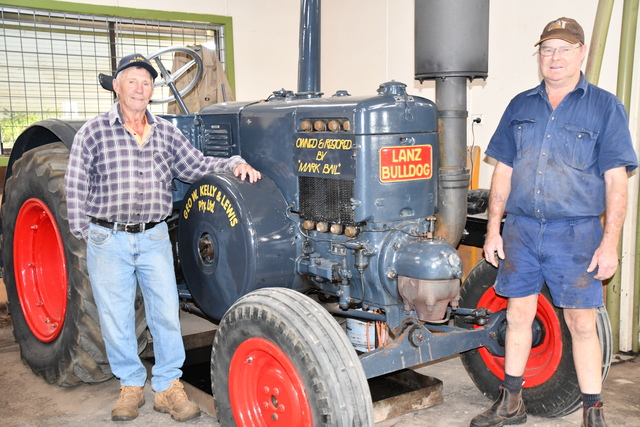
    THE iconic spluttering rumble of Lanz Bulldog Tractors is set to roar across Swan Hill and Woorinen next month, when the Mallee Steam, Oil and Machinery Club hosts Dog’s Day…

  • Perfect storm for grape industry

    Perfect storm for grape industry

    This year is certainly testing ones resolve, excessive heat, high water costs, record low grape prices, 170mm of rain at the wrong time and now the fuel issue. After eventually…

  • Holding on to their heritage

    Holding on to their heritage

    Purchase this photo from Pic Store: 531373 TRADITIONAL family farms, passed down from generation to generation, are becoming rarer and rarer these days. With the growth in corporate farming, greater…

  • Wet weather halts harvest

    Wet weather halts harvest

    It’s been an eventful start to harvest for the almond industry. Like all of agriculture in the region, Mother Nature and geo-political tensions have played a hand in providing extra…

  • Royal Commission push back

    Royal Commission push back

    A FIERY clash in Federal Parliament has reignited the bitter fight over the future of the Murray-Darling Basin, with the federal environment minister rejecting claims the government is “destroying family…

  • Call for royal commission into water welcomed by irrigators

    Call for royal commission into water welcomed by irrigators

    FARMING communities have backed a call for a federal Royal Commission into water, saying it is time to expose the “treachery, lies and shonky deals” behind the Murray-Darling Basin Plan.…

  • Nationals push to protect prime farmland with new federal Bill

    Nationals push to protect prime farmland with new federal Bill

    THE Nationals have moved to block taxpayer funding for energy and mining projects on Australia’s best farming land, unveiling a new Bill they say is vital to protect the nation’s…

  • Sally returns from Japanese adventure

    Sally returns from Japanese adventure

    I am pretty excited for this week , actually just tomorrow evening specifically when Sally returns from her first globe trotting adventure. Flying in from Osaka Japan, she’s been on…

  • CWA brings life skills program to the Mallee

    CWA brings life skills program to the Mallee

    Purchase this photo from Pic Store: 539453 A SURGE of community spirit swept through the Mallee when Country Women’s Association of Victoria president Jenny Nola attended the Murray Valley Conference…

  • Basin leaders meet as water plan review looms

    Basin leaders meet as water plan review looms

    NEARLY 200 leaders from across the Murray-Darling Basin gathered in Brisbane last week to debate the future of water management, with northern Victorian councils warning food production and regional communities…