Since it was introduced nearly 20 years ago, electronic identification (eID) has delivered a clear return on investment for producers who tap into the productivity-boosting data it generates.
MLA investments in eID research provide support for producers to collect and use information about flock health, biosecurity and reproductive performance.
Now, with the 2025 mandate for sheep and goat producers to implement eID on the horizon, MLA is funding projects to fast-track resources for producers to make the switch.
Collecting lifetime flock data
Developing a flock breeding and health plan relies on an understanding of business goals and flock performance – which in turn, requires thorough data.
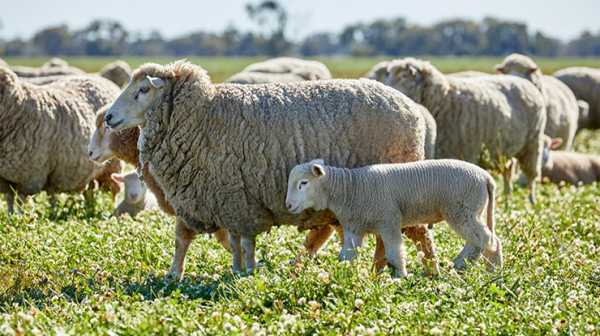
Producers can use eID to select ewes and rams for optimised reproduction and lamb survival.
The genetics of reproduction and lamb survival Producer Demonstration Site (PDS) project focuses on collecting individual genetic information on performance and breeding so producers can confidently select ewes and rams to match their production needs.
To identify and retain ewes with proven reproductive performance, the pregnancy scanning in extensive sheep flocks PDS project shows how eID can track data on: Foetal number; Foetal age;
Wet and dry numbers; Lamb survival; Net reproduction rate.
After joining, monitor pregnant ewes for adequate nutrition, water and overall health, with a focus on identifying and managing any in poor condition.
The uising eID to improve ewe performance PDS has shown that using eID to collect information on weight, nutrition and other health factors gives producers improved confidence around ewe management decisions.
Producers can use eID to manage the health of an entire flock, for example by using the data collected to diagnose health issues.
The managing trace element deficiencies in sheep PDS project is exploring appropriate practices to collect and identify trace element deficiencies – including blood tests, liver samples and biopsies for copper.
Collecting flock data can also highlight the effect of certain grasses on mineral status, as a tool to optimise pasture management.
Using data to boost your business
It’s one thing to collect all this data, but the next step is understanding how it can benefit your business. How you use it will depend on your business needs, so seek advice and conduct your own research to maximise your data’s potential.
Many MLA projects aim to provide producers with the skills to interpret their data, develop value propositions, and make good decisions for profitability, productivity and sustainability.
These projects include: Lamb survival in south-east Queensland rangelands PDS; Realising benefits from sheep eIDs PDS; Effective rangeland eID decision making systems PDS; Integrating dualpurpose crops and eID into mixed farming systems PDS; Maximising the value of eID technology for sheep producers.
These projects explore a range of eID benefits, such as: Enhancements in traceability, biosecurity and risk management through scanning and movement tracking; Individualised data on health, reproduction and performance; Time and labour savings; Increased information flow along the supply chain; Ability to compile multiple forms of data in one place; Ability to benchmark performance and health using a central database; Collection of information to enhance genetic improvement.
Researchers are also looking at other technologies, such as remote objective weight or walk-over-weighing, as data produced by these technologies can be used hand-in-hand with eID.
Integrating data through the supply chain
The incoming 2025 eID mandate for sheep and goats comes from a need to heighten biosecurity, traceability, best practice and animal health in the wake of worldwide disease incursions.
Electronic tags will be vital to trace livestock movements to identify contact points in the event of a biosecurity incursion.
Sharing information generated by eID can help the industry improve biosecurity, together.
The eID enabled – stimulating the information supply chain project supported the creation of extension products and data-sharing systems. This empowered value chain participants with skills, knowledge and tools to use eID to generate improvements in productivity and business performance.