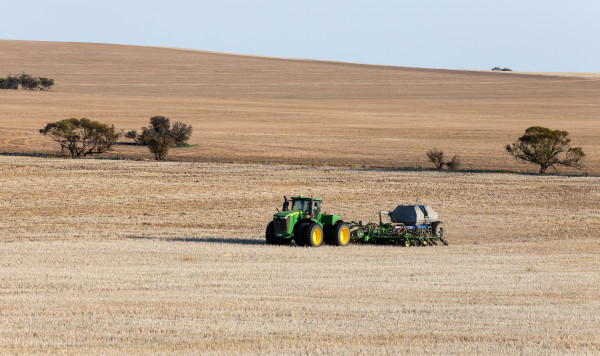
BIRCHIP Cropping Group research has shown the practice of dry sowing has become increasingly common with frequent years of below average rainfall in the sowing season.
And what is emerging is that dry sowing, where crops are sown into a dry seed bed before season breaking rainfall, has definitely helped farmers decrease production risk and better manage workloads.
BCG extension officer Alicia Gault said sowing by the calendar, regardless of moisture in the profile, also reduces the risk of sowing into cold, waterlogged soils, which can lead to poor germination and vigour.
She said due to the warmer soil conditions, dry sown crops can have earlier establishment, increasing the length of the growing season.
“An extended growing season can help crops reach a higher yield potential, creating more opportunity to capture available light and water,” Ms Gault added.
“Earlier germination and establishment can reduce concern of water logging in cooler months, as strong root systems will be established.”
Michelle Pardy from Mulwala based Riverine Plains suggested sowing before the break reduces stress on labour and helps with stubble flow, as dry stubble will flow through the seeding implement much better than wet, ropy stubble.
She said when implementing dry sowing, it is also important to consider critical periods and risk of frost, as well as weed pressure.
GRDC’s Brad Collis, Danielle England and Courtney Ramsey have all expressed the importance of considering timeliness of in-season operations, as all crops are likely to germinate homogeneously, which can lead to multiple paddocks requiring fertiliser and pesticides at the same time, causing logistical strain.
If planned correctly, dry sowing can provide great benefits and help de-risk the seeding program.
BCG conducted interviews with a series of growers from different regions to discuss sowing practices.
Below are firsthand insights and experiences on dry sowing.
Grower 1 – Mallee region
Grower 1 adopted a cautious, flexible approach to dry sowing, prioritising risk management and identified canola establishment as the highest risk under dry conditions due to poor surface moisture.
They also flagged the risk of herbicide damage from residuals in dry soil and the threat of erosion in bare paddocks.
Risk management strategies in 2024:
* Reduced high risk crops: Limited the area sown to canola, favouring cereals and pulses better suited to dry conditions.
* Adjusted herbicide use: Avoided residuals where risk was high, opting for safer knockdown options.
* Early sowing: Began sowing early to stay flexible and take advantage of any incoming rainfall.
“Long coleoptile wheats could be a real game changer in dry starts. If we understood how they perform across different soils and moisture conditions, and how deep we can push sowing without losing establishment, they could become a really useful tool in the kit for seasons like 2024.”
Grower 2 – Southern Mallee region
Grower 2 identified seed placement as the biggest threat when sowing into dry, abrasive soils.
“Our soils crack open and can drop seed deeper than expected, especially with canola,” they explained.
Clay soils also posed problems, often bringing up clods and preventing good seed soil contact.
Other concerns included poor herbicide efficacy without moisture to activate residuals, and increased wear on machinery, such as points and tynes due to hard, dry ground.
Risk management strategies in 2024:
* Reduced sowing speed to improve seed placement accuracy.
* Delayed sowing by a week in hopes of follow up rain, but the delay led to patchy germination. One canola paddock had to be resown with barley.
* Reflected on variety and crop choice, acknowledging switching to cereals earlier may have led to better outcomes.
* Selected chemicals with longer activation windows to reduce the risk of herbicide failure.
Looking forward, the grower would value:
* Improved durability of varieties, especially canola, to tolerate time in dry soil.
* Better guidance on herbicide performance in low-moisture environments.
* And ideally – “more accurate weather forecasts”.
Grower 3 – West Wimmera region
Grower 3 expressed the importance of understanding your soil profile and knowing where the moisture is, if any.
“This can be the determining factor for taking a risk or scaling back on your cropping program,” they said.
Similarly, understanding your seeder was just as important to the grower, having depth control and the ability to place the seed at the correct depth is crucial to a dry sowing program.
Date of sowing to germination, particularly in canola were key concerns, as “we can see mould when canola is sitting in the ground for three to four weeks, as well as seeing urea burn if there is no moisture there”.
To mitigate risk, the grower scaled back on their cropping program, removing more susceptible crops such as canola and adding more vetch into the rotation.
Looking forward, the grower is hoping to see varieties which can tolerate the increasingly challenging seasons, with further drought and frost resilience.
They also expressed the importance of circulating and extending current material on dry sowing to foster knowledge, especially in younger generations of farmers.