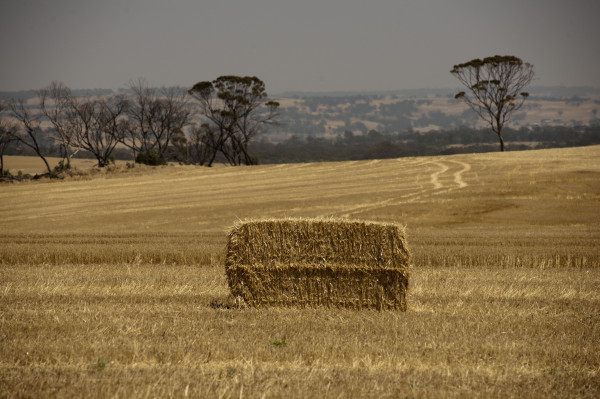
IF you need a contractor to make your hay or silage, getting the job done right has never been more important.
The Australian Fodder Industry Association has produced, in consultation with its members, including several contractors, a guide to selecting a hay or silage contractor.
It states a successful relationship with your contractor is best achieved if responsibilities are decided and understood in advance.
Communication
* How will you and the contractor communicate and work out together when the time and the crop is right?
* Communication in relation to cutting, baling, ensiling or curing time should be confirmed at the start of the contract and it should be decided in advance who will make the call.
Experience
* How many years has the contractor been involved in contracting? Do you have any testimonials from previous customers?
* What types of crops has the contractor done before?
* Do they have the right knowledge and experience for your crop?
* What is it that you are contracting – can the contractor accommodate all your needs?
* How much other work does the contractor currently have on?
* What are the contingency plans if there is a breakdown?
* Can the contractor realistically fit in the work – can they be there when the crop is ready, or will they be busy somewhere else when the conditions are right?
* Is there enough twine, wrap or other consumables available to do the job?
* Dirt and rocks in bales should be discussed before contract starts.
Machinery
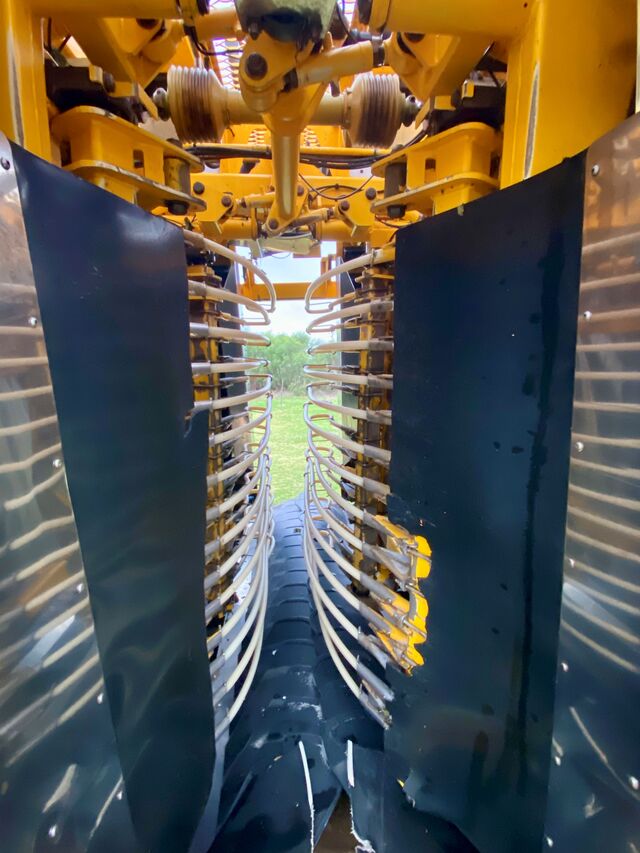
* What machinery has the contractor got to do the job and do it well? Or, is the contractor using some or all your machinery to do the job?
* If it is your machinery, who is responsible for breakdowns/repairs and the costs involved?
* Is there an understanding machinery coming onto the property must be free of weeds or other contaminants?
* Is the contractor going to use a conditioner or not? If a conditioner is to be used, stipulate the type: roller, double conditioner or flail. This should be reflected in price.
* Is fuel included or not in the contract price?
* Capacity with big square balers – if you have more than 2000 tonnes in one line or batch you may need more than one baler. Does the contractor have enough to do the job?
* A maximum of 5 per cent of bales with five strings. All bales with four strings to be re-baled. Have you thought about this and discussed this with the contractor?
* Bales of 8x4x3 should be about 2.25m long. When a contractor is struggling to get minimum bale weights, they may make bales longer to get the weight which impacts the grower’s ability to load and stack them correctly and/or efficiently.
Cost
* Is this based on a hectares/bale weights/number of bales/volumes?
* If by weight, how, when and where are the weights going to be taken and what baler/type of bales are they making, and what is the average bale weight from this crop (e.g. oats/vetch/straw, etc.)?
* Does the contractor have bale weight monitoring?
* Have you agreed how you resolve bale weight issues before the contract starts?
* Make sure you are contracting for and paying for the job to be done right and expect to pay a reasonable rate to achieve this. If something seems cheap there is usually a reason.
Moisture
* Moisture monitoring needs to be done well and regularly – who is liable for baling/ ensiling hay at too high/low moisture? The contractor?
* What is the agreed maximum and minimum moisture? This affects safety as bales cannot be stacked or transported when too much moisture is present – ideally 10-14 per cent moisture for export bales and 12-16 per cent moisture for domestic bales.
* Even though you as the grower, may be in a hurry to get baling/silage completed, it is worth remembering that moisture hay or straw is hard to sell, and to the untrained eye, hay and straw can look cured, but may not be.
* Have you agreed how you resolve moisture issues before the contract starts?
Stacking hay
* How will the stacking be done – with a bale stacker or with loader and truck?
* Stacking should be completed in a maximum of 48 hours.
* Remember bale stackers have a lot less impact on minimum-till country.
Post-contract
* Have you specified the site is to be left clean, that soft bales have to be re-baled and all baling twine has to be picked up?
* If using your machines, have these been left in fair and reasonable condition (cleaned) and are they still in good, working order?
Contract and payment terms
* What are the payment terms for the contract?
* Has the contract been agreed and signed by all parties?
* Do all parties have a copy of the contract?
* In the event of a dispute, how will you and the contractor resolve this? It is a good idea to have a section in the contract for conflict resolution/disagreements.