Sunraysia’s citrus packing industry has played a pivotal role in a major research project to examine microbial food safety risks along the citrus supply chain and develop management strategies.
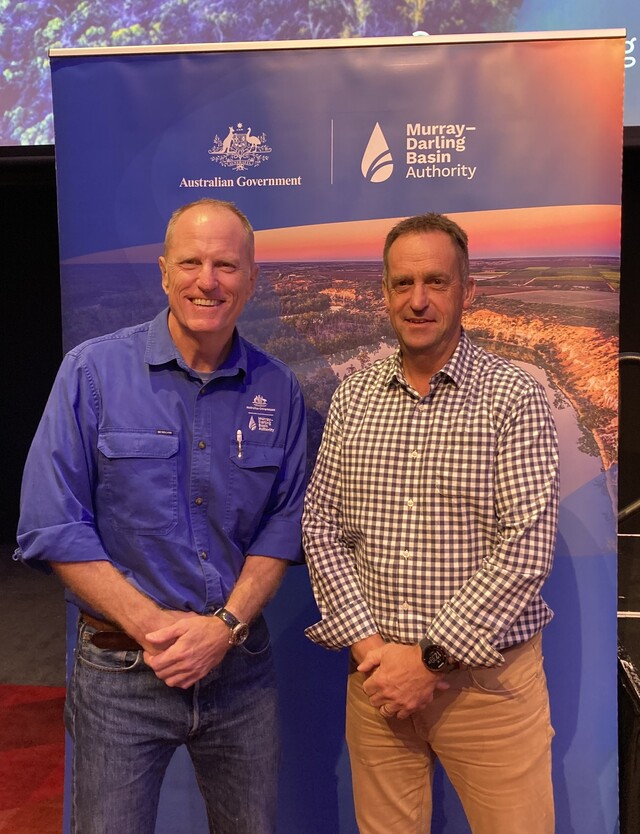
Participants included Costa Group, Mildura Fruit Company and Seven Fields/Nutrano, led by NSW Department of Primary Industries (NSW DPI) senior research scientist Dr Sukhvinder Pal (SP) Singh, who tells North West Farmer the project has been aimed at mitigating microbial food safety risks associated with the production, postharvest handling and supply of citrus to consumers in domestic and export markets.
SP says the success of Australia’s citrus export industry hinges on several key factors, including free trade agreements with importing nations and its reputation for delivering clean, green, and safe citrus products to global markets.
He says to maintain its competitiveness and safeguard its market share, it is imperative Australia consistently supply safe fruit and strive for zero product recalls.
“While citrus fruit inherently poses a relatively low microbial food safety risk to consumers due to its inedible peel, the detection of pathogens on the fruit surface by regulatory bodies could have significant repercussions, including product recalls, damage to our reputation and jeopardised trade relationships with export markets,” SP says.
“This project delivered a national snapshot of the industry’s current food safety practices and identified potential gaps to be addressed.
“The project followed a whole-of-chain approach to identify potential hotspots for microbial contamination and cross-contamination along the supply chain.
“Each link within the supply chain was examined, starting with field production and postharvest processing through to retail by collecting fruit and environmental samples (2257) to detect the target foodborne bacterial pathogens (Listeria monocytogenes, Salmonella species and pathogenic Escherichia coli).
“Associating industry practice with microbial risk mapping proved to be an effective strategy towards microbial risk identification and development of targeted interventions to manage these risks.”
SP says the project achieved remarkable success in engaging more than 50 citrus packers throughout Australia, representing a substantial network of 750-plus growers.
He says through microbial mapping analysis along the supply chain, it was revealed Listeria monocytogenes emerged as the primary environmental pathogen of concern, with Salmonella and pathogenic E. coli posing minor risks.
And insights derived from the prevalence and distribution data indicate Listeria monocytogenes was present in citrus orchard soils, which could lead to the potential contamination of fruit on trees through dust storms.
“This pathogen is ubiquitously present in soil and natural environment and can be transferred to fresh produce during production and postharvest processing,” SP says.
“The whole genome sequencing of Listeria isolates confirmed harvested fruit could serve as the primary carrier of the pathogen from the field into packing facilities.
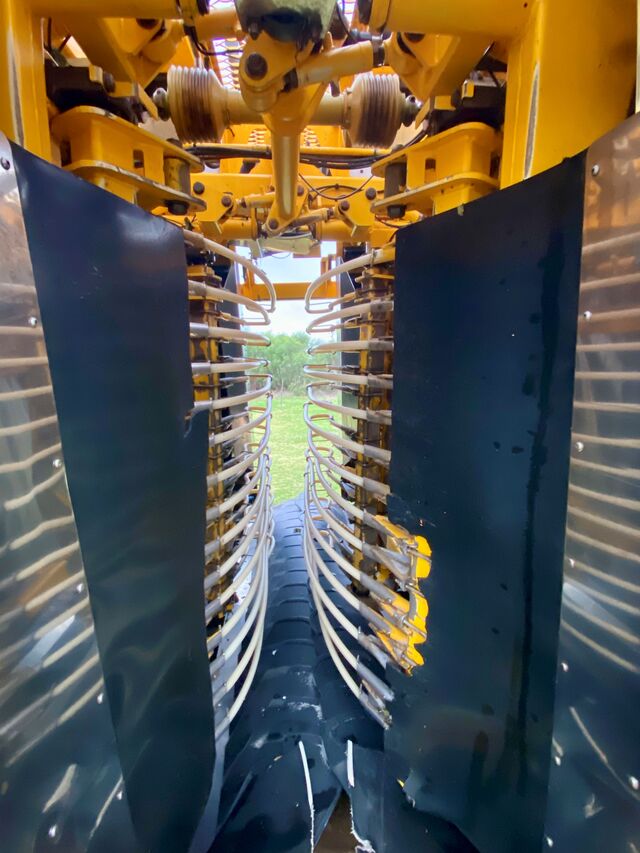
“The pathogen could establish itself in the postharvest processing equipment and premises, including harvest bins, conveyor belts and brushes, and eventually could reach cool rooms via forklifts and workers’ movements.” (For a summary of best practice recommendations see the breakout panel.)
“To uphold consumer confidence, satisfy regulatory requirements and ensure continued market access and expansion, it is essential for the citrus industry to adopt proactive measures in managing fruit quality and safety.”
SP says the industry has robust microbial food safety preventative controls during both production and postharvest handling operations.
However, he also says continuous improvement and change of some practices are recommended during fruit production, harvest and postharvest operations.
This is why the project’s effectiveness in garnering significant industry interest has played a pivotal role in raising awareness about microbial risks.
“Based on the current industry practice, microbial risk mapping and available scientific literature, best practice guidance was developed as a technical resource to achieve the microbial risk management objectives,” SP says.
“The Citrus Microbial Food Safety Best Practice Guide offers expert advice and recommendations on best practices for fruit production, harvest techniques and postharvest handling, enabling us to effectively mitigate the risk of microbial pathogens.
“This comprehensive guide is designed to serve as a practical and targeted resource for citrus growers, packers and all stakeholders involved in the citrus supply chain, offering invaluable insights into the assessment and management of microbial food safety risks.
“It is a culmination of the collaborative efforts of industry stakeholders and has been made possible through the generous contributions of more than 50 citrus packers who shared their insights and facilitated microbiological sampling from production fields and packing facilities.”
The guide is now available for download on the NSW DPI website at https://www.dpi.nsw.gov.au/agriculture/horticulture/food-safety
SP says the project’s success was dependent not only on its ability to engage citrus growers and packers but also on uncovering novel insights into the prevalence, distribution and pathways of microbial contamination.
“The identified gaps in industry practices serve as opportunities for improvement and addressing them will contribute significantly to safeguard the food safety record of the citrus industry.”
Further details are from SP Singh at sp.singh@dpi.nsw.gov.au or on 0420 593 129.
Best practice recommendations
- Organic soil amendments, dust storm-mediated pathogen dispersal, irrigation water, water used in chemical spray application and wildlife incursions are the major sources and/or routes of microbial contamination during citrus fruit production.
- Citrus orchards in proximity to livestock operations and with high wildlife pressures should revisit their food safety plans to understand the pathogen load and dispersal pathways affecting their operations, especially during extreme weather events such as duststorms, floods and bushfires.
- Raw animal manures or partially composted manures should not be used in citrus orchards. Dust-suppression agronomic practices including the use of perennial windbreaks is recommended. Spray-water quality should be assessed before application.
- Trailer-mounting of harvest bins, avoiding ground contact, is the best practice to mitigate microbial food safety risks. Cleaning and sanitisation of harvest bins after each use is recommended to mitigate microbial food safety risks associated with harvesting.
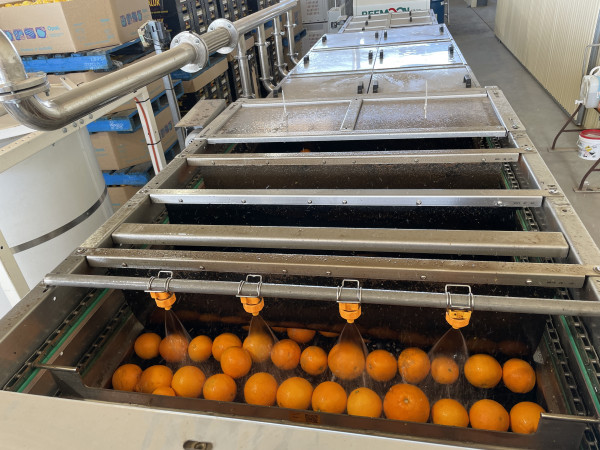
- Immediately after harvesting, citrus fruit should be drenched with a sanitiser, followed by drenching with a fungicide. This ‘two-step’ drenching operation minimises cross-contamination risks and maximises the efficacy of both types of chemicals. Their concentrations should be monitored regularly, along with changes in the frequency of replacing drenching solutions adjusted according to the organic matter load on the fruit.
- Maintaining the cool chain after harvest is critical to maximise food safety, storage and transportation potential of fruit with minimum quality and fungal decay losses.
- Clean and sanitise the fruit receival area after each shift so that environmental pathogen transfer continuum is interrupted. Dry dumping with careful unloading of fruit onto the conveyor belt has a relatively lower risk than wet dumping in large volumes of water.
- Eliminating/sorting out rotten, mouldy and damaged fruit before starting the washing and sanitisation process is a cost-effective strategy to minimise mould spore load in the fungicide tanks/packing shed and improve food safety outcomes.
- All brush rollers should remain covered under the sanitised wash water, along with daily cleaning and sanitisation schedule at the end of the shift, to remove organic matter and debris from the core and sides of the rollers.
- Treat the wash water to drinking quality before it is used/re-used for fruit washing to mitigate microbial contamination risks to the lowest level. Alternately, a single-use wash water (run-to-waste) system is recommended, but it may not be an environmentally sustainable option
- Citrus packers should avoid using chlorine-based sanitisers due to their negative impact on the environment. The selection of PAA in postharvest wash water is recommended due to its efficacy and low environmental impact and the fact its action is least influenced by the presence of organic matter. Other options such as electrolysed water, cold plasma and ozone should be explored to meet sustainability requirements with minimal environmental impact.
- Automation of sanitiser dosing and its digital monitoring and logging are strongly recommended to eliminate human error. Furthermore, verification of sanitiser concentration should be conducted at regular intervals using digital measurement tools.
- Frequent cleaning and sanitisation of fungicide tanks to remove bacterial contamination and compatibility of sanitisers and fungicides should be confirmed before fresh concentrations are mixed.
- Conveyor belts/rollers connecting washing and waxing zones should be cleaned and sanitised with utmost care to avoid any contamination opportunities between two steps. Also, the importance of washing and sanitisation step is reiterated as a control mechanism.
- There is significant opportunity to uplift the hygiene of packhouses through proper cleaning and sanitisation tools and processes. It is recommended that the industry aim to popularise the environmental monitoring program among citrus packers and highlight the benefits linked to EMP costs.