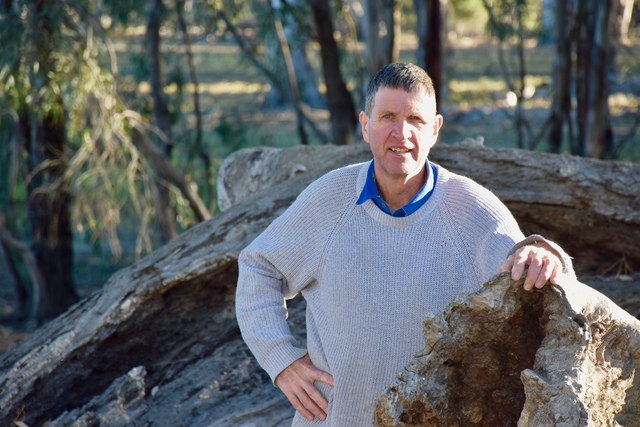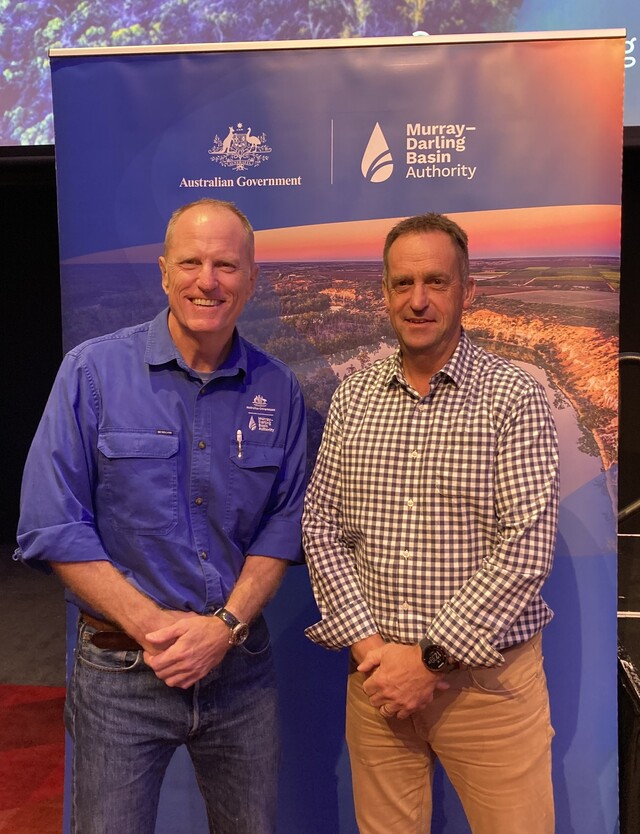
THERE’S a new frontline in the citrus biosecurity business and Jacqui Mitchell is the woman who has been enlisted in the battle to keep the industry’s bogeymen offshore.
If not forever – the preferred goal – then certainly for as long as possible.
Then, in the unlikely event we do find threatening pests and diseases such as huanglongbing (HLB) and Asian citrus psyllid (ACP) have breached the borders, a campaign of containment will kick into gear to minimise the impact.
Mildura-based Jacqui says the frontline against these potentially devastating incursions isn’t in the orchards and corporate structures of the industry, it is in the average Australian backyard, which she says is the potential backdoor into a major national industry.
It’s a concern she hopes will be countered by CitrusWatch’s early detector network and her input as a citrus urban biosecurity co-ordinator, along with the rest of the national biosecurity team.
She will work alongside Citrus Australia biosecurity manager Jessica Lye to promote the importance of a robust biosecurity system and improve industry preparedness in the event of an incursion.
Jacqui’s key responsibility will be engaging with urban communities in high-density areas to encourage the monitoring of pests and diseases such as HLB and ACP.
“The CitrusWatch program aims to ensure the Australian citrus industry is better equipped to minimise the entry and spread of high-priority pests through surveillance, research, training and education,” Jacqui explains.
“Through the early detector network we distribute trapping kits to urban communities to help monitor pests and diseases in high traffic areas, which are likely to be the pathway of entry for these threats.
“In the case of citrus and HLB, the insect is not the danger, but the disease which comes with it is, and it has already been devastating the global industry.
“Our growers are all well and truly switched on to this, but suburbia certainly isn’t and one of the upsides from COVID – which brings a downside with it – was the surge in people’s awareness of fruit, and the rapid uptake of backyard fruit trees and vegie patches, as well as in community gardens.
“If we can get the general population to have their collective eyes on the ball and want to be part of the solution – the last thing we want to end up with is another challenge such as Queensland fruit fly.
“People can use the MyPestGuide program, which lets them take photos of bugs they are not familiar with, geolocate where they took the picture and then upload the shots to be analysed – after which they will receive an email with advice about what they have found and Australia’s biosecurity keeps adding to its data and keeps on top of things in real-time.”
There are worrying signs the risks are growing, not slowing.
Varroa mite finally broke into Australia last year, and swine fever and lumpy skin disease has reached neighbouring countries.
“The whole purpose of this project is early detection if we are unlucky and have to deal with these problems here,” Jacqui says.
“It’s not unlike the arrival of varroa mite and the efforts of all the stakeholders to first eliminate the threat and when that got beyond the realms of possibility, to corral the problem and restrict it to as small an area as possible.
“That’s exactly the path we would take faced with the same challenges and the need for speed to make sure we minimise any threat.”
Jacqui brings a wealth of knowledge to her new role – including a Bachelor of Science, complemented by a Certificate IV in Training and Assessment and a Certificate III in Horticulture, along with qualifications in retail nursery, rural operations and conservation and ecosystem management.
She has spent the past two years as a TAFE lecturer at Charles Darwin University in the Northern Territory, after spending the previous four years there in the retail nursery industry.
“A career highlight would have to be the several weeks I spent in Kakadu during the wet season, doing horticulture and conservation training with some of the local people,” Jacqui says.
“We had a grand adventure collecting and propagating local species, and learning how to care for them.”
Although Jacquie has not long relocated from Darwin to Mildura (with her cheeky blue heeler named Poppy), trading crocodiles, waterfalls and termite mounds for desert plains, the Murray-Darling and citrus orchards, her arrival here was almost inevitable.
Originally from WA, once she was first finished at university she took a position in Broken Hill, from where she soon discovered the nearest serious shopping was Mildura, so she developed a very early connection with the regional city “and almost moved there at the time”.
“I love to garden and I love sharing knowledge, so community engagement for something as important as biosecurity brings together many things about which I am passionate,” Jacqui says.
“The key to a great garden is a healthy garden and if we have healthy gardens through good biosecurity practices we can keep our growers and citrus industry safe.”
A self-confessed “foodie and a craft hoarder”, Jacqui says she is happy to have settled in the region and looks forward to learning more about how the Australian citrus industry operates.
“When you live in a regional area, you get to see and experience things you don’t hear about on tourism ads or Instagram,” she said.
“I drove from Darwin to get here and found a lot of cool things along the way that I wouldn’t know about if I had flown down.
“I’m really looking forward to exploring the tri-state area.”
Jacqui’s role is a lot bigger than the average backyard – she is part of a biosecurity team covering Victoria, NSW, WA and SA, which includes the critical citrus growing areas such as Sunraysia, the Riverland, Moora and Canning River.
***
Identifying HLB
HUANGLONGBING, previously known as citrus greening disease, is perhaps the worst problem in citrus trees worldwide.
HLB is a bacterial disease that spreads through the tree canopy, causing decline and then death. It has no cure.
HLB is spread by a sap-sucking insect that is not present in Australia. The only way to stop the disease is to destroy all infected trees and replace them.
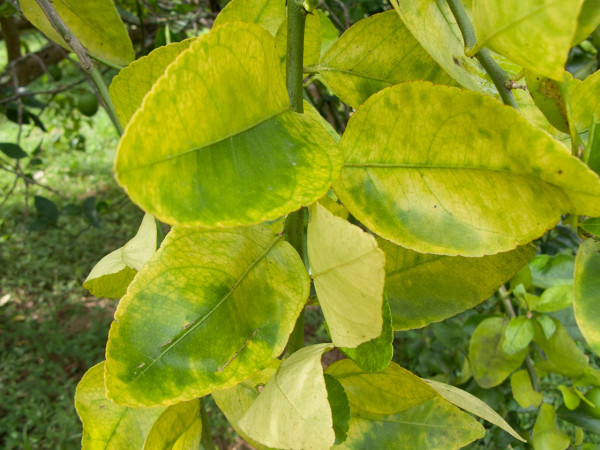
Symptoms of HLB on leaves are subtle and hard to pick, but one key sign is a blotchy yellowing that is not symmetrical or mirrored on both sides of the leaf.
Later, new young leaves are small, upright and yellow, with green bands around the veins.
In well-managed orchards, a yellowing that spreads slowly over the tree and through an orchard is an easily seen sign.
However, the spreading yellowing effect can be especially hard to see in neglected backyard citrus trees growing on poor soils. Often, a general decline accompanied by fruit becoming misshapen, sour and bitter is all that people can recognise.
The disease is prevalent in South-East Asia, including Indonesia and Timor Leste, and recently reached Papua New Guinea.
People illegally moving citrus trees into Australia from these areas, including planting and grafting material, could bring in both the disease and insect.
The need to replace infected trees means the cost of an outbreak to Australia’s citrus industry would be enormous.
If HLB established in Australia most backyard citrus trees would not survive for more than a few years.
***
Spotting ACP
THE Asian citrus psyllid, diaphorina citri, is a vector of HLB in the Asia-Pacific region and the Americas.
Adult ACP are 3 to 4mm long. The forewings appear widest at the apex, with mottled brown patches.
The eyes are red and the antennae are short and pale brown, with black tips.
When resting or feeding, the body of the adult and the plant surface form a roughly 45-degree angle.
ACP nymphs are yellowish-orange and have prominent wing pads, especially in the later instars.
They produce copious amounts of white and string-like honeydew, which may melt to form droplets when the temperature is greater than 36 degrees.
ACP eggs are about 0.3 mm long, elongated, almond-shaped and tapered toward the distal end. They are laid in groups on young flush. Newly laid eggs are pale, but then turn yellow and finally orange before hatching.