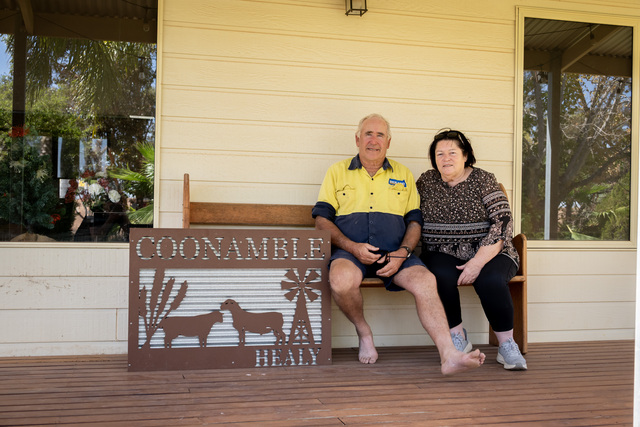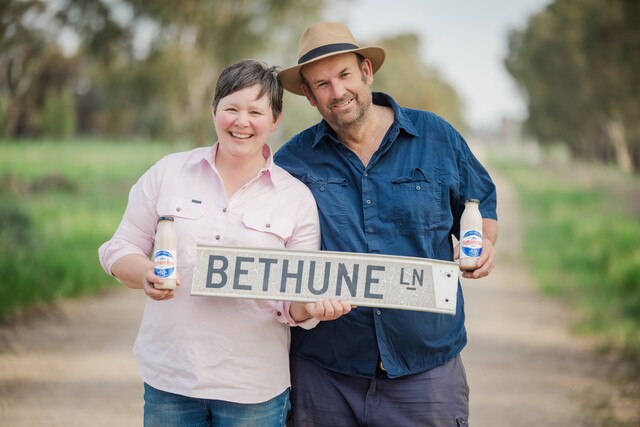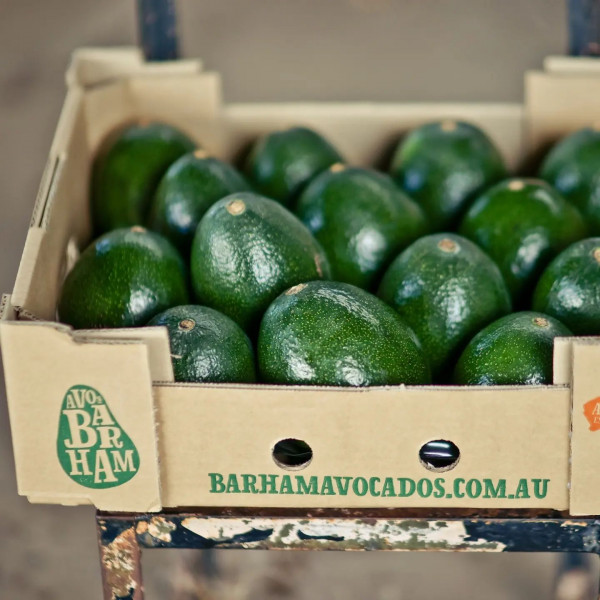
IT’S not exactly bringing home the bacon, but Barham avocado growers Katrina and Tim Myers have started harvesting their Bacon trees ahead of the serious business to follow.
With their Bacon trees in the mix primarily as pollinators, Mr Myers said they will probably pick six or seven bins.
As opposed to the Hass, which will total bins in their thousands once the dust has settled.
But Mr Myers said right now the avocado industry is marking time while it waits for the supply-demand equation to sort itself out – with supply way too far out in front.
While he waits for that, he is also glad he is only looking at a small number of Bacon bins because unlike other varieties, each Bacon (like all greens) needs to be snipped from the branch, with 2-3mm of stalk left intact on the fruit to prevent stem end rot.
Whereas the Hass, which lose their green when ripe, can just be grabbed as you go past and slipped into the bin because they are “a much tougher variety”.
They are just two of the varieties grown at Barham Avocados – you can also find Fuerte, Gem and Reed in the lineup across the almost 9000 trees on the property.
Along with some opportunity cropping on the back of our recent wet years including rice and pumpkins – and some Merino sheep – making the most of some spare land and existing, albeit older – irrigation infrastructure.
There had to be, Mr Myers noted, some sort of silver lining in all the wet weather and floods.
“We will have a lot more fruit in the not-too-distant future as we have planted a lot of new trees, which take four years to reach production maturity, so we are hoping demand will have caught up with supply by then,” he said.
“We had a very strong market a couple of years ago, with good prices, and like many others, family farms and corporates, we doubled our orchard size on land we had.
“The market is growing, just not as fast as supply. But between 2000 and 2010 the Australian avocado market doubled in size and you probably can’t maintain expansion that rapid.
“But there are other promising signs, such as new and bigger export opportunities for us all, especially with access to countries such as India with its vast population and growing taste for our products.
“We also have emerging markets in Malaysia, Singapore, Hong Kong and Thailand, all of which will help with the pressure on the domestic market as well and the bigger the export scene gets, the better.”
Mr Myers said the export market does face tough competition against Peru, Chile and Colombia, all having much lower costs of production with cheaper labour, less red tape and handy access to North America.
On the upside, Australian producers are much closer to the Asian markets so have a good advantage with freight costs.
Avocado growers are also adapting to changing standards within the industry, with new and better rootstock, better technical skills and extension work being conducted all of which is seeing a major improvement in tree longevity and production.
“Only a couple of years ago there was so much demand to get bigger, or even get on board, you were looking at a three-year waiting list just for seed, but that has all returned to normal now, so our next big challenge will be turning over our lower performing trees with some of the latest options,” Mr Myers said.
“Even something as simple as poor setup can reduce the productive life of a tree to 20 years, or less, but with all the extra information now available, the agronomy and research, if you do it right that 20 years has just become 40-50 years,” he said.
“That makes a big difference to the bottom line in cost and time saved and with research and development ongoing, there is always more good news and advice coming.”
Barham Avocados is a work in progress, having grown from its farmer’s market origins to be a significant supplier to the supermarket trade to maximise its scale of economies and, as a value-add, has ventured into online sales, which Mr Myers said they are looking at expanding as well.
But right now, there are a lot of hard yards ahead.
Harvest across the property as varieties come on line, will run until January – plus the added load of being a packer for two other growers. The Hass alone will be harvested for anywhere between two and five months.
And harvesting requires two passes in most orchards, the first one getting everything which can be gathered by hand and the second time around the cherry-pickers are brought in to tackle the tree tops.
Then there’s those quiet months in between for maintenance, any pruning required, checking out the filtration systems and all the other little bits and pieces which are the nuts and bolts of the business.
Also once again giving Tim the time to ponder some of the mysteries of the universe.
Such as why supermarkets don’t like the overly big fruit whereas some smaller independents and boutique fruit shops jump at the chance to have them.
Or why everyone is so hot for Hass while he can’t think of anything better than a big, beautiful, creamy, flavoursome Reed to rock his boat.