The first vines infected with GRBV are believed to have arrived in Australia in 1969, or earlier, and there are now several wine and table grape variety clone combinations that have tested positive in Victoria and South Australia.
The virus has caused significant economic damage in vineyards in parts of the US, however in Australia it is thought to be isolated to specific variety clone combinations.
A co-ordinated surveillance program led by industry, nurseries and vine improvement groups will inform whether future management actions should be aimed at eradication of the virus or simply to reduce the risk of spread.
Australian Grape & Wine has consulted with industry experts to provide advice to the consultative committee on emergency plant pests (CCEPP) on behalf of the winegrape sector.
The CCEPP is the technical co-ordinating body linking the Commonwealth, state and territory governments, affected industries and Plant Health Australia on matters relating to emergency plant pests.
Its position is GRBV should be considered a serious pest threat, due its high risk of spread through propagation and the potential arrival of an efficient insect vector that can spread the virus.
In California, it is thought the major source of GRBV in vineyards has been through infected propagation material.
However, there is also known to be an insect vector capable of spreading the virus, the three-cornered alfalfa hopper.
It was encouraging that since the introduction of GRBV into Australia, there had been limited evidence of any significant insect-vectored spread of the virus.
Tracing has identified links between infected vineyards through the movement of propagation material.
The quality, integrity and health status of grapevine planting material is a key factor driving competitiveness and sustainability of vineyards into the future.
In California, government-supported systems for the regulation of certified planting material, public investment in virus screening programs and rogueing of infected vines has greatly reduced the percentage of vineyards infected with damaging viruses such as GRBV.
Australia currently lacks an equivalent system covering the entire propagation supply chain from collections through to customers.
Wine Australia last year started a project to establish sampling protocols and standards for virus screening of vineyards, as well as a national standard for certification of grapevine propagation material.
Vineyard managers are strongly encouraged to only purchase material from a VINA-accredited nursery, which can trace back its planting material and provide assurance it has been propagated to current best practice standards.
Buyers should discuss what virus testing has been undertaken on the propagation material and both parties should keep records that allow for tracing of planting material from source to destination.
Given the status of GRBV as exotic to Australia, standard grapevine virus screening has not included testing for this virus and was only recently started in Western Australia.
As a result, planting material purchased to this point is unlikely to have been tested for GRBV.
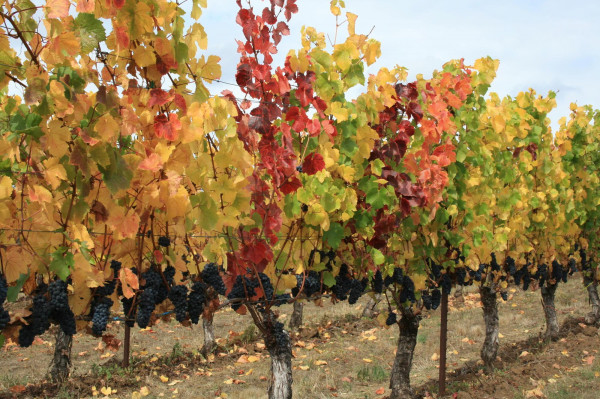
Existing vineyards should be monitored for symptoms which generally start to appear from this month and throughout autumn.
All unusual pests or diseases should be reported through the Emergency Plant Pest Hotline on 1800 084 881.