The Lord giveth, and the Lord taketh away (Job 1:21).
So too, apparently, does Anthony Albanese (Budget 3:5:2023).
Australia’s farmers finally had their pleas heard in Canberra’s corridors of power, and our nation’s crumbling border controls – the last line of biosecurity defence – have been given a big cash injection.
But Australia’s farmers are now expected to cough up about $48 million a year in a surprise case of careful what you wish for.
The obvious funding targets for this biosecurity boost could, should, be the businesses and people who create the risks for Australia’s food producers.
Not the producers themselves, the ones who also stand to lose most if something such as foot and mouth follows varroa mite and finally sneaks into Australia.
National Farmers’ Federation president Fiona Simson said farmers hoping to see an increase in biosecurity funding have been dealt a bittersweet hand, with the surprise raid on their hip pockets set to help bankroll the system.
Ms Simson said farmers will face a bill equivalent to 10 per cent of their industry-led agricultural levies – levies which already fund many biosecurity activities and organisations.
She said farmers are already a significant contributor to the system in recognition of the benefits it provides the sector.
The increase will be imposed on products from July 1, 2024, after a period of industry consultation.
“The move to have farmers foot the bill is a bitter pill to swallow,” she said. “We’re already significant financial contributors.
“What’s more, we bear the cost of managing historical pest and disease incursions and face the enormous threats posed by pests and diseases on our doorstep.
“After years of consultation and discussion, we’d hoped to see a scheme such as a broad-based container levy – that forced risk creators to underwrite the system.
“It’s extremely disappointing to have to continue waiting for a meaningful contribution from risk creators.”
According to the Department of Agriculture, producers are up for 6 per cent, of the total $804 million biosecurity spend from 2024-25.
Importers do cop the biggest hit – at $363 million, or 45 per cent – but the domestic industry wants that much higher because only imported products carry the big risks.
But hidden alongside the farmer charges is the bill for taxpayers (amongst whose ranks we find the nation’s farmers) will contribute $350 million, or 44 per cent.
Again, complain the farmers, why isn’t the bulk of this cost-shifting dumped well and truly on the risk creators?
As a pro-rata system, equivalent to 10 per cent of 2020-21 industry-led agricultural levies, the following sectors are examples of the charges which they will start paying as their share of the government “investment” from 1 July 2024:
CATTLE (grass fed) charged an extra 50 cents per head.
EGG producers face an extra 3.25 cents per chick.
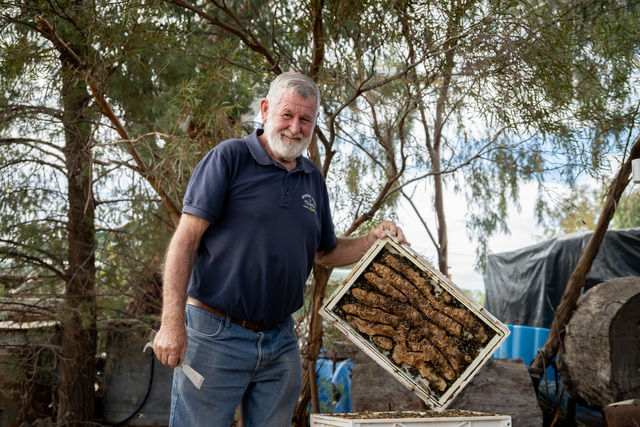
BEEKEEPERS are up for slightly less than 0.5 cents per kg of honey.
APPLE producers lose another 0.19 cents per kg.
The department stated that for “producers with commodities not subject to statutory levies, arrangements will be negotiated on a commodity-specific basis”.
GrainGrowers chief executive Shona Gawel echoed the levy against farmers was “disappointing” as they were not risk creators, demanding Canberra reconsider its “shortsighted decision”.
“Agriculture Minister Murray Watt only recently endorsed an independent report by the Invasive Species Council suggesting people who create the biosecurity risks need to pay their fair share,” Ms Gawel said.
“The imposition of what the government believes is a ‘modest levy’ is neither fair or well directed.”
The Nationals leader David Littleproud labelled the levy on farmers “a new food tax”.
He said charging farmers to pay for the biosecurity risk of international importers was “senseless” and would be passed onto consumers and inflate grocery bills.
At a time when inflation is rampant and the cost-of-living squeeze is getting tighter.
“It is unfathomable the Labor Government would ask farmers to pay for the biosecurity costs of importers from other countries,” Mr Littleproud added.
“The Coalition proposed a cost-recovery model that importers would pay commensurate to the risk provided, rather than farmers, and the model was ready for implementation before the end of last year.”