A NEW Hort Innovation Frontiers project is about to explore planting stone and pome fruit trees in 2m rows with canopies as narrow as a pair of secateurs.
And it’s not about increasing the density of trees but planting trees at 2-3m down each row.
“Narrow orchard systems (NOS) for future climates” is a partnership between state agriculture agencies across Victoria, NSW, SA and WA – and includes experimental and demonstration sites.
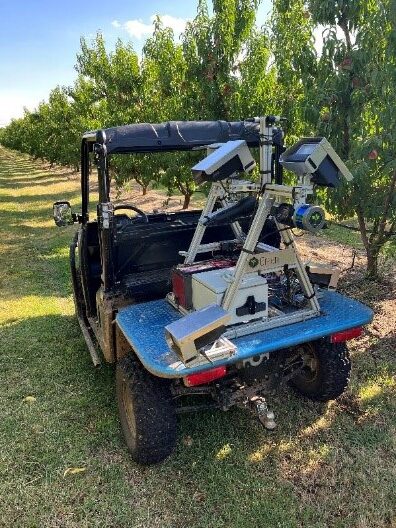
There are three streams of research. The first is studying the effects of rootstocks, cultivar, canopy height and training system on vegetative growth, yield and fruit quality in designed NOS field experiments. The second is simulating light interception and spray efficiency in NOS, using digital twins and light detection and ranging (LiDAR) technology. The third is testing appropriate ag tech and sensors for NOS.
The planar cordon systems from studies in New Zealand as well as the work in Italy on pedestrian narrow row orchards and the upright fruiting offshoot (UFO) developed in the US for cherries provide much of the impetus for this research.
For example, the Future Orchard Production Systems project in New Zealand showed yield of marketable apples exceeded 150t/ha in narrow-row tall planar canopies.
So, the question is, can these yields of Class 1 fruit be achieved in Australian fruit growing regions?
As per the studies from overseas, the project will train cherry, apricot, plum, nectarine, apple and pear trees to a cordon system (i.e., 4-10 vertical leaders arising from a ‘grapevine’ cordon).
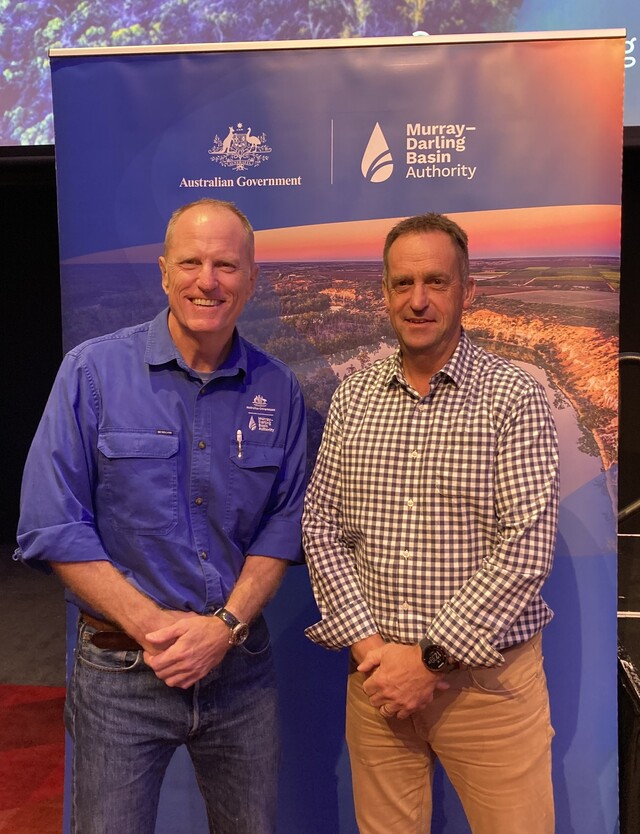
It will then examine canopy height (2-3.5m) and promising rootstocks that can impart sufficient vigour to fill the allocated space but at the same time constrain vegetative vigour to enable good light distribution down through the canopy. Ag Victoria’s Ian Goodwin says additional studies will investigate the pros and cons of planting feathered trees, arched cordons and a vertical wall, compared to a V system.
Ian says data will be collected throughout the project to undertake an economic analysis, and this will be reported to the industry.
He says existing planar canopies will be scanned using LiDAR technology to create a digital twin of an orchard.
“Light interception and distribution through the digital twin will be simulated and validated for different environments, row orientations, canopy heights and row spacings,” Ian added.
“A NOS design tool will be built for growers. Similarly, spray efficiency and sprayer design in NOS will be explored using a digital twin. The performance of a best-bet sprayer for NOS will be evaluated,” he says.
“Testing, evaluating and demonstrating NOS-suitable ag tech, sensors, tracking technologies, data integration and artificial intelligence will be major components of the project.
“Equipment and sensors include autonomous and electric machinery (for example, fruit bin and tray pickups, tractors, mowers, mulchers and herbicide applicators), robotic harvesters, variable rate spray technology, existing machinery (pneumatic defoliators, flower thinners and mechanical hedgers), ground and aerial-based optical and LiDAR sensors (to spatially monitor yield, fruit quality, tree stress), plug-and-play internet-based wireless systems and automated retractable netting.”
Ultimately the project aims to provide knowledge that supports an industry transition to:
– Safer orchards that attract a labour force
– More profitable orchards due to lower operating cost (e.g., energy, labour)
– Uniform orchards that consistently produce high yields of quality fruit
– Accelerated adoption of robotic and sensing technology
– Climate-resilient and environmentally sustainable orchards
For further details, email Ian.Goodwin@agriculture.vic.gov.au