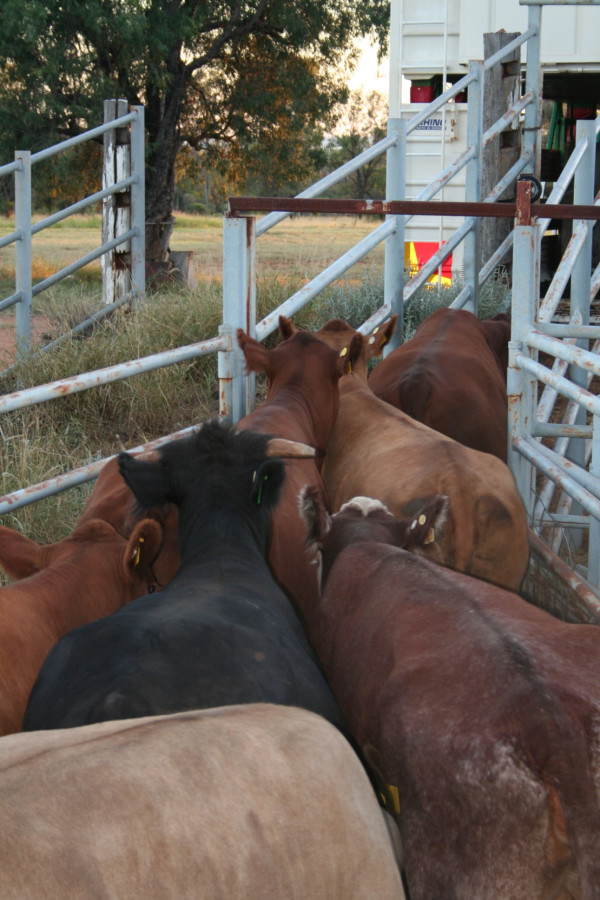
Although Australia is currently free from foot and mouth disease (FMD), it is considered one of our greatest biosecurity risks and an incursion would have significant consequences for animal health and trade, along with potential impacts for the grains industry.
In 2022, FMD was detected in Indonesia and the disease was declared endemic in 2023, which indicates a long-term effort is needed to prevent a devastating incursion emanating from our closest neighbour.
FMD does not directly affect plant industries, but it can potentially stop Australian exports of animals and hay, and prevent the movement of livestock and agricultural products off farms. Distribution of grain feed may also be impacted.
According to ABARES, 7900 out of 16,200 plant industry farms in Australia are mixed operations.
“All agricultural industries are connected, and it is likely growers and mixed-farming operations will feel the impact of FMD if a disruption occurs in one of the agricultural industries,” Sarah Corcoran said, Plant Health Australia (PHA) chief executive.
FMD is highly contagious. The disease is carried by live animals and in meat and dairy products as well as soil, bones, untreated hides, vehicles and equipment. The virus can also be carried on clothing and footwear.
The virus is present in large amounts in the blisters, saliva, urine, manure, milk and breath of infected animals. It spreads rapidly between animals and can be contagious for up to four days before clinical signs appear.
PHA has developed a FMD quick guide to help plant industries and mixed-farming operations prepare for animal and plant pest and disease outbreaks and identify business opportunities that could arise.
The framework is based on the AFITE (Assess, Find, Identify, Thresholds, Enact) model.
“It is based on the same effective approach taken for fall armyworm, russian wheat aphid and serpentine leaf miner in previous outbreaks,” says Stuart Kearns, PHA’s national manager for preparedness and R&D.
The AFITE model
Assess
A farm biosecurity plan demonstrates how plant operations are segregated from animal production.
Assessing the risk is one of the most important steps in farm biosecurity planning. PHA’s Farm Biosecurity Action Planner triggers industry-specific planning guides including cotton, rice, melons and grains.
When reviewing farm biosecurity plans, PHA recommends that growers should:
* Incorporate property mapping – map out boundaries, stock yards, gates, dams, waterways, sheds and laneways.
* Update contact details for workers, contractors, consultants, transporters and logistic companies to enable early communication and business continuity.
* Compile a list of credible sources of information and keep informed of new developments.
* Keep records of people, vehicles and machinery interactions with livestock to ensure business continuity during and immediately following an emergency response.
* Visit the Grains Farm Biosecurity website for useful templates, including a vehicle biosecurity assessment tool, a consultant checklist and agreement.
* Renew biosecurity gate signs at entry and exit points together with clear instructions to advise visitors to the farm what they need to do before entering or exiting.
Find
The second step is to know when and how to look for signs of FMD.
Symptoms include:
* Lameness and/or a reluctance to move;
* Lack of appetite;
* Slobbering/drooling;
* Severe depression;
* A large drop in milk production in dairy animals;
* Abortion in pigs;
* Sudden death in young animals; and
* Blisters (vesicles) in the mouth, nostrils, teats or on the feet.
Identify
Early identification is key in containing and eradicating the disease. FMD is a nationally notifiable disease, which means you are obligated to contact your local veterinarian, government veterinarian officer or call the Emergency Animal Disease Watch Hotline on 1800 675 888 to report any suspected symptoms.
Thresholds
Australia has a zero tolerance to FMD and the policy is to stamp out the disease by removing infected and high-risk animals. Early detection is the best chance to contain and eradicate the disease when it arrives.
Enact
The final step refers to enacting your biosecurity plan with a focus on good hygiene practices and controlling the movement of livestock, people and equipment on to your property.
More information from www.planthealthaustralia.com.au