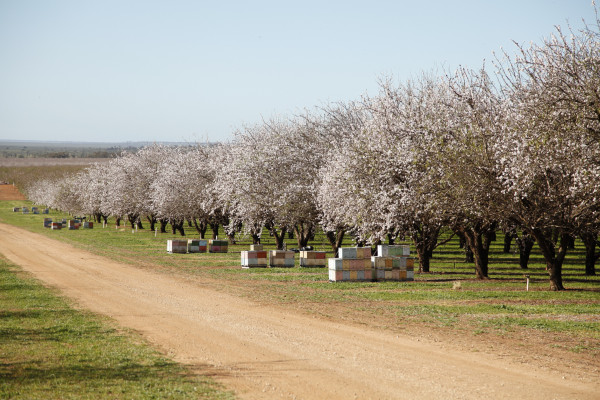
NOW the almond harvest has wrapped up for the vast majority of growers in Sunraysia, the focus turns to securing arrangements for beehives to help with pollination in August.
This is a critical time for our industry, which is heavily reliant on those bees.
While there are a lot of variables with which almond growers have to deal with during the year, a good pollination event will set the season up well for all the other challenges.
It’s hard to know how many beehives there are in Victoria, and how many beekeepers are available to provide pollination services to meet the needs of the state’s almond growers.
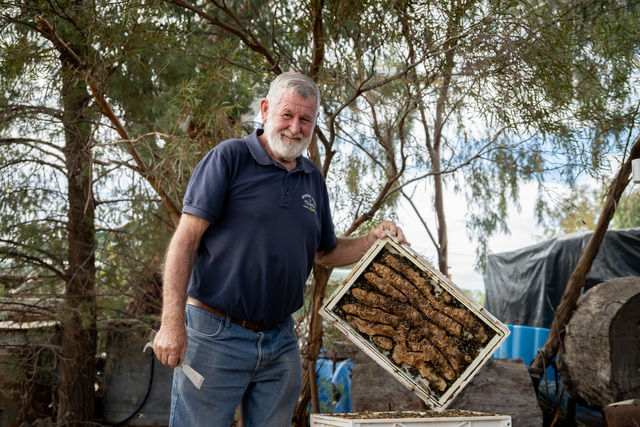
Establishing a good and trusted relationship between beekeepers and almond growers cannot be understated and a lot of time goes into these discussions and documenting expectations in pollination agreements.
Not everyone is willing or able to supply pollination services, so sometimes our growers use interstate hives, primarily from NSW and Queensland.
Beekeepers are paid a premium for supplying healthy hives for almond pollination and part of the arrangement includes a phased introduction to match the bloom rate and inspection of hives soon after arrival to make sure the hives meet the almond industry standard developed in consultation with beekeepers to look after bees for their short stay in almond properties.
A bee parasite called Varroa destructor was detected at Newcastle port in June 2022 and while the risk of this exotic pest infesting Australia has loomed for years, we had all hoped it would not get here.
Attempts were made to eradicate the pest, with what was one of the largest biosecurity efforts in Australia, but in September a decision was made to transition to managing Varroa.
A national plan is being implemented which aims at increasing resilience and minimising the impacts of the pest across Australia’s bee and pollination dependent industries as everyone gets used to managing hives with Varroa.
Earlier this month Agriculture Victoria outlined its approach to moving bee hives.
Hives not knowingly infested with Varroa will be allowed to enter Victoria from any state or territory, including NSW.
The specifics on when permit applications open and pre-entry hive testing requirements will be available in the coming weeks.
The Almond Board of Australia appreciates the Victorian government has recognised all pollination dependent industries need business continuity.
Pollination services have also provided business certainty to many beekeepers in the past and have helped many keep afloat during periods where mother nature has challenged their honey business with limited floral resources during drought, fire, and flood and more recently low honey prices as a result of a glut in honey stores.
The ABA recognises the importance of supporting beekeepers during this transition period so they are given time to learn how to manage Varroa.
While Varroa mite arrived in NSW not quite two years ago, it’s something other countries around the world have been managing for decades.
This provides a light at the end of the tunnel to know management is possible and there’s opportunities to learn from our overseas counterparts.
The almond industry is better off than a lot of other pollination dependent industries because we’ve been securing pollination services for a long time and have a good understanding of how to go about it.
There are other industries in Australia which have relied on wild honeybees for crop pollination and it will take some time to work out their full pollination requirements as these populations are likely to dwindle as Varroa spreads.