Tapping energy meter key to feed puzzle

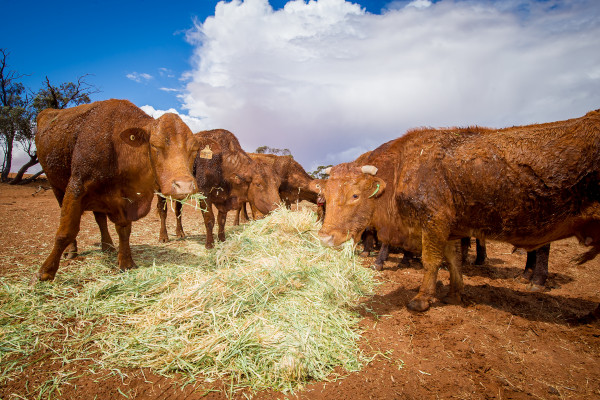
WHEN choosing the best feed to purchase for sheep or cattle, there are a few things to take into account – especially when feeding over winter.Agriculture Victoria Livestock Industry Development Officer Nick Linden said costing feeds on the basis of energy was still the number one consideration, as energy content of the supplement would determine how much you needed.

Feeding to requirements can have immediate and long-term implications.

Maternal and offspring survival can be compromised if nutrition is insufficient during late pregnancy and lactation.

There are also long-term implications for their future growth, maturity and fertility.

Other considerations that might help determine which supplements and the quantity you provide include:

Minimum protein

Lactating and young growing stock (especially those early weaned) will have the highest protein demands of any livestock on the farm.

Lactating or young growing sheep require more than 12 per cent protein (and as high as 18 per cent), whereas lactating or growing cattle require 10 per cent and above.

Therefore, feeds such as maize, oats and hays may not be sufficient for some stock if fed on their own.

Wastage

If feeding on the ground, wastage can become an even bigger factor once the ground gets wet.

Larger grains, such as maize and beans, may be better than small grains like barley.

Pellets break down and become less palatable quickly when wet.

Therefore, when costing feeds, you may need to build in a wastage factor.

Cold conditions and muddy ground may also increase requirements by at least 20 per cent.

Roughage (fibre)

As paddock feed declines over winter, it’s important to consider fibre intake, especially for growing livestock or those making milk.

However, this must be balanced, as if fibre is too high, they may not be able to eat enough to meet their energy needs.

Processed grain

Some grains require processing when feeding to cattle to achieve the full energy value (like wheat, triticale and barley).

If fed unprocessed, you may need to assume a lower energy value.

Processing grains for sheep is not required and will just increase the chance of acidosis.

Infrastructure

The ability to store and handle feedstuffs needs to be considered.

Adding a source of calcium (e.g. limestone) when feeding cereal grains will help meet the higher demand of lactating and growing stock.

Weeds and contamination

As the demand for hay and feeds is high, you may be sourcing from suppliers other than your usual provider.

Be aware of introducing new weeds and think about inspecting the product before purchase.

Where to find resources for value and costing of feeds:

Common values of feeds and animal requirements for energy and protein (sheep): www.feedinglivestock.vic.gov.au/sheep-resources/useful-tables-sheep/

Common values of feeds and animal requirements for energy and protein (cattle): www.feedinglivestock.vic.gov.au/beef-resources/useful-tables-beef

Digital Editions


  • Collection under the hammer

    Collection under the hammer

    AN eclectic curation of vintage and antique Australian pastoral machinery and memorabilia will go to auction on 1 February. Yvon Smythe and her late partner,…

More News

  • Calls flow for royal commission

    Calls flow for royal commission

    Purchase this photo from Pic Store: 524159 AUSTRALIA needs a royal commission into water management in 2026, according to Murray MP Helen Dalton, who says politicians are “destroying” the nation’s…

  • Big skies and farmscapes

    Big skies and farmscapes

    Purchase this photo from Pic Store: 524028 THE Gallery Balranald is currently showcasing the work of professional artist Graham Hearn. His latest exhibition, Big Skies and Farmscapes, reflects the vast scale and…

  • Difficult outlook for grape growers

    Difficult outlook for grape growers

    Murray Valley Winegrowers has acknowledged the findings of Wine Australia’s Australian Wine Production, Sales and Inventory Report 2025, which confirms the challenging market conditions facing growers. The newly released report…

  • Benham appointed to new ag role

    Benham appointed to new ag role

    The Nationals member for Mildura, Jade Benham, has been appointed Shadow Assistant Minister for Agriculture and Regional Development, as part of Jess Wilson’s new Shadow Cabinet announcement. Ms Benham said…

  • Connecting urban and rural Australia

    Connecting urban and rural Australia

    HAMISH McIntyre grew up on the land in Queensland, learning the rhythms of farming from his family. Today, he runs a sprawling family business across the St George, Dirranbandi, Quilpie,…

  • Farmers warned to stay alert

    Farmers warned to stay alert

    A RUN of booming haystack and shed fires across regional Victoria has sparked fresh warnings for farmers as hay season rolls into full swing. Fire crews in the west and…

  • Bumper harvest fuels Cobram Estate’s growth

    Bumper harvest fuels Cobram Estate’s growth

    COBRAM Estate Olives has reported one of its strongest years on record, with an exceptional “on-year’’ harvest in Australia driving improved earnings, higher production volumes and a confident outlook from…

  • Select Harvests’ cracking pace

    Select Harvests’ cracking pace

    SELECT Harvests Limited has released its 2025 business update, reporting a final almond crop estimate of 24,700 tonnes, slightly below the midpoint of its earlier forecast. The company says the…

  • Further water buybacks anger farming industry

    Further water buybacks anger farming industry

    FARMERS, politicians and advocacy bodies are warning further water buybacks announced last week will gut regional towns, drive up food prices and cripple Australia’s dairy heartland. Federal Water Minister Murray…

  • Farmer takes action in feral pig fight

    Farmer takes action in feral pig fight

    IN THE heart of south-western New South Wales, sheep and cattle farmer Colin McCrabb is waging a quiet war against a destructive and elusive enemy -feral pigs. Operating a 6800-hectare…