A TINY beetle that’s just 2 to 3mm long is one of the most damaging insect pests for almonds in Australia, but a substantial amount of work is being done by researchers and the almond industry to look at how it can be controlled.
The almond carpophilus beetle (Carpophilus truncatus) feeds on fresh kernels and may cause serious economic losses if the conditions are right while nuts are on trees or during storage if not treated.
The beetle burrows into the kernel and reduces it to powder from inside out.
While other species of carpophilus have been commonplace in the stone fruit industry for years, this species targets almonds and was first detected in Australian almonds 12 years ago.
In warm, humid conditions it flourishes and can lead to significant quality issues for growers.
The Agriculture Victoria Research (AVR) team, led by Mildura-based researcher David Madge, has worked tirelessly to combat the pest and are now recognised as the world’s foremost authority on this species of beetle.
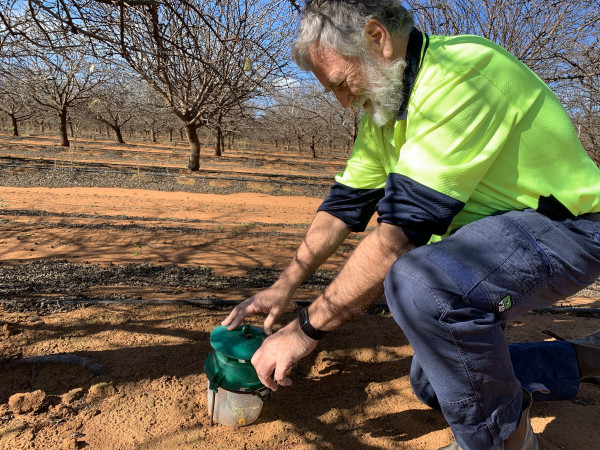
Under a long-term grower-levied project, matched with Commonwealth funding through Hort Innovation, David’s AVR team has successfully developed a trap specifically targeting the almond carpophilus beetle.
Building on this investment and funded through Agriculture Victoria Services, AVR has made traps available to almond growers to fast-track the research and understand more about the beetle.
In the lead-up to harvest this year, the Almond Board of Australia (ABA) worked with the AVR team to distribute this trap to almond growers as part of an industry-wide almond carpophilus beetle monitoring network.
More than 130 have been distributed to orchards across Sunraysia, the Riverland and Riverina with a portal developed allowing growers to easily record their trap findings so changes in beetle numbers can be monitored across the industry.
There is no cost for orchards participating in the monitoring network, but growers are required to report how many beetles they catch on a fortnightly basis.
This data will help AVR, growers and the almond industry gain a better understanding of beetle behaviour and the preferred environmental conditions for beetles.
Growers will also share their insights on how the trap can be improved.
Mildura and Swan Hill-based grower-processor Australian Farming Services (AFS) has been one of the early adopters of the traps.
The company began hosting traps on its three properties last January and the company’s senior agronomist Brian Slater said it had been worthwhile, with the monitoring set to continue well into this year.
He said it takes about an hour to service six traps on a 1650ha orchard, but it is also an opportunity to observe what else is happening in the orchard by looking for other pests and diseases.
Beetle numbers in traps spiked for two to three weeks as the hulls on the almonds dried out, with some AFS traps collecting 10,000 to 12,000 beetles.
That might sound like a lot of beetles to count, but it’s a straightforward process using scales, with 100 carpophilus beetles weighing between 0.09 and 0.11 grams.
Very low numbers continued to be caught by AFS from mid-May to mid-July and then catches started to increase about mid-August as the weather warmed up.
While the current trap isn’t commercially viable as a control treatment, AVR continues to develop a more cost-effective way to make this product available commercially.
In the meantime, the current trap is proving an effective tool for monitoring beetle numbers.
There is still capacity for more growers to join the ABA beetle monitoring network.
For further information email communications@australianalmonds.com.au to obtain a carpophilus beetle monitoring network registration form.