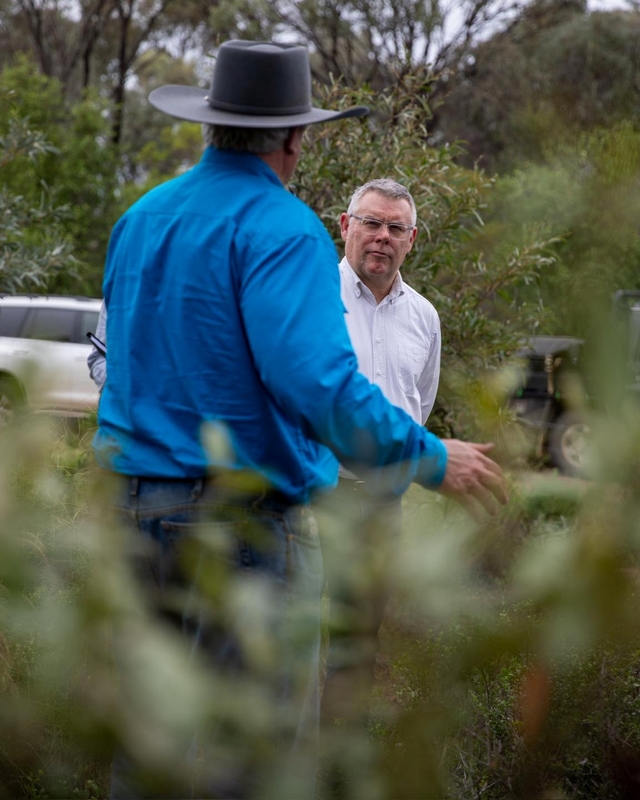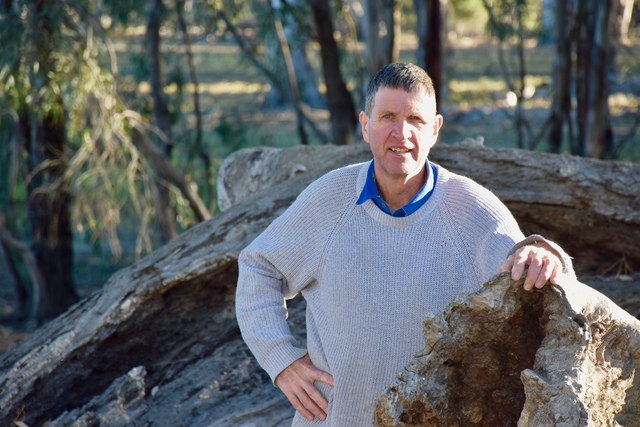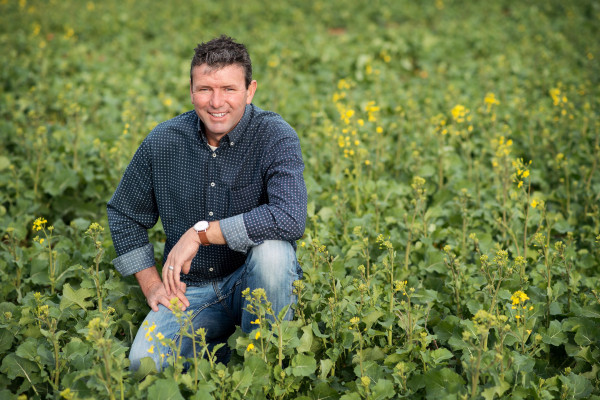
GrainGrowers chairman Brett Hosking knows what’s coming when he joins a panel discussion at next week’s Innovation Generation industry conference being run by his own organisation in Sydney next week.
The Quambatook farmer says the word on everyone’s lips is “biosecurity”.
Australia’s legendary biosecurity laws have always been a defence which has kept the country’s diverse agricultural industries safe – laws so severe that in 1956, for example, equestrian events for the Melbourne Olympics were staged in Stockholm in Sweden.
But time, politics and budgets have chipped away at what were once the world’s most severe biosecurity laws.
And while biosecurity is a subject which has always been in the background of Australian agriculture, the past few weeks have catapulted it into the headlines.
And Brett is pretty sure those headlines will also be the focus when participants are invited to have a say.
“When you look at what’s happening you can see why it is having such an immediate impact,” Brett says.
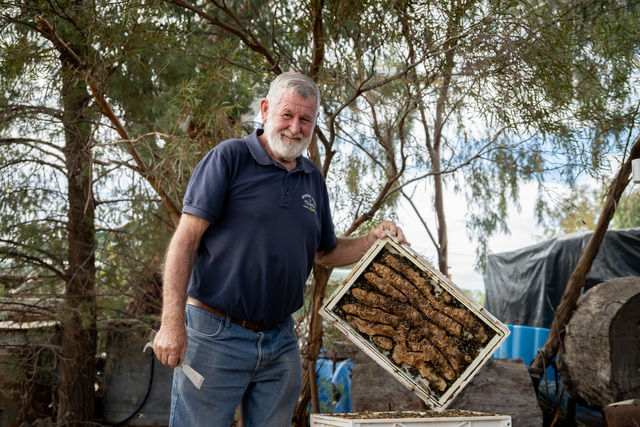
“We’ve now got foot and mouth disease and lumpy skin disease as close as Indonesia, so understandably that’s got the livestock industry in crisis mode,” he says. “And we now have varroa mite in NSW and that is sending shockwaves through the apiary industry and then every industry beyond that which needs bees for pollination programs.
“And don’t think FMD is just going to impact livestock, there’s 10 million tonnes of annual grain production which goes straight to livestock as feed and if that wasn’t required we would have to find somewhere else for it to go.
“Or look at southern Queensland and northern NSW if you are a sorghum grower – you are increasingly under siege from the army worm.”
Outside agriculture, Brett agrees it is a challenge to get the enormity of the message across to the rest of the country.
“City people just don’t get it, don’t fully understand what it means and in some ways I think that might be because we haven’t managed to explain it to them properly and consistently,” he says.
“We have been able to track the spread of most of these pest and disease risks, watching them march towards us via Indonesia, Timor and Papua New Guinea – now our borders are surrounded by them.
“And yes, sometimes we have also had our own rather perverse outcomes by bringing in exotic influences in an attempt to control problems we already have and yes, that can go spectacularly wrong – just look at the cane toad.
“Perhaps with all these things going on around us we need to have a good look at our biosecurity controls and see if they still fit the required profile, because they have really worked well in some cases. The controls have kept the khapra beetle out, and that’s a big one on its own (the khapra beetle is recognised as the world’s most destructive pests of stored grains and seeds).
“But I don’t have a firm position yet on how we do that, but I do back the best science.”
Brett says the current argument over the use of sterilising footbaths at airports for people coming home from Bali, in particular, with its FMD risks, is a classic example of the problems agriculture faces to get the wider population on side through communication programs.
He genuinely believes if city people going to Bali as tourists had a better understanding, better awareness, there would not be much resistance to biocontrol requests.
“If we could successfully deliver that message, I don’t think anyone would be that opposed to support the best and safest advice, such as washing your clothes or stepping into a footbath – and that doesn’t cover them getting the full climate/extreme weather event,” he says.
“Take Victoria, the Wimmera and Mallee have had a couple of good years but in truth we are just once bad frost away from everything going wrong.”
Production risk, Brett says, is always one of the greatest challenges faced by Australian growers, although with a combination of research and innovation, combined with on-farm application, means growers are better placed than before to manage and capitalise on seasonal weather events.
“As large managers of land in Australia, our growers are well placed to play a significant role in taking positive action on climate change,” Brett argues.
“To do so we must ensure our growers are armed with the right tools to quickly and accurately measure emissions, and capture of carbon on farm, so growers can make real time decisions for the benefit of our environment,” he says.
What has become something of a gamechanger for those playing in the agricultural space is geopolitics. Hardly a word bandied around at smoko, but with everyone accessing real time through mass communication via phones, the impact of, let’s say, Russia invading Ukraine, is available to everyone, wherever they are.
Which Brett realises now means grain growers, along with the wider industry, have to “continually respond to changing geopolitical events as they occur around the globe”.
“When tariffs were introduced on Australian barley into China, our industry cast its eyes to new market opportunities, opening up new malt barley opportunities with Mexico thanks to the preparedness of our growers by ensuring our sustainable production credentials were among the best in the world,” he says.
“That was combined with forward planning, by organisations such as GrainGrowers, ensuring opportunities for future trade were built into trade agreements, such as the Trans-Pacific Partnership.
“As conflict occurs in parts of the globe affecting grain prices and security, our growers are focused on ensuring that here in Australia we are maximising production so that everyday Australians along with many of our valued export trading partners can continue to enjoy a reliable supply of nutritious, clean and sustainably produced grain direct from Australian farms.”
And along with all other Australians, he says our growers are also feeling the burden of rising costs of the inputs critical to sustainable grain production.
“Growers are managing this by focusing on efficient application and timing combined with continual monitoring of crop performance to ensure inputs are used efficiently,” Brett explains.
“The cost pressure has, however, highlighted to opportunity to reinvigorate domestic manufacture of critical inputs to ensure reliability of supply and grow opportunities for Australians.”