Growing a citrus data bank

MORE than 750 citrus farms across the country have been carefully mapped and included on a new National Citrus Map.

Created by the University of New England’s Applied Agricultural Remote Sensing Centre (AARSC), the map serves as a national baseline for the location of all commercial citrus orchards across Australia.

The map can be viewed on the Citrus Australia website, citrusaustralia.com.au.

CA says the map, developed to support traceability, value-adds essential information at greater detail (block level).

This information is not available in the Australian Tree Crop Map and is only accessible via CA.

The National Citrus Map provides a pioneering fundamental data set for Australian citrus that is expected to become the cornerstone of the industry’s traceability, biosecurity, exports, sustainability and business planning.

CA and the AARSC have developed the map, which adds more detailed information to the existing citrus elements of the Australian Tree Crop Map, including block ID, variety and age.

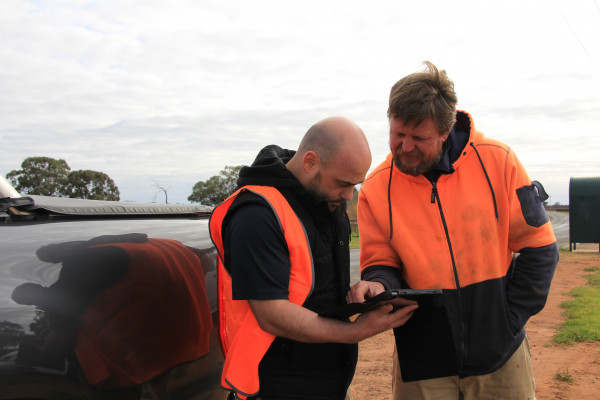
It also employed citrus traceability officer Paul Stephens to gather additional data to populate the map.

CA chief executive Nathan Hancock says “digitising the mapping will help improve the traceability to farm for biosecurity and food fraud-related issues”.

“It also provides an accurate assessment of current and future crop loads, which will aid future market development, and make KCT applications easier for growers,” Nathan says.

“The risks to industry if this tool is not developed and maintained are jeopardised traceability and biosecurity.”

Development of the National Citrus Map, together with complementary projects for isotope testing and implementation of new traceability systems for exports, was achieved through the Citrus Export Development Project, funded by Agriculture Victoria’s food-to-market program.

Growers can access the Australian Tree Crop Map on the CA website and can search for their farm by co-ordinates or road name.

Farmers can contact CA if they want the map updated.

“We are proud to be breaking new ground with this initiative, but equally, it would be negligent not to do so,” Nathan says.

About 750 farms have been mapped and 400 more are on the list.

Under the program, data is populated at block level into the map by CA through a purpose-built application developed by AARSC, supported by an iPad application that can be used on farm, enabling future use by CA, especially during the yearly November-January Citrus Tree Census.

All information populated in the National Citrus Map is owned by Citrus Australia and is secure under strict sign-in access.

Digital Editions


  • Ricegrowers backs review

    Ricegrowers backs review

    The Ricegrowers’ Association has welcomed the start of a 12‑week consultation on the Murray–Darling Basin Plan Review. RGA president Peter Herrmann said industry would take…

More News

  • Big crop predicted for almonds

    Big crop predicted for almonds

    The almond harvest is underway and 2026 could produce Australia’s largest almond crop. Nationally it’s estimated that almost 167 thousand tonnes will be harvested this year. That’s a seven per…

  • The calm before the storm

    The calm before the storm

    We appear to be bogged down in a rut, with the commissioning of our new plant. I was super frustrated a couple of months ago – at the spanner throwing,…

  • Backpacking paves the way to leadership

    Backpacking paves the way to leadership

    Purchase this photo from Pic Store: 531373 SUNRAYSIA’s summer harvest attracts travellers on working holidays from all over the world, particularly Europe. These workers perform a vital service for regional…

  • Warm weather set to continue

    Warm weather set to continue

    BARLEY prices are supported as drought speculation builds, with growers holding onto grain for livestock feed. The Bureau of Meteorology January drought statement showed below-average rainfall for much of Victoria…

  • Growers warn of fallout from visa cuts

    Growers warn of fallout from visa cuts

    UNPICKED crops, decimated rural communities and higher supermarket prices are among the consequences that could unfold if One Nation’s anti-immigration policy were to be implemented, farmers and experts have warned.…

  • Grape harvest underway

    Grape harvest underway

    Harvest has begun with our first loads of Chardonnay and Pinot Grigio. Reports of lower yields following the ongoing heat are common, although with the worldwide oversupply of wine, this…

  • Grant strengthens cattle and red meat industry

    Grant strengthens cattle and red meat industry

    Purchase this photo from Pic Store: 528596 Meat and Livestock Australia (MLA) in partnership with industry peak bodies, has secured a grant from the National Foundation for Australia-China Relations to…

  • Safety a priority

    Safety a priority

    EVERY farmer deserves to come home safely at the end of the day. That is the message at the heart of a new statewide campaign urging Victorian farmers to see…

  • Golden opportunity for future

    Golden opportunity for future

    THE Victorian Farmers Federation has called on the State Government to make strategic investments in agriculture, saying smarter policy and targeted funding in seven priority areas could supercharge the industry…

  • New initiative for soil diseases

    New initiative for soil diseases

    THE Grains Research and Development Corporation has recently launched a new initiative aimed at addressing economic strain from soilborne crop diseases. The Soil-Borne Disease Initiative is a five-year program that…