SWAN Hill played a pivotal role in a Georgian government fact-finding group which last week completed an intensive tour of Sunraysia and our region for guidance in returning the small eastern European country’s irrigated agriculture industry to its former glory.
In 1990, while still a satellite state of the USSR, Georgia had 500,000 hectares of cereals, grapes, vegetables, nuts and citrus under irrigation.
Barely two years after secession from Soviet Russia, and following a coup and civil war, that figure had collapsed to 43,000ha.
As the nascent nation struggled to assert its independence and build an economy, it was quickly faced with the threat of food and water security.
Upgrading its dilapidated flood irrigation system to a modern pressurised drip feed system using industry best-practice became a priority.
Speaking in Swan Hill, Georgia’s head of the Hydro-melioration and Land Management Department, Gizo Chelidze, said that brought his group to Australia and north-west Victoria.
Mr Chelidze said Georgian officials, while agreeing to adopt the innovative system, wanted to see first-hand how a closed pipeline system operated and to learn from the Australian experience.
He said the purpose of the trip, funded by Asia Development Bank, was to visit modern, piped-irrigation schemes looking at the construction, operation, maintenance, technology, pipe fittings and different agricultural uses of the technology.
Between Mildura and Swan Hill, then on through Kerang and Cohuna, the Georgians were left in no doubt how agricultural industries the length of the Murray had embraced the technology.
“We have seen Australian irrigation applied to maize, grapes, fruit, almonds and pasture, and we have been visiting different organisation structures and operation methods,” Mr Chelidze said.
“Where possible we have also visited smaller farms and gravity systems, which compared well with Georgia.
“In summary, the innovative system we are looking to adopt is a gravity closed pipe network using HDPE welded pipes.
“This will deliver pressurised supply to hydrants serving 5ha with sufficient capacity to almost enable water-on-demand.
“That’s where farmers will directly connect to the hydrants, which will serve 5-10 farmers per hydrant, with flow sufficient for one to three farms to operate irrigation at the same time.”
At 69,700sq km Georgia is only just bigger than Tasmania, with a population of 3.7 million, but incredibly its climate and soil profiles between the west and east are like chalk and cheese.
The western half is plains set on the Black Sea and has a significant drainage problem before it can be successfully farmed.
It is classified as a humid subtropical zone with annual rainfall anywhere between 1000-2500mm (but has been recorded above 4000mm), with most falling in autumn.
The foothills and mountainous areas (including the Caucasus Mountains) experience cool, wet summers and snowy (up to 2m in depth) winters.
In the east, it’s hilly to mountainous, dry, winter temperatures can sink to -17 degrees in higher altitudes and summer can reach 38 degrees.
Eastern Georgia has a transitional climate from humid subtropical to continental with its weather patterns influenced both by dry Caspian air masses from the east and humid Black Sea air masses from the west.
The latter is often blocked by mountain ranges (Likhi and Meskheti) which divide the eastern and western parts of the nation.
Georgia Amelioration Ltd head of international projects management office Mikheil Margvelashvili said Georgia’s traditional system of open channels and flood irrigation had to change.
He explained the country couldn’t even afford to lose water to evaporation, let alone deal with issues from inefficient water management to water theft (mostly through illegal pumping).
Mr Margvelashvili said that meant putting in pipes, introducing pressurised irrigation and demonstrating to Georgian farmers the savings in both cost and time.
He said this wouldn’t happen overnight, but the government was taking it a step at a time.
“The goal is to have irrigated farming back to 200,000ha by 2025 and the Australian technology and implementation we have seen is very encouraging,” Mr Margvelashvili said.
“But as well as our inherent problems, Georgia is also being confronted by climate change – in the past 10 years the nation’s reservoirs have no longer been filling.
“Also, much of our water is glacially fed, and our glaciers are no longer stable, they are melting and losing size, and that is very bad news for our country – whether this is cyclical or a permanent change, only time will tell.
“Hydro electricity supplies much of our power, and in winter, when it is really needed for heating, many of the rivers are frozen and so we are power deficient and have to import energy – and that’s a real cost.”
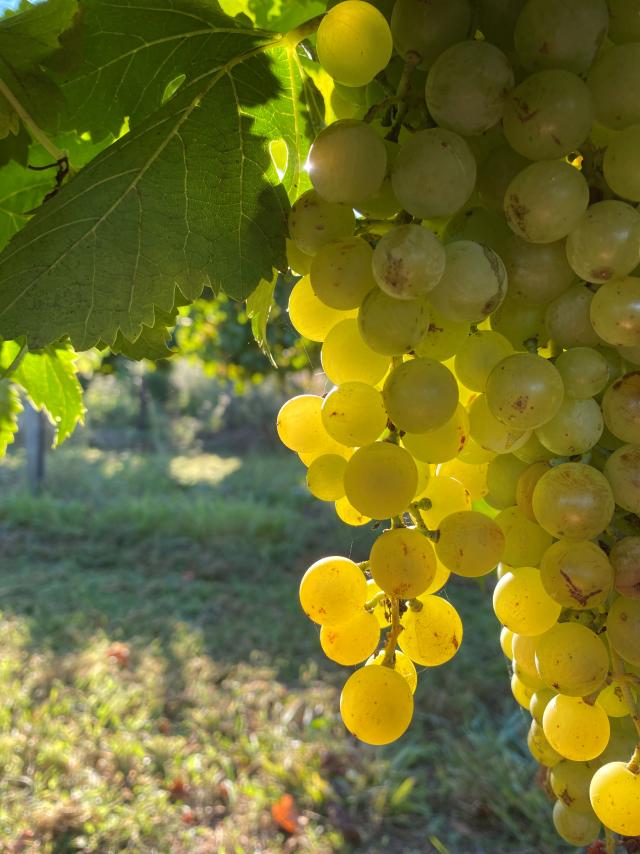
All the delegation members were amazed by sights around Mildura, such as citrus and grapes growing alongside each other – in Georgia they have to be grown at opposite ends of the country because of weather.
There was also strong interest in the wine grapes – Georgia is widely regarded as the “cradle of wine”, with archaeologists having traced the world’s first known wine creation back to the people of the South Caucasus in 6000BC.
Mr Margvelashvili said the master plan was to develop Georgian irrigated food from almost total domestic consumption to surplus production and the opportunity to export.
He said after the loss of the Russian market for most of the nation’s wine production, Georgian growers had to dramatically boost the quality of their end product to make it attractive as an export.
Today it is sold to all the countries around Georgia, from Russia to Turkey and to Europe and Asia.
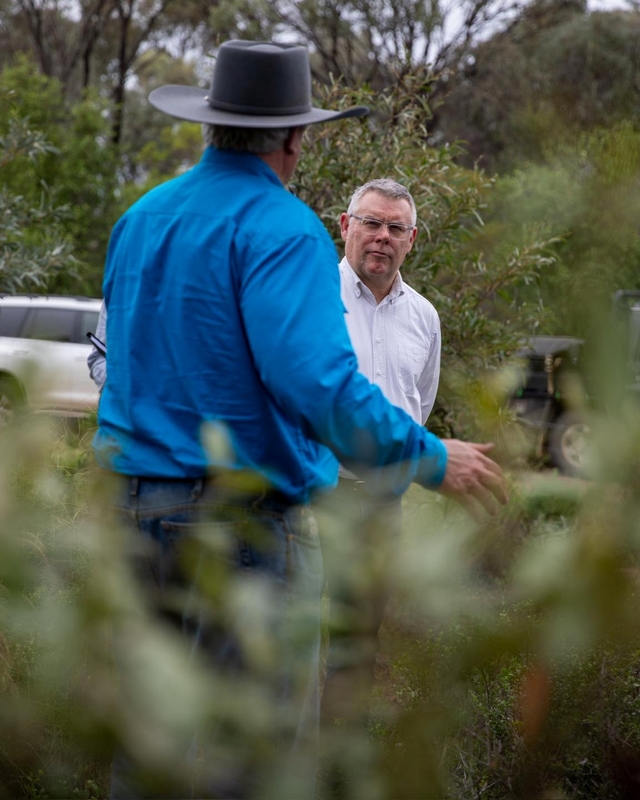
Tour leader Rob Rendell, a founder of Bendigo-based environmental and agricultural consultancy RMCG, is working with the Georgians through the Australian Water Partnership, set up by the Department of Foreign Affairs and Trade, to better manage “small projects”.
Mr Rendell had been to Georgia consulting on this project three times in the past eight months and said Georgia was modernising, not rehabilitating, its irrigation networks.
He said the biggest step for the Georgian agriculture industry was changing the irrigation system which sustained production for generations to something new.
“That is the essence of this visit, to see not only that pressurised irrigation works, but that it will work for them and they will be so amazed at how well it works, they will all wonder why they have waited so long to make the change,” Mr Rendell said.
“The original Russian engineering was in fact very, very good – there are as few things Australia could learn from them – but it is no longer good enough.”