The wool market has enough challenges without blindly going ahead and creating some of its own.
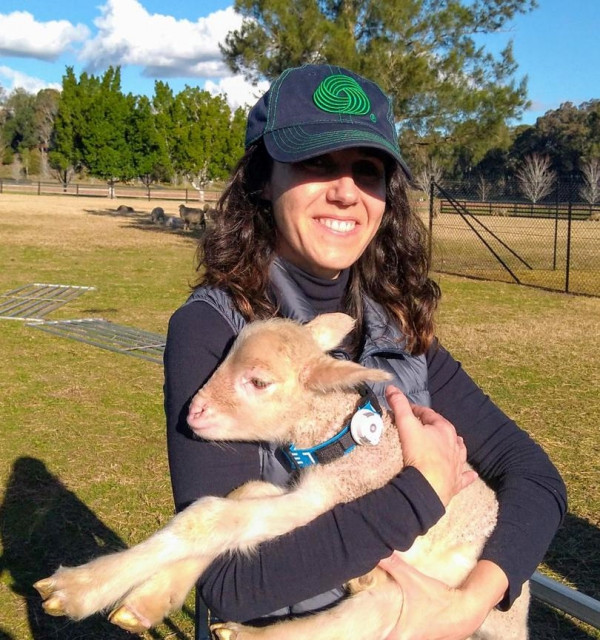
Which is why AWI program manager animal wellbeing and industry resilience, Carolina Diaz, said it’s critical woolgrowers understand and comply with the regulatory limits when using chemical products on their sheep.
Ms Diaz said following the rules not only optimises the welfare of the sheep, it also maximises the safety of the operator, the health of the environment and the positive eco-credentials of Australian wool in the marketplace.
She said Northwest Victorian woolgrowers rely on a range of animal health products to protect their sheep from internal and external parasites such as worms, lice and blowflies.
One consequence of using chemical products is the potential presence of residues in body tissues and wool for a period after the product’s application.
“For all registered veterinary products in Australia, there are in place regulatory time periods following the chemical’s application which indicate when residue remaining in or on meat and wool products will not exceed the maximum residue limit (MRL),” Ms Diaz said.
“The Australian Pesticides and Veterinary Medicines Authority (APVMA) sets MRLs for all registered veterinary chemicals in agricultural produce.
“To find out the time constraints, always read the product label or view the APVMA or ParaBoss websites.”
Ms Diaz said mandatory time constraints have been set to ensure lamb and sheep meat is safe to eat, wool and sheep are safe to handle, and wool scour effluent is safe for the environment.
She said as well as minimising any harmful impacts of chemicals on farm workers, it also helps establish the fibre’s positive eco credentials amongst environmental rating agencies, governments, the textile trade and consumers.
“It’s especially critical for woolgrowers to take extra care if they treat their sheep outside of their usual timetable or have had to change their shearing schedules,” Ms Diaz said.
“Effective chemical residue management ensures the wool is suitable for sale into markets that are increasingly concerned about the provenance of their products, including residues remaining on fibres.”
So what are the important time periods?
The sheep rehandling interval, or SRI, is the time between treatment and when wool or sheep can be safely handled without the need for protective clothing.
If an SRI is included on a product label, this must be observed to protect those handling the sheep or wool, and to protect the environment in the case of wool processing residues.
For some products, the SRI is short, only requiring the product to become dry on the sheep.
When it comes to the wool harvest interval, or WHI, equivalent to wool withholding period is the time from application of a chemical to when the wool can be harvested including crutching to satisfy Australian environmental requirements.
Most chemicals used to treat external parasites, such as sheep lice and sheep blowflies, bind to the wool grease rather than the fibre itself.
The scouring process removes wool grease and most other contaminants at the same time, which can result in contaminated scour effluent and lanolin if the WHI is not adhered to.
You can estimate the pesticide residue levels on wool at shearing caused by lice or flystrike treatments by using the ParaBoss Wool Residue Tool at flyboss.com.au/flystrike-tools/woolres-tool.
If a lice or fly treatment does not state a WHI or a SRI, then a default one-month period applies for mob treatments or for wound dressings. Flystrike treatments for individual sheep have a default withholding period of at least one month for wool.
The Meat withholding period, or WHP, is the time from chemical application to when an animal may be slaughtered for domestic consumption.
Although lice control and flystrike products are applied to the skin or wool of the sheep, the skin absorbs some of the product, or in the case of jetting or dipping for lice control, the sheep may ingest or inhale small amounts of the chemical.
The specified WHPs are in place to ensure no detectable levels of these chemicals are left in muscle, fat or other body tissues.
The wool withholding period is equivalent to the wool harvest interval.
Finally, the export slaughter interval, or ESI, is in addition to the meat WHP and sheep producers need to be aware of the ESI.
The ESI is the time from chemical application to when an animal may be slaughtered for export.
Some products have a relatively long meat WHP or ESI and care need to be taken care when treating lambs to ensure this will not delay their planned sale.
A trade advice statement, such as an ESI, may not appear on labels of older registered veterinary products, however all new products now include a trade advice statement.
If you cannot find the ESI on a product label, use the ParaBoss Products Search tool available on FlyBoss or LiceBoss.