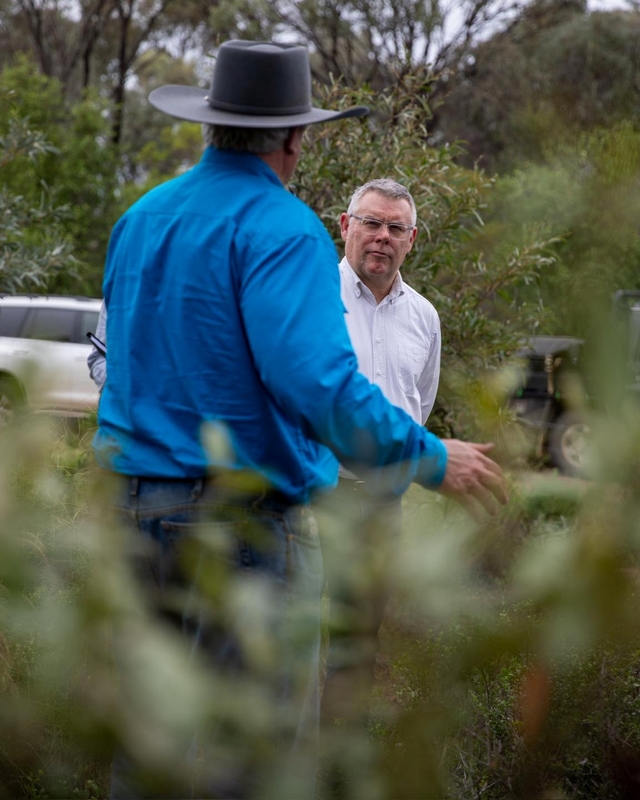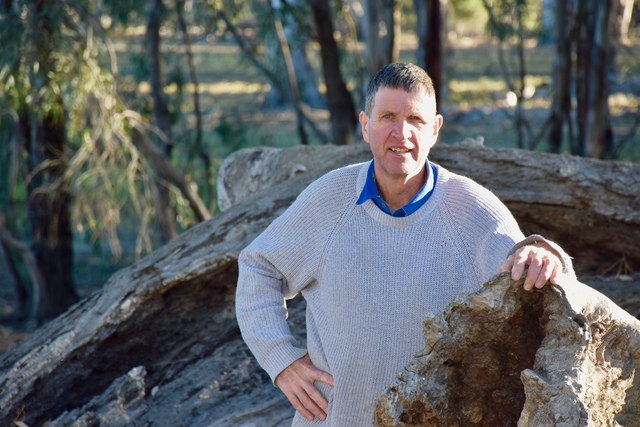
RUNNING any farm is a big job, as Mick Pole knows. He helps run a collaborative farming enterprise, but he still sees it as a small part of his big sky vision for farming in general.
Since 2015 he and neighbour and friend Jim Wakefield have been jointly farming 6000ha of Mallee cropping country in a 330mm rainfall zone at Walpeup, after previously farming with his parents.
The property has wheat, barley, lentils and occasional canola, as well as vetch, lupins and peas for brown manure.
But that’s just the nuts and bolts of the business.
Mick wants to secure the future of his industry and is pretty sure research and development will be the key – even though he is concerned it is not always heading in the right direction.
That hasn’t stopped him from putting his hand up to do his share – he is a director of Mallee Sustainable Farming and a member of the Birchip Cropping Group.
He is adamant the role of local groups such as these is pivotal in delivering local results.
“You can never have enough research and really, the best research is that happening in your own backyard, because if it’s not relevant and timely then regardless of the money spent the adaptation isn’t going to be good,” Mick explains.
“It is important for farmers and the wider community to get behind these local groups and support them, because they do listen and they have a lot to offer.
“I think they are critical at the local level and without them there would not be anywhere near as much progress.
“The farmer lives and breathes the job every day, they are the ones in the paddocks, so they know what’s going on and they are the ones who need to be close to the research to keep it relevant to their areas.”
Mick also believes the changing dynamics of research and how it comes about, as well as how it has progressed during the past 20 years, has been an interesting journey.
As he says, the length of projects is also critical.
“Long-term local projects of new possibilities are paramount,” he says, because it gives researchers and farming groups stability and confidence.
Mick says the benefits of research have been showing strongly with plant breeding.
Right now he and Jim are pretty well changing wheat and barley varieties every two years and always, he says, for the better.
He says the past five years have seen some outstanding results from a breeding industry which has been getting better all the time.
National variety trials across the region are still something he believes are up for a restructure, or change.
Having being a host of NVT trials for a considerable period of time now, and a member of GRDC NVT advisory committee, he has seen and taken somewhat negative feedback of soil type location, quarantined results and pretty much anything in between.
Which is why he believes NVT trials and extension projects need to come together for relevance, and ultimately grower confidence for adaptation.
“We are also starting to rotate our legumes on a similar schedule because we have been seeing such good results in other varieties,” Mick added.
“I reckon the last big challenge will be for the breeders to come up with a solution to barley head loss – if they could give the Mallee a variety that could hold its head and we could harvest better, that would be fantastic.”
As well as his own involvement in research and trials, Mick also works closely with an independent chair for the collaborative farm, as well as an agronomist and a business consultant.
His MSF and BCG memberships are complemented by his participation in the Victorian Farmers Federation and GrainGrowers.
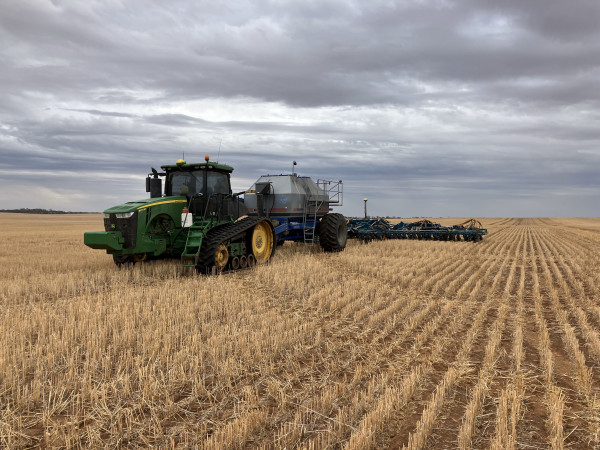
After making the decision to establish the collaborative farming enterprise, Mick and Jim adopted a 15m controlled-traffic farming on 3m wheel spacings in 2017, with the final piece for machinery to complete the full implementation in 2020.
This has allowed the implementation of deep ripping across a range of soil types since 2017, with changes made most years to continually improve trafficability across the farm.
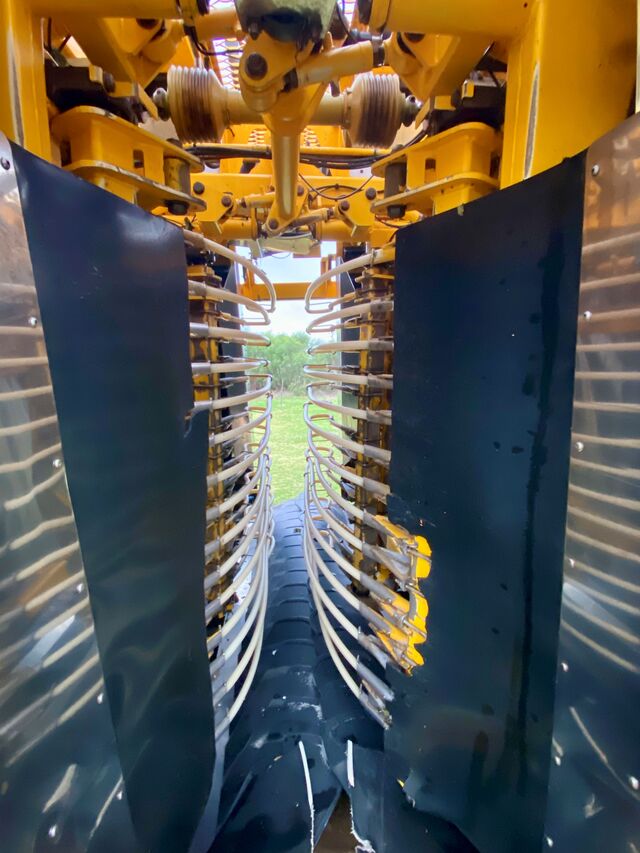
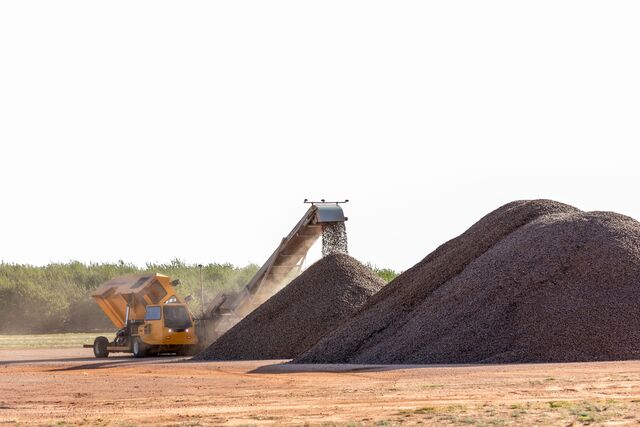
The use of chaff decks since 2017 and the still-awaited arrival of a wheel track renovator will hopefully find the solution to manage the tracks.
Camera spraying with shields in crop and summer spraying were introduced in 2022.
Mick says this has given him some new goals for 2023.
And much of that revolves around becoming better users of their on-farm technology and optimising where things haven’t been performing.
He says it will include finetuning zones for variable-rate-control fertiliser applications and having a variable-rate-control ripping map operational to deep ripper hydraulics.
“I am hoping to continually improve,” Mick says.
“I reckon we have it at about 70 per cent maps correct, but I really want to see us get that up to 95 per cent.
“Farm machinery is the big ticket item on any farm, and the prices are getting pretty high for what an individual farmer can get out of it.
“And the technology is upgrading and updating all the time – I think there needs to be a conversation about the relationship between farmers and dealers and how we manage things post-sale.
“Servicing is one thing, but making sure your client is getting the maximum out of the technology you have sold them is another – there really needs to be follow-up to make sure the whole investment is paying off.
“These prices might be OK if you have been having a run of good seasons – and we have, as 2020 and 2021 were good and kept building up to 2022, which was a high-risk, high-reward if I played the right cards with some weather luck.
“But that won’t last, it can’t, so we need to have a new look at this new challenge in the agricultural industry of achieving some balance between price and technology.”
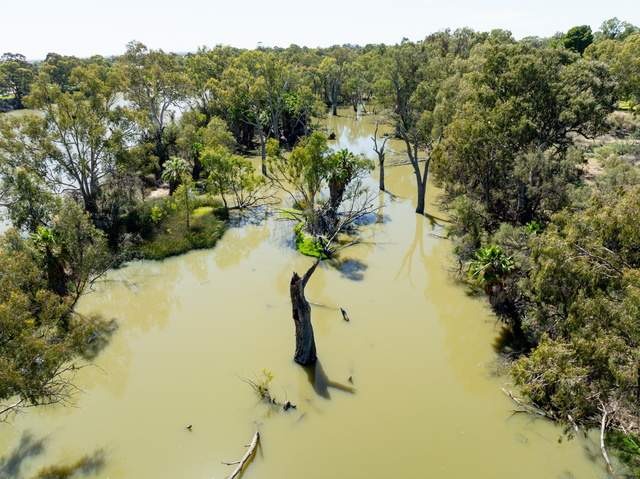
In the short term – and possibly for a few years to come – the other challenge will be fixing the effect and mess made by the big wet in spring last year.
Mick says trafficability on some paddocks will cause issues with efficiency of spraying and sowing this year, as areas are so wet (although this also leads into a great opportunity with a full profile of water).
Both short and long term issues will be to adjust from what appeared high-risk farming last season, in what is traditionally a low-rainfall, low-risk environment.
He says the likelihood of drier times ahead – with input costs still historically very high, along with machinery costs – continues to press home how important our choices are in crop selection, rotation, efficiency of implementing a plan and machinery purchases.
“Each season seems to find a way to challenge us, but with the advances in research, technology and good advice, we are continuing to build confidence in our system, business and farm,” Mick says.
“Soil amelioration has been – and will continue to be – a big topic, but still has many more years to go in how things react, manage, grow and change.”