Be alert to the butterfly effect

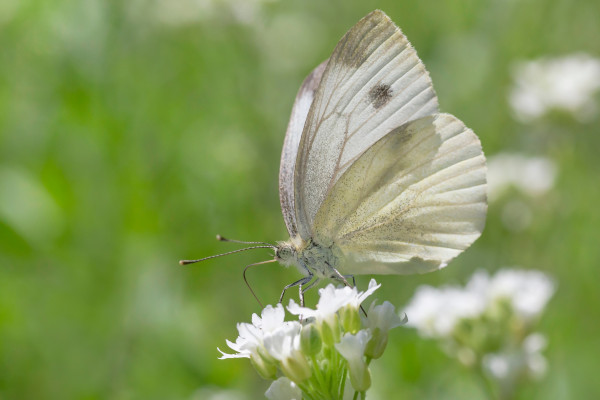
YOU may have seen these white butterflies, in your garden, on the street or flying onto your car while driving along the Murray Valley Highway.

And while they do look beautiful fluttering about, they present a clear and present danger to vegetable farmers.

Cabbage butterflies, better known as cabbage moths, are a common pest during summer and autumn, but this year’s weather conditions have caused a population explosion – making them a serious challenge for farmers to control.

Peter Shadbolt from Scotties Point Farms in Beverford grows onions, beetroots and broccoli, and said he feared for the damage his recently planted broccoli crops may suffer.

“It’s a little bit of an unknown, just exactly what’s going to happen as we move forward,” Mr Shadbolt said.

“In most cases it is an easy moth to control compared to other pests, but just sitting here I can already see 50 of them on my front lawn right now, so we going to have to be a bit more diligent this year.”

Mr Shadbolt said he worried about the butterflies laying eggs in his crops.

“The main concern will be the grubs in the broccoli, it’s not the moths that do the damage,” he said.

“Once the butterflies lay eggs in the broccoli, then we can’t tell because it’s inside the plant. So we’ve got to make sure we’ve got a good spray program to minimise it.”

Cesar Australia extension scientist Lilia Jenkins said the influx of cabbage butterflies this year had been triggered by a winter that was not cold enough, and winter was when most of them die.

“They are quite a common pest in general, but due to the really mild winter, it was easier for earlier generations to survive and their numbers have had a good chance to build up,” Ms Jenkins said.

Cabbage butterflies are largely harmless, but in their green caterpillar stage is when they decimate brassica plants like broccoli, cauliflower, cabbages, kale and bok choy.

“It can be quite easy for the caterpillars to do quite a bit of damage to vegetables, such as damaging young seedlings or causing defoliation,” Ms Jenkins said.

“The adults will lay their eggs anywhere they can but usually on the underside of the leaves.

“Then, the eggs will hatch and the caterpillars will eat ferociously until they turn into butterflies and the cycle repeats.”

At the same time she cautioned farmers about any serious use of insecticides to control the problem.

“Generally we say to try to avoid spraying if you can, especially with the really active pesticides because they can wipe out all the beneficial insects in the crops as well, which help control the numbers of pests,” she said.

“We should try and give them a chance to do their job as well so we’re all working together.”

Digital Editions


  • The calm before the storm

    The calm before the storm

    We appear to be bogged down in a rut, with the commissioning of our new plant. I was super frustrated a couple of months ago…

More News

  • Grape harvest underway

    Grape harvest underway

    Harvest has begun with our first loads of Chardonnay and Pinot Grigio. Reports of lower yields following the ongoing heat are common, although with the worldwide oversupply of wine, this…

  • Grant strengthens cattle and red meat industry

    Grant strengthens cattle and red meat industry

    Purchase this photo from Pic Store: 528596 Meat and Livestock Australia (MLA) in partnership with industry peak bodies, has secured a grant from the National Foundation for Australia-China Relations to…

  • Safety a priority

    Safety a priority

    EVERY farmer deserves to come home safely at the end of the day. That is the message at the heart of a new statewide campaign urging Victorian farmers to see…

  • Golden opportunity for future

    Golden opportunity for future

    THE Victorian Farmers Federation has called on the State Government to make strategic investments in agriculture, saying smarter policy and targeted funding in seven priority areas could supercharge the industry…

  • New initiative for soil diseases

    New initiative for soil diseases

    THE Grains Research and Development Corporation has recently launched a new initiative aimed at addressing economic strain from soilborne crop diseases. The Soil-Borne Disease Initiative is a five-year program that…

  • Wine producers call for intervention

    Wine producers call for intervention

    AUSTRALIA’S winegrape producers’ association has warned that the sector is entering a structural crisis as global demand continues to spiral. In their pre-budget submission for 2026-27, Australian Grape and Wine…

  • Vineyard vintage outlook wine-derful

    Vineyard vintage outlook wine-derful

    THIS year’s vintage is shaping up well across the Murray Darling. Duxton Vineyards, operating more than 2400 hectares as well as a large-scale winery, are reportedly on track for a…

  • Honey on tap un-bee-lievably good

    Honey on tap un-bee-lievably good

    Purchase this photo from Pic Store: 532909 WHAT’S better than beer on tap? Honey, especially if it’s made and produced by Megan and Lachie Mannes, from the Mannes Desert Honey…

  • China driving Aussie almond demand

    China driving Aussie almond demand

    DEMAND for Australian almonds remains strong despite easing from last season’s record highs, according to the Almond Board of Australia. The industry’s October sales position report, released in December, shows…

  • Tractor tragedy sparks concern

    Tractor tragedy sparks concern

    A FARMER has become the first workplace fatality for 2026 after being entangled in a tractor wheel, prompting renewed calls for farmers to stay vigilant around machinery. The death comes…