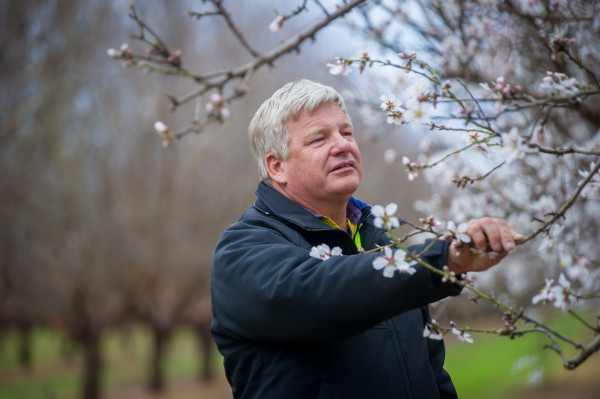
Australian almond sales for the 2024 season might be on record pace after setting another monthly record for exports – but that comes with a caveat.
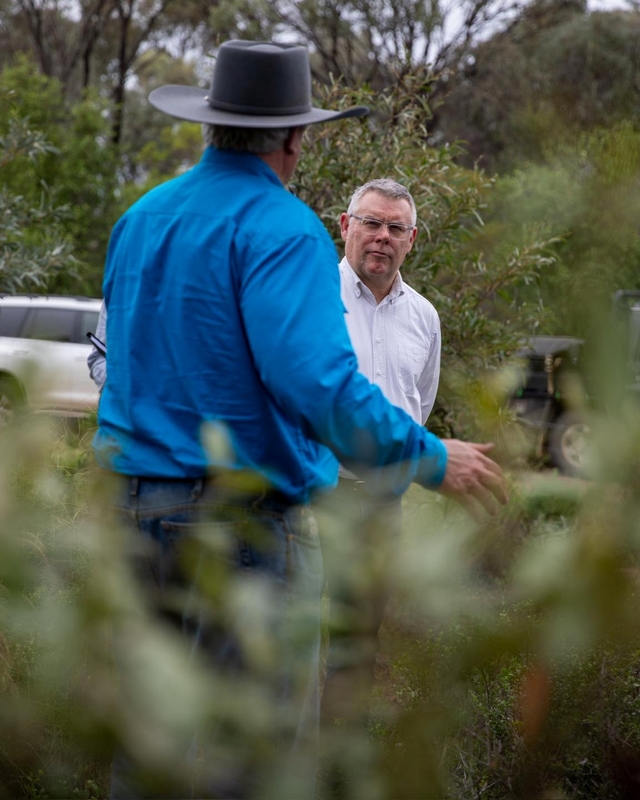
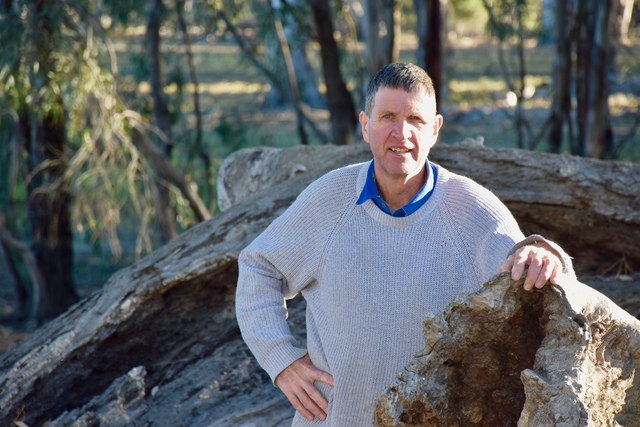
Iraak producer and Almond Board of Australia director Darren Minter said it was a success story, which had to be seen in context as the industry was coming off a low base.
Three months into the new season, the industry has surpassed 31,000 tonnes of sales, with export up 4 per cent on last year driving momentum.
Improved quality has resulted in Chinese demand increasing 89 per cent on last year – with New Zealand, Thailand and India are all performing strongly.
Sales volumes for May also are the best the industry has seen, up 300 tonnes on the record.
Grower returns have also been improved by a relatively low exchange rate against the US dollar – and international pricing improving on last season.
Mr Minter said there was no doubt the industry was all up and running but added it had been playing catchup since the seasons just before COVID-19.
He said in 2016-18 market demand was going by as much as 15 per cent a year, while plantings were dragging behind at an annual growth rate around 10 per cent.
“Long-term demand was outstripping supply and at the same time, as the world went into the pandemic, the US landed a huge 1.5 million tonne crop, which left was as a shadow over the global industry,” Mr Minter said.
“The Americans actually had most of that crop sold, but when COVID hit all the Chinese shipping system – and all its containers – were sailing to the US loaded with medical equipment and forced to sail home empty.
“By the time COVID was over, and global logistics were in chaos, there was still a big slice of that US crop dragging the market down, along with falling production and quality everywhere.
“But now that is all changing, things are picking up, and our overseas markets seem to be realigning after being hit hard by cost-of-living pressures, which also pushed sales down.”
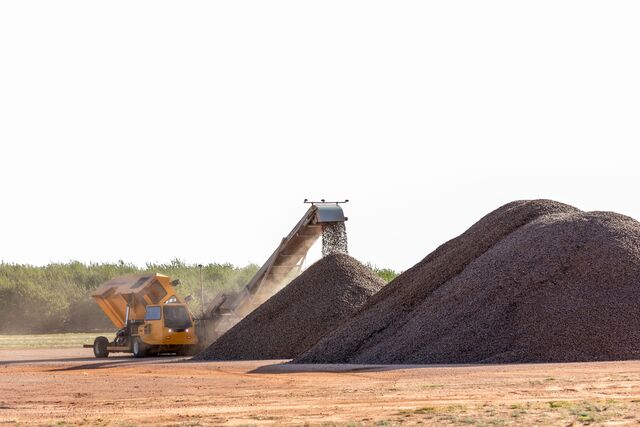
In today’s market, inshell has played a significant factor in grower returns.
Pricing remains favourable to kernel sales, and with increased availability due to dry harvest conditions, volumes shipped are up 61 per cent on the first three months of the 2023 season.
“The US nearly always has a significant carry-over but on the occasions it doesn’t, that’s when you see prices rise to $10-$12 a kilogram,” Mr Minter said.
“But with the everyone being able to clear the backlog it meant Australia didn’t have anything holding us back this year and we pretty well have sold the lot – and you can’t beat that.
“Of course we do have to carry some stock to supply our good domestic customers and near Asian markets but that will go too – the US season starts soon and the goal here is to use the six-month window we have each year before their product hits the market to sell our harvest.
“We deal through the grower co-op Almondco and being counter-seasonal to the Americans gives us some very good opportunities and we have just sent the last of our harvest, which was a good one.”
Mr Minter said while his production was down about 5 per cent on what he had budgeted for with a bumper season on track.
He said while it was still a huge result, trees across the region had not rebounded as well as people had thought they might after the stress of consecutive wet seasons.
But they are looking stronger now and he is anticipating they will start flowering in a few weeks and is again looking at a boomer crop – helped by the industry’s growing capacity to deal with varroa mite.
“Victoria and NSW are pretty well OK for pollination, but SA growers may be facing a bit of an issue with the regulations over there, and the permits they can get,” Mr Minter said.
“In the past couple of years things have been getting under control and we are all learning to live with it, the rest of the world does, so we can too, we are just the last to get it.
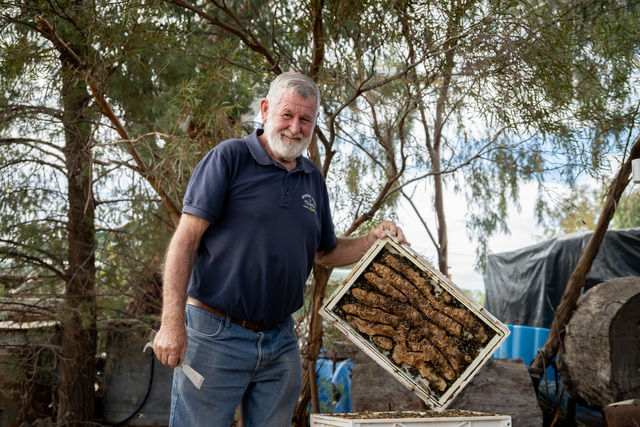
“The bees themselves will adapt – right now when each bee is born with the parasite the soldiers haven’t been recognising it, thinking it is part of the new bee – but they will learn and they will control it although until then hives will get knocked around a bit.”
But as inconvenient as varroa mite has been, Mr Minter said his real frustration was with the way Australia’s whole biosecurity management was being run.
He said the last lot of varroa mite came in on a ship – in a container of highchairs.
“There’s no biosecurity there. We didn’t bring it into the country but now we are paying for it – and not just with the damage varroa is causing our industry, and a lot of other industries,” Mr Minter said.
“Now it is the producers are getting slugged every which way.”
“Our industry signed up to support eradication, we are contributing millions of dollars to that.
“At the same time Canberra charges us to fund biosecurity on imports and now we have been hit with one on exports as well.
“And what are we getting for that when the people bringing things into the country aren’t paying anything at all – it’s just plain wrong.”