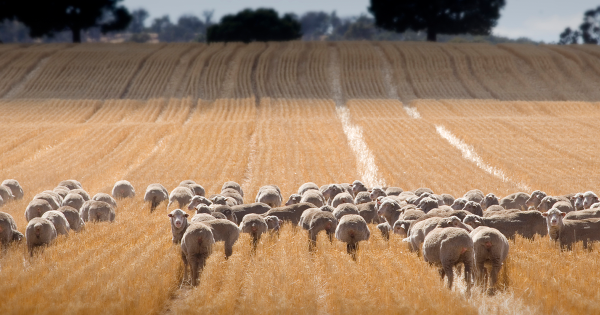
In many mixed farming areas of southern Australia, crop stubbles play an important part in feeding sheep flocks during summer.
Now, before harvest, is the time to plan which classes of stock you will graze on stubbles and what supplement you will provide them with if they need it.
Grazing stubbles is an important component of many mixed farming systems and can be a valuable source of feed for livestock over the summer months to fill feed gaps, provided careful feed budgeting, monitoring and grazing management is in place.
In a wool production system, being able to fill feed gaps to prevent breaks in the fibre and prepare ewes for joining is essential.
Grazing stubbles can also allow pasture paddocks to be spelled during summer.
The main feed value of stubbles is in the spilt or unharvested grain.
However, the efficiency of harvesting crops has improved in past decades and this has resulted in stubbles with less grain.
Furthermore, other factors such as new crop cultivars have affected the nutritional value of modern crop stubbles.
To help sheep producers work out how to get the most out of their stubbles, the grazing modern stubbles guide (updated in November 2021) provides the latest information and tips on the nutrition and management of sheep grazing modern stubbles and chaff piles.
The guide is a result of a project undertaken by CSIRO, with funding from AWI and MLA.
A stubble grazing calculator is also available to help producers estimate the number of grazing days for adult sheep on wheat stubbles, based on the level and timing of supplementary feeding required in each individual scenario.
Example scenarios are included in the calculator. The calculator is not suitable for estimating weaner performance due to their high requirement of protein for growth (relative to adult sheep).
Grazing stubbles in the feedbase
Sheep grazing stubbles are highly selective and prioritise eating the high feed-quality spilled grains and any green pick when these components are available.
Leaves and fine stems are low quality but generally edible, while ripe wheat stems are poorly digestible.
How the farmer prioritises the stubbles for grazing will depend on the type/class of livestock. Ewe lambs should be given access to the highest quality stubbles, followed by ewes that are pregnant or in preparation for joining.
Older or dry ewes are grazed on lower quality stubbles, such as those that have already been grazed or wheat and canola stubbles.
Adequate nutrition is paramount for all animals, so supplementary feeding could be required. In particular, producers should aim for any pregnant ewes to have a condition score of at least three at lambing to minimise mortality and optimise wool and meat production of their ewes and lambs.
Supplementary feeding can extend grazing of stubbles, both by helping reduce weight loss as stubbles become depleted and increasing the utilisation of low-quality stubble forage.
The provision of high protein supplements, such as lupins and peas, will help ensure sheep meet their protein requirements when grazing cereal stubbles, which have a low protein content. This is particularly important for young, growing sheep, which have higher protein requirements.
Sheep grazing stubbles will also eat mineral mixes, which can improve their nutrition.
The grazing modern stubbles guide shows the nutritive value of a range of grain, hay and chaff, compared with the requirements of sheep for maintenance.
Other considerations when grazing stubbles
Ensure a decent water supply because stubble is a dry feed with typically less than 10 per cent moisture content. A single sheep will require at least 3-5 litres/day when grazing stubbles, but more if it is provided a salt supplement or the paddock contains saltbush.
Sheep, and particularly lambs, that do not have access to green feed should be supplemented (drenched or injected) with Vitamin E to avoid white muscle disease. Alternatively, adjacent areas of perennial grasses and shrubs can provide a useful source of Vitamin E.
If sheep are being introduced to grain, introduce it slowly to avoid acidosis which can kill sheep. Alternatively, start by grazing barley or lupin stubbles prior to being moved to wheat stubbles.
Take steps to ensure sheep are not exposed to toxins when grazing lupin stubbles or annual ryegrass.
Grazing benefits cropping enterprises, too
As well as filling the summer feed gap, grazing stubbles has advantages for the cropping side of a mixed business, including:
· Reducing summer weed numbers
· Ability to spray graze weeds meaning lower chemical spend
· Knocking down chaff piles so they can be seeded through
· Grazing chaff lines so they break down more quickly, and
· Recycling nutrients to benefit the following crop.
Although sheep cause some compaction while grazing on stubbles, it is shallow and transient and usually disappears after the soil wets again. Reduced water infiltration and yield from grazing is due to the removal of cover rather than compaction; light grazing has no impact on subsequent grain yields.
Download the grazing modern stubbles guide (PDF) and the stubble grazing calculator (Excel) at www.wool.com/stubbles