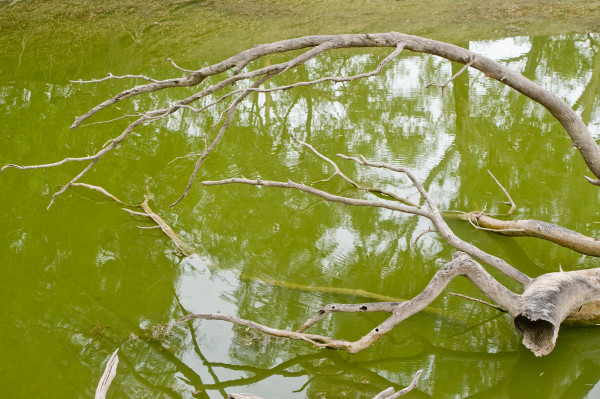
RECENT flooding, combined with warmer weather conditions, has produced favourable conditions for blue-green algae to thrive in farm water supplies and standing floodwaters.
Agriculture Victoria senior veterinary officer Dianne Phillips, says livestock owners need to remain alert as ingestion of blue-green algae could result in the poisoning of livestock.
“As there is no specific treatment for blue-green algae poisoning, producers should check standing bodies of water and farm water supplies daily for blooms, as this remains the most effective way of preventing stock deaths,” Dr Phillips says.
“Blue-green algal blooms typically appear as surface scum that looks like a suspension of green paint, often with an earthy smell.
“However, the colour may range from pale green to dark brown.”
Deaths can occur when stock drink toxins produced by the blue-green algae, often when it is concentrated on the downwind side of a water supply and has formed a dense, surface scum.
Animals that have consumed blue-green algal toxin may appear ill very rapidly, develop a staggering gait, collapse, begin to convulse and die – typically within 24 hours – depending on the toxicity of the bloom and the concentration of the toxin.
Those that don’t die immediately often suffer severe liver damage. This may lead to the development of jaundice (the yellows) or photosensitisation over the next few days.
Livestock that recover from these ailments often suffer from chronic ill-thrift.
If a suspicious bloom is noticed, the water supply should be isolated as quickly as possible, and a safe alternative water supply provided.
“Where possible, producers should identify an alternative water supply prior to their primary source of livestock drinking water being affected by a bloom,” Dr Phillips says.
“There may not be time to identify an alternative water source once the primary water supply is affected.
“We recommend laboratory testing of the water supply for the presence of blue-green algae and a post-mortem or examination of dead or sick animals by a veterinarian.”
Contaminated water should not be used to irrigate vegetables and fruit or come in contact with plants being grown for food, particularly fruit and vegetables that are mostly eaten raw, such as apples, grapes, tomatoes, strawberries, cabbages and other salad greens.
Dr Phillips says dogs are also prone to poisoning as they can swim in farm water supplies and should be kept away from suspect water sources.
Further information on blue-green contamination in livestock water supplies is available at go.vic.gov.au/3UR90aO.
The information note Managing Contaminated Stock Water is also available at agriculture.vic.gov.au/farm-management/emergency-management/floods/managing-contaminated-livestock-water, which steps through how to manage flood contaminated stock water supplies