Not worth a bean without good storage

WITH legumes becoming big business across northwest Victoria, the latest research out of Monash University is ringing some alarm bells for local croppers.

The research reveals poor storage conditions are causing avoidable quality decline across the legume supply chain – costing growers and processors.

After harvesting, legumes are often stored in bulk silos or on-farm sheds where they can be exposed to hot Australian summers with little or no temperature or humidity control.

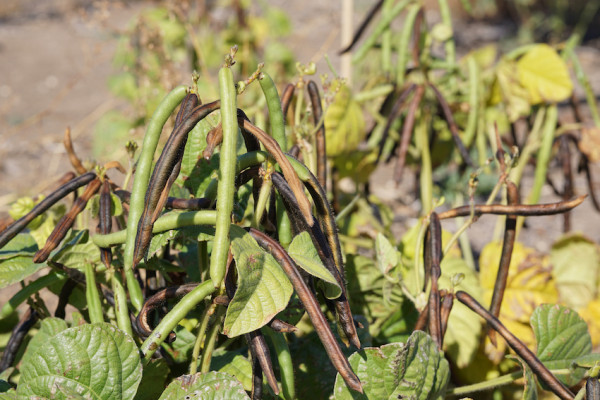
High temperatures and humidity during storage trigger internal damage in faba and adzuki beans, making them harder to cook, less nutritious, and less suitable for processing (e.g. canning or protein extraction), the research has found.

In a series of studies published in Carbohydrate Polymers, Food Hydrocolloids, and Food Bioscience, researchers found storing faba and adzuki beans at high temperatures (above 40 °C) and humidity levels (more than 80 per cent) triggers internal changes in the beans’ protein, starch, and lipid structures.

According to lead author Associate Professor Sushil Dhital, how beans are stored after harvest can make or break their final quality, even if they were grown and harvested perfectly.

“There’s a perception that once beans are harvested, the job is done,” Associate Professor Dhital said. “But we found poor storage conditions can quietly ruin bean quality and undo months of good work in the paddock.

“We saw even perfectly bred and harvested beans can develop serious quality issues if not stored correctly.

“Beans stored at high temperatures and humidity become structurally resistant to water absorption and much harder to cook. Their protein and starch are different to those of freshly harvested.”

Known as the HTC defect – hard to cook – it means beans take longer to soften, are harder to digest, and can develop off-flavours.

Associate Professor Dhital said this has real implications for food manufacturers, canning companies, and exporters who rely on consistent, high-quality product.

Australia is one of the world’s top producers and exporters of legumes, yet postharvest handling remains relatively overlooked.

The research team highlighted the need for investment in temperature and humidity-controlled storage systems, along with policy support to ensure the preservation of postharvest quality.

They’re calling for greater industry awareness – particularly from the Grains Research and Development Corporation, which funds research to improve Australia’s grain productivity and sustainability – regarding the impact of storage on bean quality.

“Millions are invested in breeding better beans and improving agronomy,” Associate Professor Dhital said.

“But without proper storage, much of that value is lost. We need a shift in focus from paddock to postharvest.”
Digital Editions


  • Collection under the hammer

    Collection under the hammer

    AN eclectic curation of vintage and antique Australian pastoral machinery and memorabilia will go to auction on 1 February. Yvon Smythe and her late partner,…

More News

  • Calls flow for royal commission

    Calls flow for royal commission

    Purchase this photo from Pic Store: 524159 AUSTRALIA needs a royal commission into water management in 2026, according to Murray MP Helen Dalton, who says politicians are “destroying” the nation’s…

  • Big skies and farmscapes

    Big skies and farmscapes

    Purchase this photo from Pic Store: 524028 THE Gallery Balranald is currently showcasing the work of professional artist Graham Hearn. His latest exhibition, Big Skies and Farmscapes, reflects the vast scale and…

  • Difficult outlook for grape growers

    Difficult outlook for grape growers

    Murray Valley Winegrowers has acknowledged the findings of Wine Australia’s Australian Wine Production, Sales and Inventory Report 2025, which confirms the challenging market conditions facing growers. The newly released report…

  • Benham appointed to new ag role

    Benham appointed to new ag role

    The Nationals member for Mildura, Jade Benham, has been appointed Shadow Assistant Minister for Agriculture and Regional Development, as part of Jess Wilson’s new Shadow Cabinet announcement. Ms Benham said…

  • Connecting urban and rural Australia

    Connecting urban and rural Australia

    HAMISH McIntyre grew up on the land in Queensland, learning the rhythms of farming from his family. Today, he runs a sprawling family business across the St George, Dirranbandi, Quilpie,…

  • Farmers warned to stay alert

    Farmers warned to stay alert

    A RUN of booming haystack and shed fires across regional Victoria has sparked fresh warnings for farmers as hay season rolls into full swing. Fire crews in the west and…

  • Bumper harvest fuels Cobram Estate’s growth

    Bumper harvest fuels Cobram Estate’s growth

    COBRAM Estate Olives has reported one of its strongest years on record, with an exceptional “on-year’’ harvest in Australia driving improved earnings, higher production volumes and a confident outlook from…

  • Select Harvests’ cracking pace

    Select Harvests’ cracking pace

    SELECT Harvests Limited has released its 2025 business update, reporting a final almond crop estimate of 24,700 tonnes, slightly below the midpoint of its earlier forecast. The company says the…

  • Further water buybacks anger farming industry

    Further water buybacks anger farming industry

    FARMERS, politicians and advocacy bodies are warning further water buybacks announced last week will gut regional towns, drive up food prices and cripple Australia’s dairy heartland. Federal Water Minister Murray…

  • Farmer takes action in feral pig fight

    Farmer takes action in feral pig fight

    IN THE heart of south-western New South Wales, sheep and cattle farmer Colin McCrabb is waging a quiet war against a destructive and elusive enemy -feral pigs. Operating a 6800-hectare…