How to get ripper results

MALLEE Sustainable Farming says when you are spending big on soil amelioration, every pass of the ripper counts.

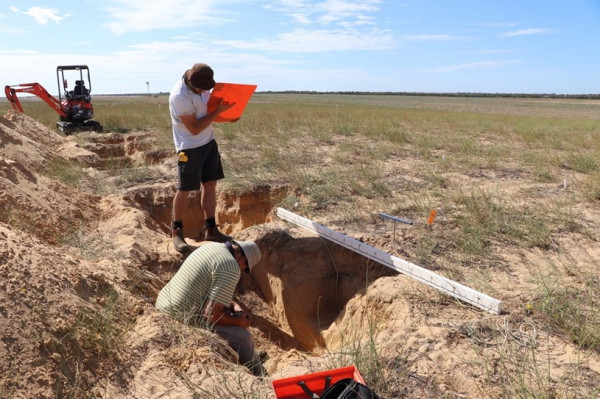
That’s why the GRDC national grower network project Optimising Soil Amelioration in Typical Mallee Soils set out to answer a big question: “How do we get the most bangs for our bucks when deep ripping”?

In 2024 the MSF trial site at Copeville, South Australia, where UniSA’s Chris Saunders and Frontier Farming Systems had set up a ripping trial to compare different tine configurations, but final results were not available then.

The only data was force measurements, fuel use and some promising visual differences between treatments.

But now, with harvest done and dusted, the results are in – and MSF said they are results worth talking about.

The Setup

The trial compared:

*     Standard ripping.

*     High efficiency ripping (lower draft, wider spacing, less steel).

*     Maximum loosening setups.

*     Ripping with inclusion plates.

*     And a commercial Bednar ripper as a farmer practice comparison.

Each setup was measured for its power requirements, soil loosening impact, and most importantly, its effect on barley yield in a tough, low rainfall year.

What was learnt?

The control plots (no ripping) came in at around 0.73 t/ha. From there:

*     Standard ripping jumped to 1.36 t/ha.

*     High efficiency ripping pushed yields up to 1.51 t/ha.

*     Maximum loosening ripping delivered 1.49 t/ha.

*     The Bednar ripper increased yield to 1.2 t/ha.

*     But ripping with inclusion plates stole the show, reaching 1.71 t/ha.

While the inclusion plates weren’t a core part of the project, they clearly made a difference in this deep sand paddock, where non-wetting soils were a known issue.

It’s not just about yield, it’s about ROI

When Frontier Farming Systems crunched the numbers on partial gross margins, the high efficiency ripper came out on top.

It delivered the best return per hectare when you factored in fuel, labour, and machinery costs.

Here’s the breakdown:

*     Standard ripping: +$66/ha.

*     Maximum loosening: +$82/ha.

*     High efficiency ripping: +$109/ha.

The key takeaway? If you can get the same or better yield from a ripping setup which uses less power and fewer tines then you’re way ahead.

Key messages for growers

*     You don’t always need a bigger tractor. Smarter tine setup might get you the same result without the extra capital spend.

*     Dry seasons still respond. Even in low rainfall, the ripping treatments made a clear difference in yield.

*     Inclusion plates are worth watching. They’re not widely available yet, but in deep sand, they can be a game-changer.

For more details go to msfp.org.au/projects/optimising-soil-amelioration-costs/
Digital Editions


  • Ricegrowers backs review

    Ricegrowers backs review

    The Ricegrowers’ Association has welcomed the start of a 12‑week consultation on the Murray–Darling Basin Plan Review. RGA president Peter Herrmann said industry would take…

More News

  • Big crop predicted for almonds

    Big crop predicted for almonds

    The almond harvest is underway and 2026 could produce Australia’s largest almond crop. Nationally it’s estimated that almost 167 thousand tonnes will be harvested this year. That’s a seven per…

  • The calm before the storm

    The calm before the storm

    We appear to be bogged down in a rut, with the commissioning of our new plant. I was super frustrated a couple of months ago – at the spanner throwing,…

  • Backpacking paves the way to leadership

    Backpacking paves the way to leadership

    Purchase this photo from Pic Store: 531373 SUNRAYSIA’s summer harvest attracts travellers on working holidays from all over the world, particularly Europe. These workers perform a vital service for regional…

  • Warm weather set to continue

    Warm weather set to continue

    BARLEY prices are supported as drought speculation builds, with growers holding onto grain for livestock feed. The Bureau of Meteorology January drought statement showed below-average rainfall for much of Victoria…

  • Growers warn of fallout from visa cuts

    Growers warn of fallout from visa cuts

    UNPICKED crops, decimated rural communities and higher supermarket prices are among the consequences that could unfold if One Nation’s anti-immigration policy were to be implemented, farmers and experts have warned.…

  • Grape harvest underway

    Grape harvest underway

    Harvest has begun with our first loads of Chardonnay and Pinot Grigio. Reports of lower yields following the ongoing heat are common, although with the worldwide oversupply of wine, this…

  • Grant strengthens cattle and red meat industry

    Grant strengthens cattle and red meat industry

    Purchase this photo from Pic Store: 528596 Meat and Livestock Australia (MLA) in partnership with industry peak bodies, has secured a grant from the National Foundation for Australia-China Relations to…

  • Safety a priority

    Safety a priority

    EVERY farmer deserves to come home safely at the end of the day. That is the message at the heart of a new statewide campaign urging Victorian farmers to see…

  • Golden opportunity for future

    Golden opportunity for future

    THE Victorian Farmers Federation has called on the State Government to make strategic investments in agriculture, saying smarter policy and targeted funding in seven priority areas could supercharge the industry…

  • New initiative for soil diseases

    New initiative for soil diseases

    THE Grains Research and Development Corporation has recently launched a new initiative aimed at addressing economic strain from soilborne crop diseases. The Soil-Borne Disease Initiative is a five-year program that…