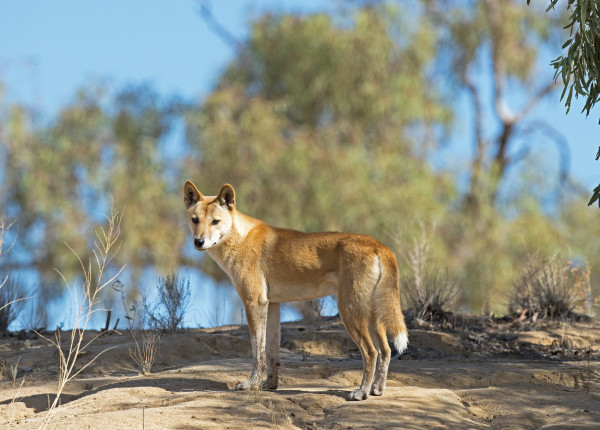
NEW Victorian Government policy settings on the management of dingoes/wild dogs are due from October 1 following completion of the recent Agriculture Victoria livestock predation survey.
A government spokesperson says more than 500 livestock producers responded to the survey, “providing valuable information about the levels and frequency of livestock attacks on their properties, the effectiveness of control methods and the impact of livestock predation on farmers and their local communities”.
“The insights collected through the survey will be considered alongside scientific research; conversations and perspectives from traditional owners, environmental and agricultural groups; and feedback collected through stakeholder engagement activities as part of Victoria’s review of its approach to dingo conservation and management,” the spokesperson says.
“Having up-to-date insights and perspectives from producers in relation to livestock predation on private properties across the state is an important input to Victoria’s dingo conservation and management review.
“The survey shows livestock predation is an ongoing concern to sheep farmers whose properties border public land.
“Just over half the survey respondents reported incidents of livestock being maimed or killed by a wild dog or dingo in the past five years and most (84 per cent) say they are using a mix of lethal and non-lethal control methods to manage predation with the most common forms of control methods being shooting, 1080 ground baiting, trapping, farm hygiene, exclusion fencing and guardian animals.”
The Nationals’ Member for Mildura, Jade Benham, says the worsening dog control situation comes after the government revoked an unprotection order on wild dogs in the north-west of the state in March 2024 “without consultation and with only a few hours’ notice”.
Ms Benham says since the changes were introduced, the region has seen extensive wild dog attacks.
She says in many cases the dogs do not actually kill stock but maul them to such an extent that they suffer a slow and painful death.
“I have raised the issue in Parliament several times and the official response received is of a targeted $550,000 pilot program to be delivered in the north-west in the next 12 months, with a focus on supporting farmers and building awareness about non-lethal control options to protect livestock from predation on private land,” Ms Benham says.
“In a further blow, the government confirmed it expects land managers to assume anything previously considered to be a wild dog is now a protected dingo,” she adds.
“This is heartbreaking for producers who invest so much time, energy and money into their livestock, and is compounded by the fact Labor has no desire to put any supports in place for farmers.
“Now we see a survey Labor has only sent to select producers and where the framing of the questions does not give responders an opportunity to paint the full picture of the issues they are facing.
“There is growing anger that Labor consistently prioritises animal extremists over supporting our farmers to grow food and fibre and drive the Victorian economy, and I am very concerned a decision has already been made to end the wild dog management program in Victoria.”