MALLEE graingrowers will welcome news researchers at the Centre for Crop and Disease Management have developed a new method for detecting fungicide resistance, enabling them to identify multiple mutations, both known and novel, in just one test.
For growers plagued by challenges such as stripe rust and barley net blotch, the hi-tech solution is going through the proving process after the team driving the project reported outstanding results.
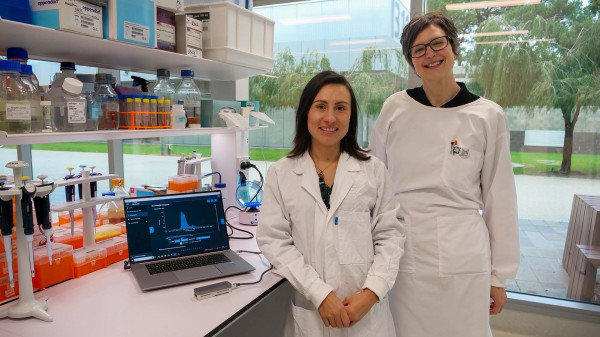
With co-investment by Curtin University and GRDC, CCDM researchers were able to rapidly and accurately detect fungicide resistance mutations using a portable DNA sequencing device called the MinION, from Oxford Nanopore Technologies in the UK – including unknown mutations that could fail to be picked up by traditional methods.
CCDM researcher and lead author Dr Katherine Zulak said traditional techniques for identifying mutations within pathogens often involved labour intensive and time consuming processes, and are limited to screening for only previously known mutations.
“Barley net blotch has two forms, spot form and net form net blotch, each with its own suite of different mutations,” Dr Zulak said.
“Furthermore, the particular target gene we were looking at can have mutations occur in two different regions, both of which again have their own suite of mutations.
“So, every time we need to investigate a sample for fungicide resistance, we previously had to run tests for every one of these possible mutations.
“To simplify this increasingly complicated process, we’ve used the Nanopore MinION to sequence fungicide target genes and provide a comprehensive map of all possible mutations, which may include those that we hadn’t previously identified.
“For example, while developing this method, we found a recently discovered variation of a known mutation.
“This is the type of mutation which could go unnoticed with traditional methods.”
Dr Zulak says further research and development is required before field detection of fungicide resistance becomes a reality.
However, the data from the sequenced target genes could contribute to a national resource that can be continuously utilised by future researchers.
“The fungicide resistance landscape is always changing, and this technology simplifies our fungicide resistance detection process and ensures we have the capacity to detect new mutations as they appear, putting us in a better position to tackle this issue as it evolves,” she added.
“As we sequence regions within the pathogen’s genome, we are not only gathering data for current research but also creating a resource for future studies.
“This genetic information can be stored in national databases, providing a reference point for researchers in subsequent projects and ensuring that future efforts build on our existing knowledge.”
Professor Mark Gibberd, CCDM director, highlighted the centre’s commitment to seeking new tools and resources which can expedite and enhance the industry’s ability to combat this problem.
“Innovation lies at the core of our research centre,” he said. “This project stands as a great example of our ability to draw inspiration from diverse fields to confront the most significant disease challenges in the grains industry.”