JADED farmers in north-west Victoria have labelled the Bureau of Meteorology’s forecasting as a “joke”, saying they have lost faith in the government agency for “repeatedly” getting short and long-term rainfall predictions “so wrong”.
A trio of influential local cropping farmers this week added their voices to criticism by livestock producers and vegetable growers from across Australia on the BoM after its El Nino declaration for drought-like conditions during summer misfired.
Many locations in northern and south-eastern Australia were smashed by severe storms and have received above-average rainfall totals since December.
It’s had massive financial implications for farmers and hammered livestock markets, sending prices crashing after many cattle and sheep were sold immediately after the El Nino call in September.
While Mildura Airport missed much of the better rainfall, recording 51.5mm over summer (below the average of 68.2mm), some Millewa farmers have reported falls of about 200mm since the El Nino declaration.
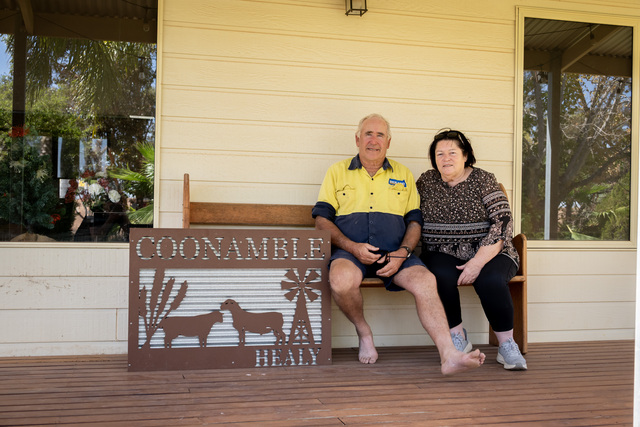
Veteran Ouyen grain grower and former head of the Victorian Farmers’ Federation, Ian Hastings, said the BoM’s latest national forecasting “failure” was “nothing new”.
“We always know that the bureau is wrong. That is something that is built in. But we just can’t ignore statements like that (El Nino),” Mr Hastings said.
“It’s got to the point where I’d suggest very few farmers take notice of the bureau’s forecasting anymore.
“I sat on an advisory group with the bureau years ago, and they were claiming at that point that their forecast was 75 per cent accurate. That’s easy if you’re forecasting 30 degrees today with a mild wind from the west.
“I don’t speak for every farmer, but it’s not hard to find people who agree with what you say. We just completely discount their forecast and we just look at the radar and the wind that might be coming and work out ourselves what’s likely to happen in two or three days’ time.”
Mr Hastings’ comments came after the bureau’s boss, Andrew Johnson, fronted a federal parliamentary hearing earlier this week over his agency’s performance, following the devastating impact of ex-tropical cyclone Jasper and other recent severe storms across Queensland, New South Wales and Victoria.
Mr Johnson said his staff had done a “superb job” on its forecasting over the past six months.
His defence of the agency came a fortnight after one of his senior colleagues claimed that farmers and the general population still had “faith” in the BoM’s forecasting.
“For the last five months, the (forecast) accuracy has been over 65 per cent for rainfall and 98 per cent for temperature. That’s the best you’ll find anywhere in the world,” the BoM’s chief customer officer, Dr Peter Stone, told ABC TV’s Landline program.
“We’re aware that there’s a wide range of opinions out there. Surveys show a really consistent faith in the bureau where for every 70 people who say they really like the bureau, there’s less than one who says they don’t.”
Sunraysia Daily this week conducted its own straw poll of nearly two-dozen farmers in north-west Victoria and south-west NSW, asking whether they had confidence in the BoM’s forecasting.
The vast majority said they had “no confidence” in the bureau’s forecasting, with only three of the 21 respondents saying they have “faith” in the five-day forecasts but still treat them lightly.
INDEPENDENCE DAY
Former VFF head Ian Hastings, a fourth-generation Ouyen farmer, says that those living on the land aren’t just looking at weather forecasts to see if they need to put a coat on before heading for lunch.
“It would be easier if we just turned them (the BoM) off and never hear what they say, because we would then just look at the things that give us an idea of what’s coming,” said Mr Hastings, who is also a former Grains Council of Australia vice-president.
“There have been plenty of opportunities to correct forecasts after they’ve said, for example, there’ll be 50mm of rain for the Mallee in two weeks’ time but we end up getting 3mm.”
He said the forecasts were particularly important for cropping farmers, some of whom are now turning to independent sources for rainfall predictions.
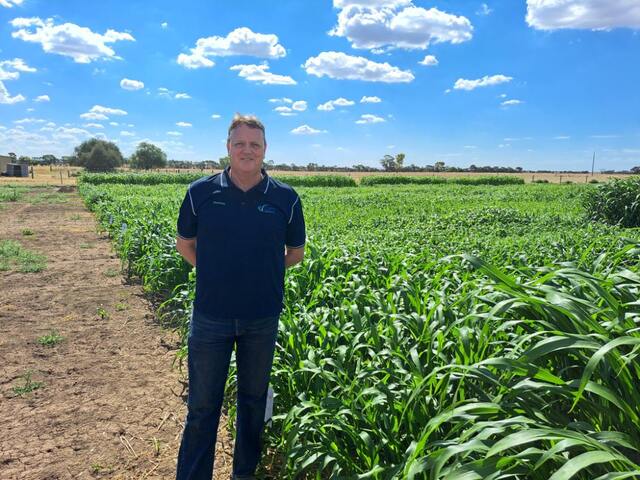
Millewa farmers Ron Hards and Ian Arney question the methodologies of the BoM’s forecasting models, along with its customer-satisfaction surveys.
“If they believe they have strong support from farmers, they believe in Santa Claus,” said Mr Hards, who has a 3000ha property at Yarrara, between Werrimull and Meringur.
“Seriously, the general comment from farmers is that they don’t take notice of them (the BoM). It’s got to the point where they’ve become a joke.
“Last year they were so intent on talking up an El Nino for months before they declared it. But just a fortnight after they did, we had some decent rain in the Millewa.
“And up north, where there’s been significantly more rain, it was clearly worse for farmers where they had been restocking their properties over the past couple of years after the ’19 drought. They all had a bit of a panic attack after the BoM’s forecast and flooded the market (with livestock) and that affected the whole of Australia.
“We should be able to lay all these issues at the foot of the bureau because they got it so wrong.”
Ian Arney, who is also a Mildura councillor, said his confidence in the BoM’s forecasting was “quite low”.
“We have days that when they’ve provided a forecast of 95 per cent chance of significant rain, we’ve ended up with 10 per cent of the forecast or less,” said Cr Arney, whose 7000-acre Werrimull property has been in the family for nearly a century.
“A good example of this occurred in December when I went out and sowed a paddock to put grain out to grow sheep feed, expecting that even half the (40-60mm) rain forecast would be enough. But we only received about 3mm that day.
“Another example was last winter when they predicted a warmer and drier winter than normal. There were people like me who sat back and watched, based on that forecast. Some people did well, but my crop ended up getting frosted, which took most of my yield away.”
RAIN RETURNS
Cr Arney said his property received about 60mm of rainfall in January alone.
“That was a pretty good month, but there are other farmers I’ve spoken to in the region who have had about 200mm since September,” he said.
He has observed some subtle changes in local rainfall patterns.
“Between 2002 to 2010, we had a really dry period. But now, we’re back to better summer rainfall,” he said.
“The rain that had been dodging the Millewa is starting to fall here again. The Riverland had been picking up the rain when it was missing us, but now they are missing it.”
THE OUTLOOK
Ian Arney, Ian Hastings and Ron Hards are all optimistic about the future of farming in the region ahead of the next winter harvest season, which typically begins with sowing in April.
“There are farmers on the edge trying to make ends meet, but there are also people doing well on the land,” Cr Arney said.
Mr Hastings added: “There’s been a couple of reasonably profitable years, so people have come out of the last harvest in reasonable shape.
“There is reasonably good confidence for this coming season because we already have good soil profiles.”
Mr Hards said the tide was turning in favour of mixed-grain farmers.
“Look, 2019 was pretty bloody ordinary for us but last year and the year before, we had good yields and prices,” he said.
“Our current farming methodologies – things like no till – are working extremely well. Our costs are going up, but I think we have them under control.
“Farmers in our region have a good story to tell. It’d be just better if we had better forecasting (from the BoM),” he added with a laugh.