By Andrew Mole and Janine Batters
ONE of Victoria’s highest profile farmers and agri-politicians has stepped onto the board of another high-profile enterprise.
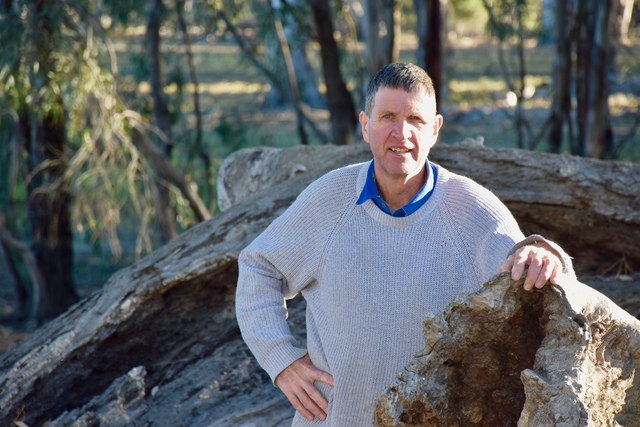
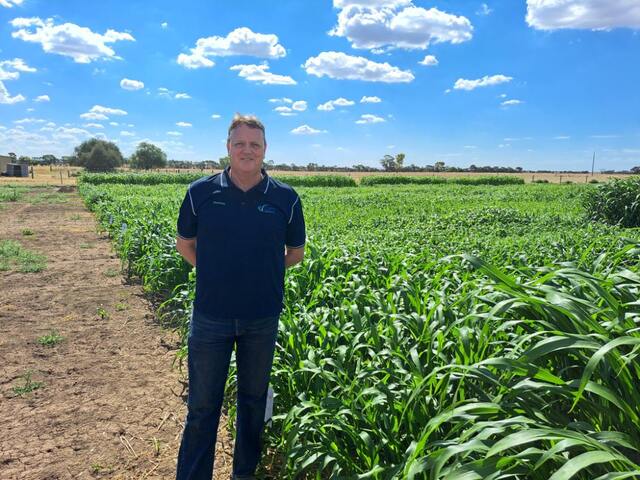
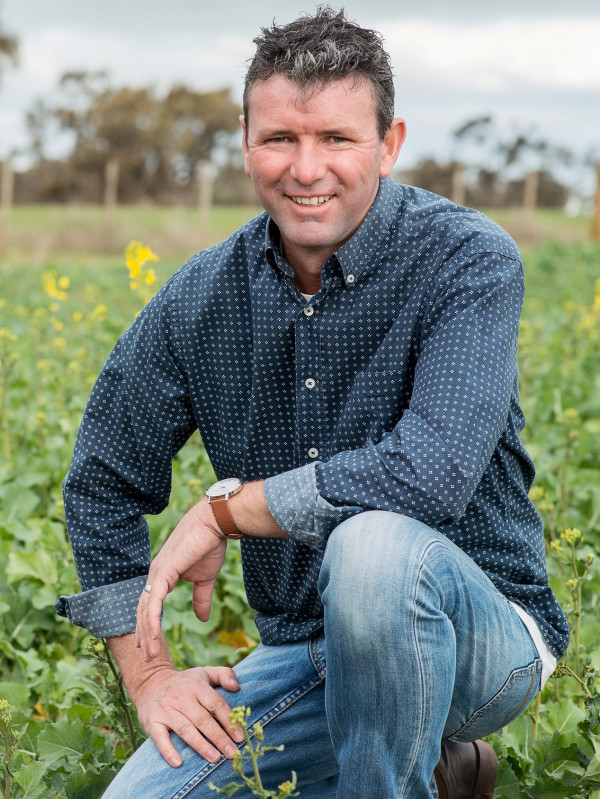
In something of a surprise move, Quambatook mixed farmer Brett Hosking is now a director at Birchip Cropping Group.
Mr Hosking was recently one of the rebel faces trying hard to oust Victorian Farmers Federation president Emma Germano.
BCG, the Mallee-based peak industry research organisation, has become an integral partner in trials, extension programs and solutions to the challenges of farming in a low-rainfall area.
While not publicly confessing to be a workaholic, Mr Hosking does concede he spends “way too much time on the phone”.
But he said it was “important to spend the time to get the right advice and build upon those networks to get good advice when you need it”.
And while the rebel bid to force the VFF to stage an extraordinary general meeting, at which it was expected members would vote out the current president and vice-president, has been shut down by the courts, the former VFF grains group president has his hands pretty full right now – on the farm as well as off.
Like almost everyone in cropping, he has been flat out in summer spraying, in a bid to control the serious threat of a major green bridge between harvest and seeding.
If he’s not doing that, he is probably out in another paddock repairing extensive damage caused by heavy unseasonal December downpours (also adding to that green bridge risk factor).
Somewhere in all that he also finds as much time as possible for wife Jane and their four daughters; Grace, 22, Lily, 20, Isabelle, 17, and Amelia, 12.
“Like all farmers we struggle with work-life balance, there is always something else to do on the farm or at home coupled with the demand of community,” Mr Hosking said.
“To maintain the same number of opportunities, more of us are working harder.
“I had a season in my life where I was away a lot and had to get very good at driving out the gate and dealing with it when I returned, knowing I had full-time staff, family and a network supporting me.
“Part of it is knowing you have to make a choice to put your family first sometimes to go skiing or whatever it is you all enjoy … and that’s OK, we get there in the end.”
Although Mr Hosking has continually taken the long way to arrive, his track record in the industry stratosphere confirms he isn’t just dabbling, he is there for the long haul – and is determined to leave the industry in a much better place than he found it.
As well as juggling commitments, he and his family produce merino ewes and grow canola, wheat, barley, lentils and, opportunistically, vetch hay, on soils ranging from red loam, rising ground and floodplains with heavy self-mulching clay.
“I also have 25 breeder Herford cattle running round at the moment as bit of a hobby,” the 50-year-old said with a laugh.
Mr Hosking’s involvement in industry groups is no coincidence.
His passion for the agricultural industry and growth is evident in his enthusiasm when he talks farming: “The opportunity to become a BCG director is a chance to contribute using the skills I’ve acquired over the years.
“We all contribute to our community where we are able and with extensive board experience, I hope to add value at board level.
“What I like about BCG is it is community-led, locally led and community-oriented. Over time that community has expanded but it’s that grassroots approach that has always appealed to me in groups I’ve been involved with.”
Mr Hosking sees the need for growers to have good and trustworthy advice as critical, given the number of variables growers deal with in their businesses.
“Modern farmers need to be more adaptable than ever.
“On any given day a farmer may perform the role of mechanic, international commodity trader, or any other role which needs to be picked up on that day.
“Having good advice from groups such as BCG is vital to support them to grow and prosper.
“BCG’s extension and engagement supports this required growth well.
“Farmers need often complex information communicated efficiently so that it can be practically applied on farm.
“BCG is a conduit between academia and practical application, recognising the skills and knowledge that farmers already have and building areas of passion and areas that can make their farms more profitable.”
As a member of the BCG board, Mr Hosking’s focus will be to ensure BCG continues to find new ways to engage with farmers in new areas of interest: “Farmers are fast learners and adopters of technology that is proven.
“Remaining ahead of the curve, that’s the challenge BCG has.
“I’d also like to support BCG’s delivery of tailored events.
“There is a lot on and farmers are required to be selective in which events they attend. The number of attendees may be less but that does not mean these events are any less valuable.”
Mr Hosking’s passion to contribute is fed by challenges farmers are facing today: “A big challenge is rising input costs, the other is climate change.
“It’s not as sorely felt when years are good but in the future we need to be more engaged around our emissions footprint and providing credible information to society.
“Growers who aren’t engaged could be taken advantage of or will have the world decided for them.
“Growers understand their areas, their own properties, their farming environment. They understand their capacity to change, adapt and make a difference. It’s critical they are at the forefront of the conversation.
“Our farmers have the challenge of climate change in two areas: how we reduce emissions – for a city person they can catch a tram, that looks different to us – and secondly, we are affected due to the change that has already occurred to the environment and landscape.
“We need to adapt to the significant change in our environment and our bottom lines due to climate.”
The Hoskings are constantly working towards building a business that can withstand the harshness of drought.
“The way we manage summer weeds, crop rotations, et cetera, as well as having other income streams such as livestock in our business, hopefully add diversity, allowing us to rely less heavily on cropping,” Mr Hosking said.
“Sheep are a lower-cost part of the business and are maybe not as time-intensive as people think.
“We don’t know what the future looks like for our farm succession yet, but we aim to support all our girls in their passions and their dreams, whatever they might be.”
Not surprisingly Mr Hosking has large network on which he relies for advice.
“I regularly talk with my local agronomist, financial planner and accountant,” he said.
“I also have a number of independent machinery mechanics who I ask advice from before buying equipment, what they are spending their hours on and what they’re not.
“I have had the opportunity to travel across Australia and have built up a personal network of people I trust, people I know that I can ask advice or I have a whine to, understanding that farmers are the same everywhere.”