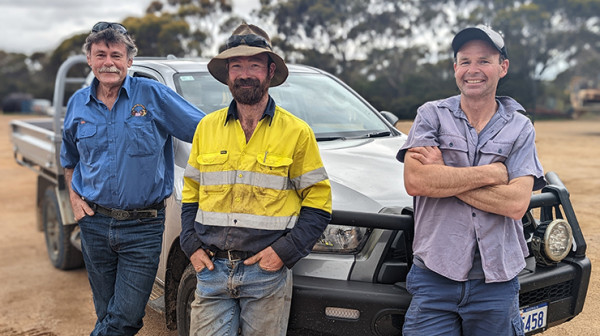
WHEN WA producers and brothers Michael and John Bertola faced medic pastures which fell short of providing adequate feed, they turned to vetch and haven’t looked back.
In an epiphany that has genuine applications in large areas of the Mallee and north-west Victoria, because of its success in medium to low rainfall areas, the Bertolas have embraced their new feed source after a trial seven years ago.
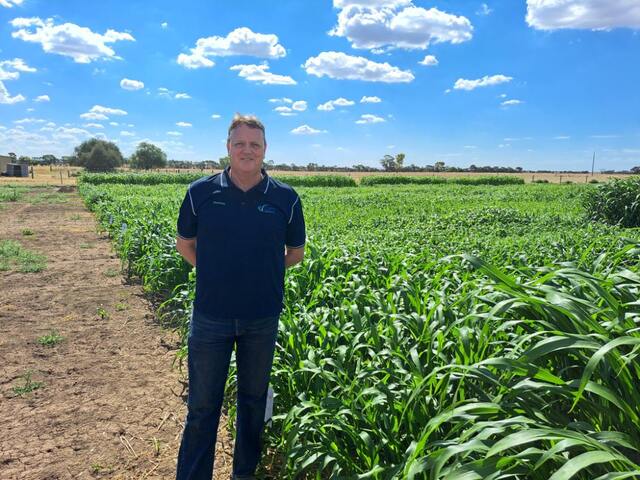
The family runs a mixed enterprise across three properties in Beaumont, near Esperance, cropping 3000ha of wheat, barley and canola and running a self-replacing flock of 1600 Kojak breeders.
They are one of few sheep enterprises in the predominantly cropping region, where the distance from the coast and the Mediterranean climate means producers can count on only three to four months of green feed each year.
This makes the additional management requirements of sheep an uncertain proposition for many. Even John and Michael went through a stage where they got out of sheep altogether, in 2009-10.
“We were getting too many feed gaps,” Michael says.
“It was slow growing any feed early in the year and it died off too quickly at the end. With cropping in the mix, you’re always spraying weeds, then when the pasture phase comes around, you’re not left with a very dense population of feed.”
Trial and error
THE Bertolas tried field peas as a legume break, but the nitrogen benefit wasn’t obvious, and they didn’t like harvesting it every year.
After five years, they decided to reintroduce sheep, so they cast around for an alternative pasture legume option. Theo Oorschot, their agronomist, suggested vetch.
In 2016, they trialled half a paddock of Rasina, a high-yielding variety for medium to low-rainfall areas, and were surprised by the amount of biomass it grew, with no management. The following year they sowed a few bags of seed and “it went bananas”.
“There was so much feed there and it nodulated brilliantly,” Michael says.
“We now sow a quarter of the operation to vetch every year. The sheep do well on it and the following cereal crops get a great benefit.”
The vetch is sown in early April. This provides time for the plants to develop bulk while sheep are in the feedlot, before they are put onto the paddocks in June for July lambing. They stay on the vetch until October.
“We give them as much time as we can on the vetch before we have to spray it off; it’s a weed management issue,” Michael says.
“Ideally, we’d like to include species such as barley in the pasture mix, but with my cropping hat on, it’s more important to keep the ryegrass under control.”
The sheep then go onto a couple of small, late-sown cereal paddocks.
In this system, the lambs gain around 400g/day. Wethers are drafted off and sold once they reach a target weight of 42kg – around November/December – to reduce numbers over summer. Ewe lambs are kept as replacement breeders.
Following harvest, the sheep are run through stubble paddocks to clean up spilt grain and any remaining heads, which takes roughly two to three weeks per paddock. If feed is tight, the lambs are weaned prior to the ewes grazing stubble paddocks.
Confinement feeding
IN the past, a late start or poor year meant the Bertolas had to sell their sheep, because the feed on offer was insufficient.
In response, they’ve developed and refined a system of seasonal confinement feeding to provide them with the necessary consistency and flexibility.
“It’s a critical part of having sheep, because we have such a short season here,” Michael says.
After a couple of crude attempts at confinement feeding in the sheep yards, they knew they had to do it better.
They built proper pens and bought a feed mixer. With the assistance of their nutritionist John Milton, they developed their own mixed ration of straw and grain produced on the farm, with legumes, a mineral mix and probiotics added.
Confinement feeding usually commences in January once the stubbles have been grazed. The ewes are drafted into lines and penned appropriately. The rams are introduced into the pens in February for a joining period of four to six weeks.
All ewes are scanned six weeks after joining. Ewes scanned as dry are rejoined then sold, to further optimise reproductive efficiency. The remaining ewes are drafted according to their scan results. Singles, twins and ewe lambs are drafted into separate lines so they can be fed according to differing nutritional needs.
Joining ewe lambs
THE Bertolas chose Kojak (shedding) sheep because they were a low maintenance fit in their cropping enterprise. However, without a wool cheque to rely on, getting the maximum number of lambs on the ground each year is a priority.
“We focus on trying to get them to have a lamb as a lamb, and we select for multiples as well,” Michael says. “We’re hoping to get to a point where we can just retain ewes that are out of a twin.”
The ewe lambs (seven to eight months old) run with teasers for two weeks prior to joining. The ewe lambs average 78 per cent in lamb (from joined) which produces an average of 80 per cent marking rate. Of the other mixed-age ewes, 97 per cent joined get in lamb, of which 60 per cent have multiples. Total marking rates from these ewes is usually 120 to 125 per cent.
A reliable system
MICHAEL says the major lesson they’ve learned is the need to have a system that’s reliable, regardless of what the season presents.
“There are images that are just burned in our brain of driving past sheep that are lambing onto bare ground. We thought, we’ve got to get better at this, otherwise we might as well not have them,” he says.
Now the Bertolas no longer experience angst when it doesn’t rain.
“By utilising the feedlot over summer and only grazing the vetch for a short period, the paddocks have benefitted. This system has allowed us to increase our flock numbers and get a better dry sheep equivalent (DSE), and our sheep have got it pretty good these days.
“From a cropping perspective, the vetch is awesome for the cereals following. The protein levels are higher, and the crops just look head and shoulders above anything else. We wanted to find profitable ways to include livestock in our cropping rotation and, for our enterprise, vetch has been the answer.”
LESSONS LEARNT
• Try to achieve a good knockdown prior to sowing to get a solid vetch stand.
• Aim to have vetch sprayed off before seed set, otherwise you’ll be swamped with vetch over summer and in the following crops.
• Cut the vetch vine over summer when conditions are hot and dry to ensure the smooth flow of the air seeder the following year.
• If you’re planning to harvest vetch, apply two passes of fungicide to prevent Botrytis grey mould wiping out the crop.