Managing diamondback moth resistance

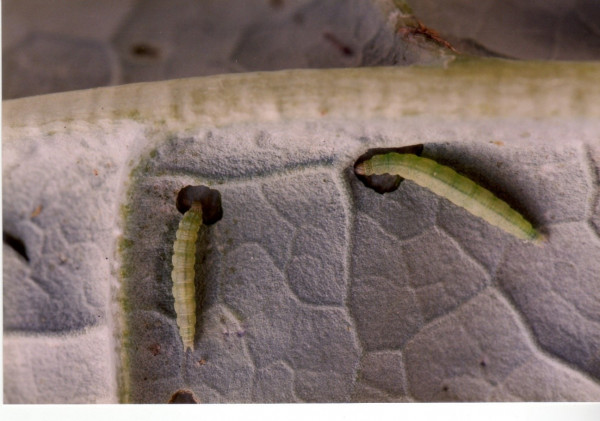
DIAMONDBACK or cabbage moth (Plutella xylostella) is one of the more notorious lepidopteran pests in Australia to develop resistance to synthetic insecticides and Coragen insecticide (active ingredient 200g per litre chlorantraniliprole, Rynaxypry, group 28) is no exception.

Coragen was commercialised in Australia for DBM control in brassica and brassica leafy vegetables in September 2008.

It proved to be a highly effective product for the control of up to eight different lepidopteran species in these crops and still is – with the exception of DBM.

Due to its many favourable attributes, Coragen became a product of choice for DBM control and, in conjunction with the registration of other group 28 offerings in the marketplace, it is therefore probably not surprising that DBM has built up a tolerance to the group 28 chemistry over time.

The sad reality is that often when a new DBM product comes to the marketplace with a unique mode of action, it is perceived as a silver bullet, often overused and not effectively rotated with other insecticides with different modes of action. This can often lead to the eventual demise of a once-effective chemistry for DBM control.

The solution to such a conundrum is annual insecticide resistance monitoring and establishment of effective insecticide resistance management strategies on a localised basis.

DBM resistance monitoring was on the radar of the Department of Agriculture in Australia led by South Australian Research and Development Institute (SARDI) and Dr Greg Baker for about 20 years starting from the 1990s.

Frequent insecticide resistance monitoring (up to 2012) of DBM populations collected from the key brassica vegetable production areas from around Australia led to the development of effective insecticide resistance management strategies that could be implemented by advisors and growers.

However, the challenge has always been the effective implementation of these strategies.

In more recent years (from 2017 to 2019), a consortium of CropLife Australia members, in conjunction with SARDI, conducted insecticide resistance monitoring on 24 different field-collected DBM populations from brassica vegetable production areas in Queensland, NSW, Victoria, South Australia and WA.

The results of this study showed DBM had developed tolerance to a range of synthetic insecticides where tolerances appeared to vary by state.

Tolerance levels were highest for the group 28s (chlorantraniliprole, flubendiamide) however increased tolerance levels were also detected for group 5 (emamectin benzoate) and to a lesser degree, groups 2B (fipronil), 6 (spinetoram) and 22A (Avatar eVo – indoxacarb). With the exception of fipronil, the population with highest tolerance levels to all active ingredients tested were from Queensland. This trend should be an early warning sign to all other states.

The next round of DBM resistance monitoring to be conducted by CropLife Australia is imminent and hopefully will include an even greater range of active ingredients.

Although Coragen is less reliable these days for DBM control in certain parts of Australia, it is still a valuable tool for the control of other chewing pests in brassica and brassica leafy vegetable crops, including centre grub, cabbage cluster caterpillar, cabbage white butterfly, cluster caterpillar, heliothis and soybean looper.

Coragen can be effectively tank mixed with other DBM effective larvicides to cover a spectrum of species. Coragen also demonstrates very low impact on a range of beneficial insects, so is a valuable tool to work in conjunction with nature to help control pests in the target crop.
Digital Editions


  • Collection under the hammer

    Collection under the hammer

    AN eclectic curation of vintage and antique Australian pastoral machinery and memorabilia will go to auction on 1 February. Yvon Smythe and her late partner,…

More News

  • Calls flow for royal commission

    Calls flow for royal commission

    Purchase this photo from Pic Store: 524159 AUSTRALIA needs a royal commission into water management in 2026, according to Murray MP Helen Dalton, who says politicians are “destroying” the nation’s…

  • Big skies and farmscapes

    Big skies and farmscapes

    Purchase this photo from Pic Store: 524028 THE Gallery Balranald is currently showcasing the work of professional artist Graham Hearn. His latest exhibition, Big Skies and Farmscapes, reflects the vast scale and…

  • Difficult outlook for grape growers

    Difficult outlook for grape growers

    Murray Valley Winegrowers has acknowledged the findings of Wine Australia’s Australian Wine Production, Sales and Inventory Report 2025, which confirms the challenging market conditions facing growers. The newly released report…

  • Benham appointed to new ag role

    Benham appointed to new ag role

    The Nationals member for Mildura, Jade Benham, has been appointed Shadow Assistant Minister for Agriculture and Regional Development, as part of Jess Wilson’s new Shadow Cabinet announcement. Ms Benham said…

  • Connecting urban and rural Australia

    Connecting urban and rural Australia

    HAMISH McIntyre grew up on the land in Queensland, learning the rhythms of farming from his family. Today, he runs a sprawling family business across the St George, Dirranbandi, Quilpie,…

  • Farmers warned to stay alert

    Farmers warned to stay alert

    A RUN of booming haystack and shed fires across regional Victoria has sparked fresh warnings for farmers as hay season rolls into full swing. Fire crews in the west and…

  • Bumper harvest fuels Cobram Estate’s growth

    Bumper harvest fuels Cobram Estate’s growth

    COBRAM Estate Olives has reported one of its strongest years on record, with an exceptional “on-year’’ harvest in Australia driving improved earnings, higher production volumes and a confident outlook from…

  • Select Harvests’ cracking pace

    Select Harvests’ cracking pace

    SELECT Harvests Limited has released its 2025 business update, reporting a final almond crop estimate of 24,700 tonnes, slightly below the midpoint of its earlier forecast. The company says the…

  • Further water buybacks anger farming industry

    Further water buybacks anger farming industry

    FARMERS, politicians and advocacy bodies are warning further water buybacks announced last week will gut regional towns, drive up food prices and cripple Australia’s dairy heartland. Federal Water Minister Murray…

  • Farmer takes action in feral pig fight

    Farmer takes action in feral pig fight

    IN THE heart of south-western New South Wales, sheep and cattle farmer Colin McCrabb is waging a quiet war against a destructive and elusive enemy -feral pigs. Operating a 6800-hectare…