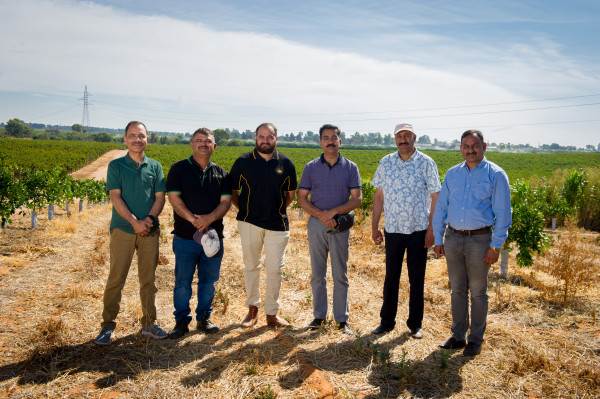
A GROUP of scientists from northern India have completed a discovery tour of Victoria’s horticulture industry.
The men from the University of Horticulture and Forestry in Solan travelled the state across two weeks to witness innovative food growing techniques in Australia.
Dr Navender Singh Pathania hosted the men, taking them to enterprises in Colac, Shepparton, Tatura, Lake Powell, Piangil, Kenley, Robinvale, Euston, Wemen, Iraak and Red Cliffs.
“We have been to various places where high tech production has been done,” Dr Pathania said.
The group inspected a variety of crops and processing facilities including blueberry, stone fruit, kiwi, apple, almond, pistachio, and citrus properties.
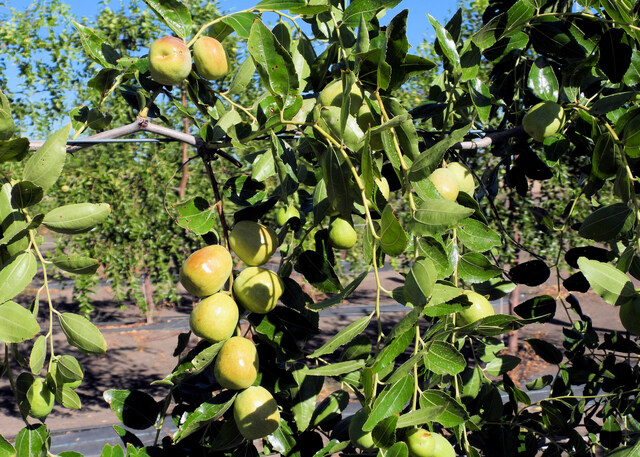
Hardeep Singh Gill from Gill Farms showcased his business’ wine grapes, mangoes, avocadoes and jujubes.
“We’ve been showing them new development areas predominantly, and how we’re using continuous fertilisers in order to get the best outcome for trees early on,” Mr Gill said.
He also demonstrated some wind protection measures he’d taken on his property, and how he makes use of organic matter to enhance soil nutrition.
“We’ve been knowledge sharing for over 17 years, and discussing new ideas and new ways of doing things.”
Dr Vishal Rana is one of the three academics who made the journey to Australia for the tour.
He said there’s huge potential for India and Australia to support each other, as the countries grow similar crops at opposite times of the year.
“With this visit, we explore the better linkages between India and Australia,” Dr Rana said.
“Recently our prime ministers they have also met and they are planning for free trade, so I think there is a great possibility for accelerating the trade between the two countries, and horticulture is one of the major area where we can explore this possibility.”
Dr Satish Bhardwaj agreed.
“This global market chain, if we study that properly, we can supply food around the year, that will help us also and of course Australians,” Dr Bhardwaj said.
He said there is a lot of parallels between the Indian and Australian horticulture market, and the more we help each other, the better.
“Whatever we have learned here in the field it will be very helpful to us to solve the problems of the farmers, and to give them new innovations so that will improve their productivity,” he said.
“We are going to benefit from the cross pollination of this knowledge.”